Special Offers
Buddhist
Catholic
Contemplative
Evangelical
General Christian
Hindu
Jewish
Latter-day Saint
Muslim
New Visions
Progressive Christian
Beliefs
Buddhist
Catholic
Contemplative
Evangelical
General Christian
Hindu
Jewish
Latter-day Saint
More Voices
Muslim
New Visions
Pagan
Progressive Christian
Topics
Religion News
Food and Religion
Sports and Religion
Religious Art
Religious Music and Entertainment
Religious Events
History and Religion
Style and Religion
Politics and Religion
Women in Religion
Recreation Outdoors and Religion
Business Finance and Religion
Careers Workplace and Religion
Education and Religion
Family Parenting and Religion
Health Fitness and Religion
Home and Religion
Relationships and Religion
Technology and Religion
Travel and Religion
Columnists
Buddhist Columnists
Business Finance and Religion Columnists
Careers Workplace and Religion Columnists
Catholic Columnists
Contemplative Columnists
Education and Religion Columnists
Evangelists Columnists
Family Parenting and Religion Columnists
General Christian Columnists
Health Fitness and Religion Columnists
Hindu Columnists
History and Religion Columnists
Home and Religion Columnists
Jewish Columnists
More Voices Columnists
Latter Day Columnists
Muslim Columnists
New Visions Columnists
Nonreligious Columnists
Pagan Columnists
Politics and Religion Columnists
Progressive Columnists
Recreation Outdoors and Religion Columnists
Relationships and Religion Columnists
Religion News Columnists
Religious Art Columnists
Religious Events Columnists
Religious Music and Entertainment Columnists
Sports and Religion Columnists
Style and Religion Columnists
Technology and Religion Columnists
Travel and Religion Columnists
Women in Religion Columnists
Resource Library
2026 Calendar
Library of World Religions
The 100 Most Holy Places on Earth
Patheos Answers
Podcasts
Videos
Faith Leaders Database
Anglican Episcopalian
Bahai
Baptist
Buddhism
Christianity
Confucianism
Eastern Orthodoxy
Hinduism
Holiness and Pentecostal
ISKCON
Islam
Judaism
Lutheran
Methodist
The Church of Jesus Christ of Latter-day Saints
New Age
Paganism
Presbytarian and Reformed
Protestantism
Religion Behind the Scenes
Roman Catholic
Scientology
Shia Islam
Sikhism
Sufism
Sunni Islam
Taoism
Zen
See all religions
Research Tools
Comparison Lens
Preacher Resources
Teacher Resources
Video
Podcasts
Thought Readers
Faith In Media Tracker
E-Books and Other Special Offers
God's Cheat Sheet to Finances
Books of the Bible Study series
History of the Bible
7 Day Prayer Challenge for Spouses
A Different Kind of Christian
Jesus is Love
Prayer Devotional
The Saints We Love
FaithChatter Conversation Cards
Newsletters
Special Offers
Ad-Free & Subscriber Log-In
Subscription Support
Trending:
Forgiveness
|
Marriage
|
Afterlife
|
Trump
|
Pentecost
|
Deconstruction
Home
About Us
Stump a Scholar
Patheos 10+1 Q&A Series
FREE NEWSLETTER
Home
Progressive Christian
Archives
Select a Category
Advent
Author Interviews
Battle Over the Body and Blood of Christ
Bearing Beauty
Book Reviews
Christian Education
christian spirituallity
christianity
Christmas
Church
Church Leadership
Contemplation
Creation Care
Death and Dying
Death Penalty
Disruptive Change
Disruptors Series
Easter
Education
Evolution and Faith
Future of Progressive Christianity
Gun Violence
Health & Wellness
Holy Week
Interfaith
Israel-Palestine
Leading Differently
Lent
LGBTQ
Living with Cancer
Meditations on the Cross
Mental Illness
millennials
Mimetic Mondays
Monday Meditations
Movie Reviews
New Monasticism
Pando Populus
Parenting
Patheos 10+1 Q&A Series
PC(USA)
Politics
Pop Culture
Practical Theology Series
Prayer
progressive christian
Race Relations
Reformation
religion
Religion and Politics
Religion in America
Rethink Church
Social Justice
Spirituality
Spirituality of the Body
Stump a Scholar
Technology and Faith
Thanksgiving
Theodicy
Trust Me Church
Uncategorized
Why I'm Still Christian
Youth Ministry
Select a Month
December 2025
April 2025
January 2025
September 2023
September 2022
May 2022
February 2022
January 2022
November 2021
October 2021
May 2021
February 2021
November 2020
October 2020
September 2020
June 2020
May 2020
March 2020
June 2019
March 2019
January 2019
June 2018
May 2018
April 2018
February 2018
January 2018
December 2017
November 2017
October 2017
September 2017
August 2017
July 2017
June 2017
May 2017
April 2017
March 2017
February 2017
January 2017
December 2016
November 2016
October 2016
September 2016
August 2016
July 2016
June 2016
May 2016
April 2016
March 2016
February 2016
January 2016
December 2015
November 2015
October 2015
September 2015
August 2015
July 2015
June 2015
May 2015
April 2015
March 2015
February 2015
January 2015
December 2014
November 2014
October 2014
September 2014
August 2014
July 2014
June 2014
May 2014
April 2014
March 2014
February 2014
January 2014
December 2013
November 2013
October 2013
September 2013
August 2013
July 2013
June 2013
May 2013
April 2013
March 2013
February 2013
January 2013
December 2012
November 2012
October 2012
September 2012
August 2012
July 2012
June 2012
May 2012
April 2012
March 2012
February 2012
January 2012
December 2011
November 2011
October 2011
September 2011
August 2011
July 2011
June 2011
May 2011
April 2011
March 2011
February 2011
January 2011
December 2010
November 2010
October 2010
September 2010
August 2010
July 2010
June 2010
May 2010
April 2010
March 2010
August 2010
August 31, 2010
Why Big Tent Christianity?
"Brian McLaren and I are organizing a major public conference on September 8-9 in Raleigh,...
August 31, 2010
Pakistan, Denying Them Answers, Job & God Overwhelmed
Pakistan is still reeling from the destruction of the floods. I have personal friends who...
August 30, 2010
Backward or Forward with God: A Response to Glenn Beck’s “Recovering Honor”
"Faithfulness to God today involves world loyalty and the willingness to sacrifice for the well-being...
August 30, 2010
Counting the Cost: Lectionary Reflections on Luke 14:25-33
Says biblical scholar Earl Ellis, “Jesus’ purpose in telling these 2 parables is not to...
August 30, 2010
Religion, Politics and the Public Square
"I find good people of faith and conscience are reticent to speak up about controversial...
August 29, 2010
Ungrounding Ourselves into the Christ-Ethic
For Lacan, public law such as “No Photos” or “Do not go on the grass”...
August 28, 2010
Is Morality Natural? Hitchens, God, and the Nature of Morality
Belief in God is not necessary for morality. But, I cannot disprove that an omniscient...
August 22, 2010
Guest of Honor? Lectionary Reflections for Aug. 29
Who was the guest of honor in the banquet Jesus attended? Who is the guest...
August 20, 2010
The Future Church: What does it mean to be an inclusive Church?
The condition of renewal means you cut your roots - Slavoj Zizek Once upon a...
August 20, 2010
Muslims, Ground Zero, Fear and Fairness
"I sympathize with all those who are afraid of Muslim terrorists. I do not join...
August 18, 2010
Eat, Pray, Love: An Invitation for Christians?
Does the film and book "Eat, Pray, Love" present an invitation to moderate and progressive...
August 17, 2010
How I Rediscovered Christianity Through Islam
"The religious "other" is not the enemy; quite the contrary: it's through her that one's...
August 16, 2010
Belief is a Parasite: What Alice, Old Yeller and Broken Lights Can Teach Us About Dogma
Dogma imprisons us within freedom. It gives us the caged experience of liberty. It drives...
August 16, 2010
Standing Up Straight: Lectionary Reflection on Luke 13:10-17
I stayed in a convent once for a week while leading a seminar at a...
August 16, 2010
Place and Process: History, Geonarratives and Patriotism in Tension
The world as we know it has not always been so, and the world as...
August 16, 2010
Eat, Pray, Love: Spiritual Quest or Chick Flick?
Rereading parts of the book after I saw the movie, I was impressed with the...
August 16, 2010
Christians in the Movies: A Complex History
In an article I wrote for Patheos a few months back, I talked about the...
August 13, 2010
The Homeless: Violent Liberators
At one point on his journey, Jesus comments on the static state of the homeless...
August 13, 2010
Anxious for Nothing
"I wonder why a bible verse that served me so well in one phase of...
August 12, 2010
Abandonment and Responsibility: Reflections on Sunday’s Scriptures
"Does there ever come a time in life in life when God withdraws God's care...
August 11, 2010
Conversations from Chautauqua
"When I last wrote, I was on the island of Patmos out in the Greek...
August 09, 2010
Vision, Promise, and Practice: A Response to Rodney Stark
"While it easy to dismiss Rodney Stark’s interview as insulting, inaccurate, and unworthy of a...
August 09, 2010
Burning our Scarecrows: Re-redefining History
There has been a hip new influx of re-ideology. Or neo-ideologies. For example, there used...
August 09, 2010
Connecting the Dots? Lectionary Reflection for August 15th
The worst sermons I’ve ever preached were those that tried to “connect the lectionary dots”...
August 06, 2010
How Churches Break; A Response to Rodney Stark
Are Evangelicals the new Mainline? Not so fast... Professor and Episcopal lay leader Greg Garrett...
August 06, 2010
Who Are the Samaritans Today?
Our Christian past has been rife with breaking God's human family apart. Could the future...
August 05, 2010
Prayers for Connecting to the Land
Summer is well underway, the garden continues to flourish and I am taking time to...
August 05, 2010
Fantasies In Our Rear-View Mirror: The Gay Community
It's ironic how, especially in western countries, we have been indoctrinated to believe that freedom...
August 03, 2010
The God Who Forsakes Us
We live in a world that almost thrives on the need for closure or an...
August 01, 2010
Picturing God in a Fragmented World: Blogging from An International Gathering of Teachers of Preaching
Trying to sneak into a professional meeting late doesn't work when you're wearing shoes that...
1
2
»
Related posts from
Faith Forward
Progressive Christian
Why Dickens' True Christmas Lesson Is Community, Not...
Faith Forward
Progressive Christian
Why People Are Leaving Their Childhood Religion
Faith Forward
Progressive Christian
How Religion Is Reframing the LGBTQ Movement
Faith Forward
Progressive Christian
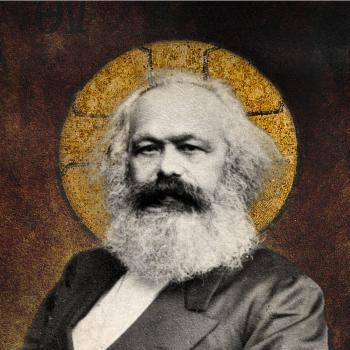
Karl Marx: Communism as Alternative to Christianity?
Faith Forward






 Ad-Free & Subscriber Log-In