Prairie poetry

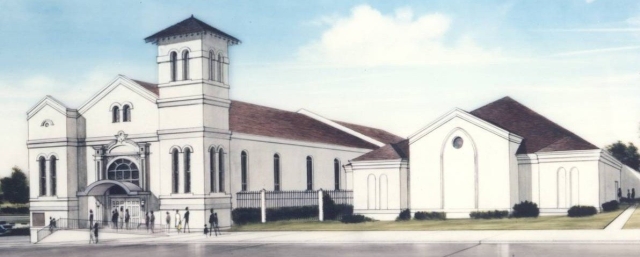
hunter_church2.jpgI love a good story, don’t you? One that you can sink your teeth into by a fireplace or on your porch, with a cup of tea or a nice craft brew at your side.

Financial pressures, and the general pace of 21st-century life make it more challenging for media to send reporters out to cover the narratives that oftimes help make sense of places that some of us have never seen.

That’s why, (with a few caveats), I loved the recent rural churches story by David Van Biema in Time.

How many of us know that there is a crisis, a shortage of pastors, facing America’s rural congregations? Caught up in the media drumbeat about (admittedly important) issues on both coasts and internationally, we aren’t hearing as much as we should about the more mundane, less controversial decisions that make up the fabric of most lives.

Van Biema’s lede paints a vivid image of loss:

Carol Porter, 63 and no word mincer, sits in her modest kitchen in Euclid, Minn., and recalls the day her 118-year-old church was burned to the ground. “I was baptized, confirmed and married there,” she reports. Her family had moved two lots down from Euclid’s First Presbyterian, so she was able to watch through the kitchen window a few years ago as fellow parishioners knocked down the church, buried its fixtures and then put a match to what remained, sending a thousand Sundays of memories up in smoke.

America’s rural congregations, thinned by age and a population drain that plagues much of farm country, have gotten too small and too poor to attract pastors. No pastor means no church. And losing one’s church–well, Porter has a vivid memory of that, living as she does in an area where abandoned buildings are control-burned for safety. The flames were taller than a man, she remembers. “In plain English,” she says, “it looked like hell.”

Here’s a fascinating statistics from the Fund for Theological Education: less than half of American rural congregations have a “full-time seminary-trained pastor.” But the writer doesn’t rely on statistics and quotable talking heads. He gets out into the lovely Minnesota countryside, and talks to real people struggling with real problems–and trying to find creative solutions reminiscent of the old circuit-riding days.

One response to the pastor shortage is “yoking” two congregations to share a circuit-riding minister–and one salary. Along the Minnesota–North Dakota line, the yokes stretch thin. Jeff Gustafson, in the town of Warren, Minn., adds a degree of difficulty: he’s Methodist, but one of his two yoked churches is Presbyterian. Another pastor travels 200 miles (about 320 km) every weekend to serve five churches. A botched three-pastor attempt to connect three already yoked churches (including Grue) with four more resulted in, among other things, shut-ins being overlooked and not receiving Communion for years.

What seems conspicuously absent here is a reference to what Roman Catholics are doing to fill prairie pulpits. Are the monks of Benedictine St. John’s Abbey, Collegeville (about 70 miles from Minneapolis) filling some spiritual needs for Roman Catholics in Minnesota? Is there an organized program to supply clergy?

I bring up St. John’s because of a very intriguing reference Van Biema makes to Crookston, Minn., pastor Daniel Wolpert. A Presbyterian, Wolpert started the Minnesota Institute of Contemplation and Healing, a retreat center that allows visitors to partake of and receive training in the ancient spiritual disciplines of the Christian church. That’s worth another story in itself.

There is new life springing up, even in the midst of prairiescapes grappling with population loss and a shortage of clergy. Here’s how one clergy quoted by Van Biema puts it at the end of the article: “”God is with you wherever you are going,” he tells the youngsters. “God never says goodbye to us. Let’s pray: O God, thank you for not saying goodbye. Thank you for always being with us.”

Good stories engage us. We don’t want them to end. I don’t know about you, but I want to know what happens to these folks. Faith is not always about the spectular, but about the ordinary. I hope in another year or two Van Biema stops in the “gorgeous, wind-strafed corner of Minnesota” again, and gives urban and suburban readers another glimpse of a rural life that, to many of us, seems as distant as the Little House on the Prairie. They must get a little tired reading about us.

Postcard from Flickr: The Commons.

Print Friendly

  • http://www.soilcatholics.blogspot.com Peggy

    You mean churches with married and female clergy have experienced shortages? Shocking. ;^D

    Our Roman Catholic diocese in Southern IL has (for 10 years or more) employed “parish life coordinators,” lay people to be administrators of parishes and take on some “ministerial” tasks. It’s a trend that is rather controversial, to put it mildly. In these cases, a priest is pastor (“canonical” or “sacramental”) to 2 or more parishes, usually in multiple towns–1 parish per town–so the PLC and priest work together. The lay person is on site on a daily basis. We are also supplementing with international priests, some of whom work with the PLC’s as well.

    I’d like to see something along the lines of what you posted, ie, order priests seeking to aid rural dioceses by making some “missions” to the rural parishes and offering to “man” them for the bishop. I’d like to see bishops and orders open to such ideas.

  • Jerry

    Faith is not always about the spectular, but about the ordinary.

    I agree but I would emphasize the ordinary over the spectacular. How faith is expressed in the lives of regular people is much more interesting to me than the doings of the rich and/or famous.

    There was a segment on Religion and Ethics Newsweekly in the middle of last year that covered this area. I loved both the original story and this follow-up:

    BOB ABERNETHY, anchor: Sometimes the stories we tell on this program have a dramatic effect, as one did last summer about a struggling, itinerant black pastor in Louisiana — a modern-day circuit rider driving his old car from one poor, little church to another every Sunday. That story was seen by a white pastor in Texas with a large, upscale congregation, and Lucky Severson tells what happened.

    http://www.pbs.org/wnet/religionandethics/episodes/june-20-2008/circuit-preacher-david-brown-revisited/50/

  • http://www.getreligion.org Mollie

    One side of my family has a deep rural background and I myself have been a member of a few rural parishes.

    I loved the topic Van Biema chose as well as the result. There are so many competing factors that influence congregations and I thought he was very nuanced about some of the external and internal ones.

    I want more, too.

  • http://www.getreligion.org Mollie

    Oh, and I love that circuit-rider story. But I pretty much love everything on that show.

  • Fr. J.

    I would just like to note what I think is an increasing trend: the marginalization of Catholics in general religious reporting. Most media outlets didn’t even notice the complete absence of any Catholic clergy at the recent inauguration, a ceremony in which there have often been represented Protestants, Catholics and Jews. This inauguration had only two Protestant clergy.

    This story is typical of the broader trend of excluding Catholics from depictions and reportage of religious America. I believe there has been a notable coarsening of American culture against Catholicism in recent years from two different directions.

    First, as mainline Protestantism declines and is replaced by evangelical Protestantism, the ecumenical relationships between mainline Protestants are being replaced by a more aggressive anti-Catholic attitude.

    Secondly, secular America has targeted the Catholic Church for its stands against the secular agenda such as gay marriage, stem cell research, etc.

    The loss of Fr. Richard John Neuhaus has perhaps also signaled a closing of the window of cooperation between Evangelicals and Catholics on a host of issues which can united but without tangible efforts, will not.

  • dalea

    Curious that there is no mention of Lutherans in the story, since that would be one of the predominate religions in the region. Yoked parishes are nothing new, remember them from back in the 50′s. Some rural congregations owned farm land and the income from that was enough to employ a minister full time. Knew of one church that had all living members in nursing homes, services that no one was able to attended. Ingmar Bergman made a movie about this 50 years ago. A circuit riding priest in the Church of Sweden traveled to churches no one attended. Seems we are catching up to Sweden.

  • Fr. J.

    Also, btw, I dont know what the Benedictines are doing in Minnesota for the rural church, but I for one, as a Holy Cross priest live and work at our seminary and travel an hour several times a week to pastorally care for a small parish in a rural county.

  • dalea

    The Bergman film is called, in English, Winter Light. In Swedish it is Nattvardsgästerna, The Communicants. Year 1962, more information at:

    http://en.wikipedia.org/wiki/Winter_Light

  • FW Ken

    The Lutherans are on the second page, dalea.

    The Catholic diocese of Fort Worth has had priests serving multiple rural parishes for years; who’d thought it had a name -”yoked parishes” – or was a new trend.

    Our priests recently had their retreat given by a bishop from the upper midwest and our pastor told a story he heard from that bishop almost identical to this one: a parish to close, the religious artifacts were taken out, and the building burned. The last part of the story, however, was that they gathered the old long square nails and made crosses of them for their homes.

  • http://blog.siena.org Sherry Weddell

    I’ve worked in something like 76 US Catholic dioceses so far and it is the rare diocese now who doesn’t have parishes sharing pastors or linking up. One newly ordained priest I know was offered (and refused to take) 6 parishes as his first pastorate. He ended up with three parishes, three schools and a polyglot community that spoke 12 different languages – none of which was a majority. Fortunately he was a polyglot himself so learned to celebrate Mass in Tongan, Spanish, Croatian, etc.

    Another diocese is currently dropping from over 200 parishes to 76, which means that some pastors will have 6 parishes to oversee.

    When I met rural pastors who only have two neighboring parishes to deal with, I consider them lucky these days.

  • http://ironiccatholic@yahoo.com IC

    I live in Minnesota (the opposite end from the story locale). But I was at St John’s a few years ago and MANY of their resident priests were serving rural parishes in the area. Collegeville to Crookston is quite a hike, though.

    I thought it was a solid story too…and a huge reality in the Upper Midwest.

  • http://www.followingthelede.blogspot.com Sabrina

    Well, in terms of the the Catholic Church, the United States is a mission country anyway. :-)

    What U.S. parishes/dioceses are starting to face in terms of twinned parishes and the sheer mileage covered by an individual priest has been routine in Latin America for decades. Which is why the Latin American Catholic Church has given more weight to the role of lay catechists.

  • MJBubba

    Unlike the Minnesota area VanBiema reported on, the rural areas of the mid-south have seen a trend in population decline that is over 100 years old now. As youngsters moved into towns, and then from small towns to larger cities, many old churches had to merge, or just expire. Peggy (#1), there is no real shortage of clergy for many Protestant denominations. Rather, many rural parishes have shrunk to a size that no longer allows them the revenue needed to support a full-time pastor. They make do with inconsistent coverage by “supply preachers” (retired pastors never actually retire), and lay ministers.

  • Pastor Lisa

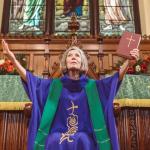
    What a surprise to find a photo of one of the churches I serve posted with this entry. I just read this very article in Time and it seemed to describe the situation I serve to a “t”. Hunter UM Church (in the photo) is one of three churches in the North Boone Co-Active Ministry (located in north central Illinois very close to Wisconsin). The anchor church, Poplar Grove UMC in the town of Poplar Grove, along with another small country church, Blaine UMC, joined with Hunter in ministry together in 1997 as a way for the smaller two churches to have viable, effective, and longer-term church leadership. The result has lead to more stable congregations at Blaine and Hunter. Between the three churches, we have 5 worship services a weekend; preaching responsibilities are filled by myself and several very qualified lay speakers. I attend most meetings for all three churches to provide pastoral leadership, but the only way all three churches are able to achieve the quantity and quality of ministry to over 500 active congregants and the community is through the laity answering their call to participate. Our churches’ websites are: http://www.pgumc.us; http://www.blaineumc.us; and http://www.hunterumc.us. Check us out. Thank you for taking a moment to cover this reality. Peace.