When is an ‘evangelical’ not an ‘evangelist’?

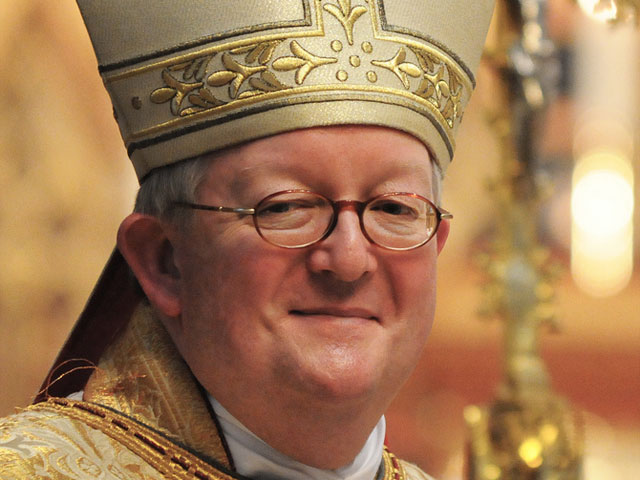
As an admirer of his political life and work, I know a few things about the late Sen. Mark Hatfield.

I know that he was very open about his faith and was involved in many private circles of believers that practiced, in the best sense of the word, “evangelism” on behalf of the Christian faith. In that sense, and in that sense alone, it might be possible to call the senator an “evangelist.”

However, I doubt that he ever was a preacher or a leader in the large- or small-scale public rallies or crusades that are commonly linked to the word “evangelist,” in the sense that the Rev. Billy Graham is the world’s best known evangelist.

So, with that said, what’s going on with this short Richmond Times-Dispatch salute to Hatfield? Note that the headline has nothing to do with the article itself.

The headline:

Mark Hatfield: Evangelist

The top paragraphs:

Oregon Gov. Mark Hatfield delivered the keynote address at the 1964 Republican Convention that nominated Barry Goldwater for president. Intransigents subsequently would vilify Hatfield for being not only a moderate but a RINO.

Hatfield served in the Senate for many years and looked the part. A man of intense religious faith, he lent an evangelical perspective to politics. His opposition to capital punishment and to abortion suggested his seamless approach to issues relating to human life. Christianity Today saluted him. The religious right did not.

Clearly, the editorial-page staff thought that the word “evangelist” was, in some way, the same word as “evangelical.” That’s really strange, for scribes working in a sort-of Southern state such as Virginia.

Simply stated, the headline is wrong.

Thus, this calls for another visit with sociologist Christian Smith and his famous (to some infamous) Books & Culture essay entitled, “Religiously Ignorant Journalists.” This text should be posted in many newsrooms, methinks, for occasional inspirational reading. The opening goes like this:

Today I received a phone message from a journalist from a major Dallas newspaper who wanted to talk to me about a story he was writing about “Episcopals,” about how the controversy over the 2003 General Convention’s approval of the homosexual bishop, Gene Robinson, would affect “Episcopals.” What an embarrassment. How do I break the news to him that there are no “Episcopals”? Actually, they are called Episcopalians. Of greater concern, I wonder how this journalist is going to write an informed and informing story in a few days about such an important and complex matter when he doesn’t even know enough in starting to call his subjects by their right name.

What I have learned, however, over the years, is that this journalist is not alone in his ignorance. As a scholar of American religion promoted to journalists by my university’s PR department as an alleged expert, I constantly receive inquiries from reporters wanting background, quotes, and contacts for religion stories they are writing. Usually they have one or two days to complete the story. As often as not, the journalist mispronounces the name of the religious group he or she is covering.

“Evangelicals” is one of their favorites to botch. Often in our discussions, journalists refer to ordinary evangelical believers as “evangelists” — as if the roughly 70 million conservative Protestants in America were all traveling preachers like Billy Graham and Luis Palau — or, more to the point, televangelists like Jim Bakker and Jimmy Swaggert. … Other journalists simply cannot pronounce “evangelicals” at all. They get confused and flustered, and after a few uncomfortable tries at “evangelics” and “evangelicalists” they give up and resort to referring to evangelicals simply as “them.”

Words have meanings, folks. As Smith goes on to note, can you imagine news executives hiring people who mangled legal and political terms in the same way?

I know. It’s an old subject. It’s still out there and it’s still important. Some people just don’t get it.

Print Friendly

About TMatt

Terry Mattingly directs the Washington Journalism Center at the Council for Christian Colleges and Universities. He writes a weekly column for the Scripps Howard News Service.

  • Julia

    Words have meanings, folks. As Smith goes on to note, can you imagine news executives hiring people who mangled legal and political terms in the same way?

    I see legal terms mangled all the time.
    I’ll look for an example to link.

    I remember one article that misrepresented a perfectly legitimate statement by a litigant defending his position that totally misunderstood the legal term “duty”. The defendant was blasted for denying he had any duty toward the poor, sympathetic plaintiff. A legal “duty” is not necessarily the same as a moral duty. This is a frequent problem with bleeding-heart reporters – they don’t understand the difference between assigning legal liability and the failure to be a nice guy.

  • http://!)! Passing By

    I thought Christianity Today is part of the Religious Right.

    Speak of defining terms…

  • Jerry

    Your link to that article is wrong – it’s to a google search. The article itself http://www.booksandculture.com/articles/2004/janfeb/2.06.html is behind a paywall unfortunately.

    And unfortunately the ignorance is not just about religion. There’s a classic howler I just found http://michellemalkin.com/2011/08/02/ap-headline/

    Associated Press has found a way to really inflate the number: Just take the Fahrenheit reading, mistake that for Celsius, and voilà… it’s a lot hotter:

    Northeast braces for temps near boiling point

    But wait, there’s more:

    Washington, D.C.’s 103 degrees may seem the same as a melting 116 degrees.

    http://news.yahoo.com/northeast-braces-temps-near-boiling-point-104346055.html

    I hate to ask, but what actually melts at 116 degrees. I’ll grant that it might be just terrible writing rather than abysmal ignorance, but it’s sad either way.

  • http://www.tmatt.net tmatt

    JERRY:

    The Google link is intentional. Because of the firewall, I wanted a search that INCLUDED the B&C link and other sources of commentary ON the Smith piece.

    PASSING BY:

    LOL. Now that’s funny.

  • Jerry

    Terry, please in the future be more exact about such links because I obviously expected a direct link. If you had originally written what you clarified the link to contain, then I and perhaps some others might not be led astray.

  • Deann Alford

    For the record, the name of the Baton Rouge-based [presumably evangelical] evangelist is Jimmy Swaggart.

  • Will

    Julia: Maybe someone should start a blog on how the press just doesn’t get law?