Newt, Newsweek, evangelicals & Rome

Before we get to one of the Beltway issues of day — the surging Newt Gingrich and the evangelicals of Iowa — I have a question for GetReligion readers who are, or have been, Newsweek subscribers in recent years.

My question: What is Newsweek, right now?

Is it a journal of news and opinion, sort of The New Republic Lite, with an emphasis on opinion? Is it a celebrity publication, where topics leap out onto the cover because of THE NAME of the author more than the topic? Is it still a news weekly in the American news model?

I ask these questions because I read the publication quite closely and it is, after all, the home of Peter J. Boyer, one of the long-form journalists I most admire. And everyone has to read Howard “Howie” Kurtz, right?

The problem is, I can find evidence to support any of those journalistic labels in just about any recent issue of Newsweek. What we have here is a confusing case of multiple journalistic personality syndrome.

This leads me back to Michelle Goldberg’s piece on Newt and the evangelicals. This report started out looking like a rather mundane drive-by journalistic shooting. Ho-hum. But then I kept reading and, by the end, I found that this story had bravely included some very interesting voices and they were raising some of the key Newt questions that I hear being discussed in Christian circles from time to time.

The current media template, of course, focuses on Gingrich and his private life. That is supposed to turn off the evangelicals. When you put this in print, it looks like this:

After all, it’s not just that Gingrich is on his third marriage. He famously divorced his first wife while she was suffering from cancer — a cancer he’d previously used to garner sympathy in campaign speeches. He cheated on his second wife with congressional aide Callista Bisek, now his third wife, while leading the impeachment battle against Bill Clinton. Like Sen. Larry Craig, he of the attempted airport-bathroom tryst, Gingrich’s personal life has become a liberal punchline, proof of Republican hypocrisy on family values. How can voters whose main priority is the restoration of the traditional family rally around him?

Now the X-factor in this is, of course, that Newt has improved his Godtalk game in recent years, finding a way to fuse it into his established love of lofty soliloquies about history, Western civilization, rampant secularism, etc. In the Newsweek piece that all adds up to “theocentric” rhetoric. The key, readers are told, is Newt’s conversion to Catholicism, which has turned into the official faith of bookish conservatism — especially on topics of law and politics.

This is pretty standard stuff. What fascinated me, of course, was that the Catholic angle in this story simply vanishes — poof. The Iowa storyline, after all, is about Newt and evangelicals. That’s what matters.

Later on, the story — to my surprise and pleasure — actually includes materials based on real, live evangelicals talking about how their religious beliefs affect their views of Gingrich. For example, there is the question of whether or not Newt will enthusiastically sign a document called “The Marriage Vow,” which states the following: “We acknowledge and regret the widespread hypocrisy of many who defend marriage yet turn a blind eye toward the epidemic of infidelity and the anemic condition of marriages in their own community.”

Apparently, many of the evangelicals are convinced that Newt has signed on for real.

Why do they believe that?

Gingrich benefits, of course, from the powerful Christian narrative of sin and deliverance. “These voters believe in forgiveness, they believe in redemption,” says Ralph Reed, who leads the Faith and Freedom Coalition. After all, as he points out, it was evangelicals who helped elect Ronald Reagan, our first and only divorced president.

The redemption narrative allows evangelicals to see themselves as fundamentally different from the feminists who rallied behind Bill Clinton because he was able to advance their agenda despite his personal failings. Tamara Scott is the Iowa director of Concerned Women for America and recently became a co-chair of Bachmann’s campaign, but she has nothing bad to say about Gingrich and resists Clinton comparisons. “Here’s the difference,” she says. “Bill Clinton denied what he did. He didn’t repent.”

Yikes. An actual theological context for this discussion! For these voters, in other words, the big issue is whether Gingrich meant what he said when he talked about the sin in his life. For some, it is enough that he publicly repented.

This is the point at which I wanted to ask a question that is very close to being out of bounds, in terms of journalism and privacy. Newt is now a Catholic. Who is his confessor? How is he walking his talk? Would he like to discuss that?

Then there is this related question: At what point is some media type going to ask conservative and middle-of-the-road Catholics what they think of his conversion, repentance and public professions of a changed life?

Obviously, the thoughts of the evangelicals matter. But what about the Catholics? We know that liberal Catholics are almost certainly rolling their eyes at all of this. But what do other Catholics think of this man? Consider this, for example: Newt angered many GOP hardliners with his more moderate stance on immigration. Might there be some Catholic intellectual DNA, in his stance? Will that hold up? Where are the other Catholic fault lines and questions?

Someone needs to write that story. The evangelicals are not the only people studying the allegedly new Newt Gingrich.

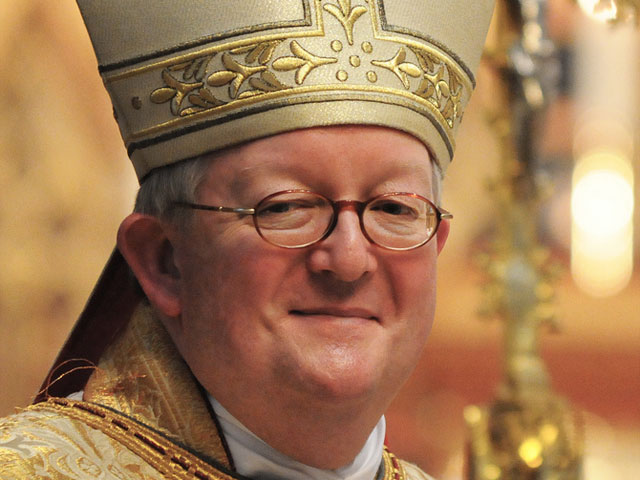
IMAGE: From the liberal Catholic site Bilgrimage.

Print Friendly

About TMatt

Terry Mattingly directs the Washington Journalism Center at the Council for Christian Colleges and Universities. He writes a weekly column for the Scripps Howard News Service.

  • http://hereisthechurch.wordpress.com Allie

    At least from what I’ve seen in the Catholic blogosphere, belief in Gingrich is that he is sincere, although his recent “life begins at implantation” bit has certainly caused a ruckus. Since that’s counter to the Church’s “life begins at fertilization” stance, I’m hoping that the angle of Catholic’s views of Gingrich will be picked up by the media. Regardless of whether he just didn’t understand the Church’s teachings, made an honest mistake, or is actually at odds with the Church, I think we’ll see some interesting commentary regarding the diversity of views from within the Catholic community.

  • Julia

    National Review, which has a Catholic flavor thanks to founder WFB, has a piece on Newt and the implantation issue.
    Hot topic in the combox.

    http://www.nationalreview.com/corner/284769/gingrich-life-ramesh-ponnuru

  • Jeffrey

    I imagine the reason no reporters are asking Caholics is that (a) the Gingirch surge is new and (b) Catholics are inconsequential in the GOP primaries. Evangelicals pull all the strings and do all the voting at thIs point. Until we start taking swing voters and move out of the Evangelical states it just doesn’t matter what Catholics think of Gingrich’s rehab tour.

  • Jerry

    This is the point at which I wanted to ask a question that is very close to being out of bounds, in terms of journalism and privacy. Newt is now a Catholic. Who is his confessor? How is he walking his talk? Would he like to discuss that?

    To me, it’s out of bounds to ask who is his confessor. How his religion plays out in public life and his policy positions is fair game for the media.

    As to Newsweek, I don’t care any more. I used to buy the magazine when I went on plane trips but the last time I did not buy Newsweek (or Time etc) for that matter, preferring to read a book or two along with a science magazine. If something is called to my attention or comes up on Google news, I’ll look at it but otherwise it’s not a goto source any longer.

  • http://www.tmatt.net tmatt

    JERRY:

    I wasn’t saying that I want to know his confessor’s NAME. What I am trying to say is that, at some point, the active, church-going Catholics are going to want to know something about the practice of his newly claimed faith. They will want to know how Catholic he is….

  • http://hereisthechurch.wordpress.com Allie

    @tmatt But, I think that asking his confessor for an opinion (in that role) is still too far. Asking a parish priest (who may also be his confessor) for Gingrich’s involvement in parish life is one thing. This would be like asking an evangelical’s accountability partner how he is doing. I think that the Catholics who go to confession wouldn’t want to see this question asked, both because they understand the nature of the sacrament, and that they wouldn’t want their own confessors commenting on their faith with that perspective. The Catholics who don’t go to confession won’t care.

    As a Catholic, I would be satisfied to hear about his frequenting of the sacraments in general, his involvement with his parish (adoration? 40 Day for Life? etc), and his views when discussed within the context of his parish community (perhaps quotes from fellow parishioners). I think “walking the talk” would be much better demonstrated through this angle – after all, people can lie in confession, but their actions to their neighbor will speak volumes.

  • tmatt

    ALLIE:

    Who said anything about questioning his confessor? I guess reporters could ask questions about how involved he is in parish life, but I was in no way suggesting that his spiritual father be asked questions about the contents of confession. Never. Ever.

    All I am saying is that Catholics are going to ask factual questions about his faith and beliefs.

    Reporters always say things like, “He’s a devout” or “active” Catholic. I’m saying these claims can be backed with facts about parish involvement.

  • http://hereisthechurch.wordpress.com Allie

    @tmatt Got it. The way it came off above, it sounded like you were looking for a more personal response regarding his life in confession, and I was a little confused. Thanks for the clarification!

  • Jerry

    Terry, from your post you need to reword this sentence:

    Who is his confessor?

    I can’t conceive of anyone asking that question who does not want to know his name.