
 Jonathan Wilson-Hartgrove
When I tell stories about the signs of hope I see in small communities of people who’ve devoted themselves to living the way of Jesus, Christians often ask if I see any signs of hope in congregations. My answer is always, “Yes.” Then I often tell a story about Englewood Christian Church.
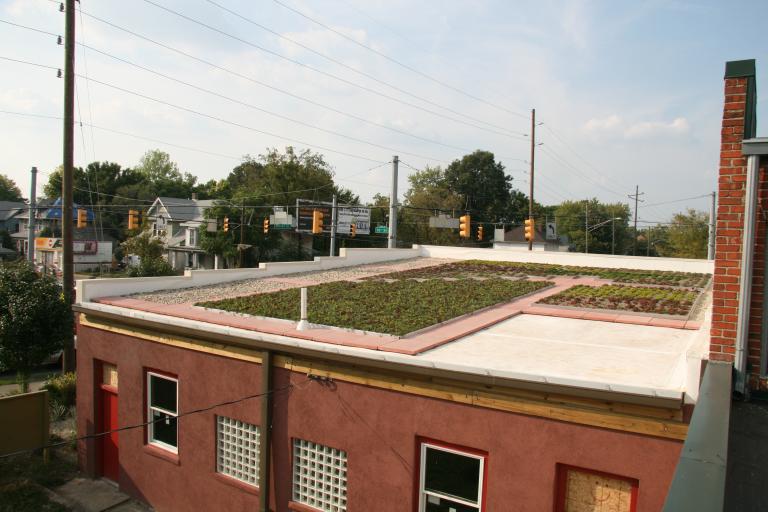
A “failed” mega-church in inner-city Indianapolis, Englewood has reorganized itself over the past two decades as a community of and for the neighborhood. It’s the sort of church that prays, worships and eats together, but also finds ways to work together, to live together, and to create good work for neighbors. I’ve been to potluck dinners in their basement and eaten the chilli and cornbread myself. This community is for real.
Here’s a description of some of the good news that’s happening around Englewood:
On Rural Street, the century-old Indianapolis Public School #3 building, which has not functioned as a school since 1979, is being converted into thirty-two units of gorgeous, mixed income housing. It will be the first development in the state of Indiana to integrate market rate and affordable housing with supportive housing for people coming directly out of homelessness or severe mental illness. And not only will its classrooms be transformed into fashionable apartments with high ceilings, wood floors, and lots of natural light; the new apartment complex will also feature a three-level gymnasium and recreational facility that will serve the residents as well as the neighborhood at large.
block east of the former school building is Oxford Street, which was almost completely vacant a decade ago. Over the last ten years, its empty houses have been occupied one by one until a majority of the homes are now filled. Another block in the neighborhood has seen its block club grow and thrive into one of the most active ones on our side of the city, with its neighbors working together on issues pertinent to the block and celebrating together with two large block parties each year.
On the south edge of the Englewood neighborhood, one of the most toxic abandoned industrial sites on the east side of Indianapolis has begun remediation, its land being
renewed and prepared for safe use again at a cost of over a million dollars. Right behind the school building, a lot that was once covered with asphalt is now home to a community
garden that has expanded yearly over the last decade.Immediately to the south of the school building, a commercial building on Washington Street, a major East-West thoroughfare through Indianapolis, was once home to a seedy used appliance dealer and then vacated. This building is now being renovated and its exterior painted by a local artist with historical scenes from the amusement park that graced the Englewood neighborhood a century ago.
What’s made all of this possible? Chris Smith, a longtime member of Englewood, says it’s learning to listen to one another. He quotes the ancient church father Cyprian in an epilogue to his new e-book The Virtue of Dialog. 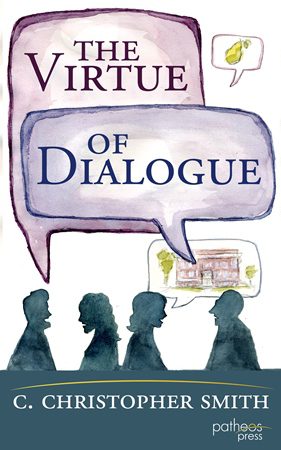 “The Kingdom of God is not in the wisdom of the world, nor in eloquence, but in the faith of the cross and in the virtue of dialogue.” By creating a space for conversation about the neighborhood and what it meant to be the church there, Englewood became a center for transformation.
I love the vision that Chris is holding up of the church as a new kind of space for connection in a society where people are increasingly atomized and disconnected. This is a good read of an incredible sign of hope in our time.














 Ad-Free & Subscriber Log-In