Sometimes I wonder if “enlightened experts” ever had childhoods,
. . . increasingly, some educators and other professionals who work with children are asking a question that might surprise their parents: Should a child really have a best friend?
…
“I think it is kids’ preference to pair up and have that one best friend. As adults — teachers and counselors — we try to encourage them not to do that,” said Christine Laycob, director of counseling at Mary Institute and St. Louis Country Day School in St. Louis. “We try to talk to kids and work with them to get them to have big groups of friends and not be so possessive about friends.”“Parents sometimes say Johnny needs that one special friend,” she continued. “We say he doesn’t need a best friend.”
Unreal. Read the article. The schools and “experts” are intrusive and unnatural. And sad.
This isn’t about what’s good for the children; it is about being better able to control adults by stripping from them any training in intimacy and interpersonal trust. Don’t let two people get together and separate themselves from the pack, or they might do something subversive, like…think differently.
This move against “best friends” is ultimately about preventing individuals from nurturing and expanding their individuality. It is about training our future adults to be unable to exist outside of the pack, the collective. The schools want you to think this is about potential bullying and the sadness of some children feeling “excluded.” But that is not what this is about.
As a kid I was the target of “the pack;” I know more than I care to about schoolyard bullies, and I can tell you that the best antidote to them was having a good friend. One good friend who shares your interests and ideas and sense of humor can erase the negative effects of the conform-or-die “pack” with which one cannot identify, “the pack” that cannot comprehend why one would not wish to join them and will not tolerate resistance.
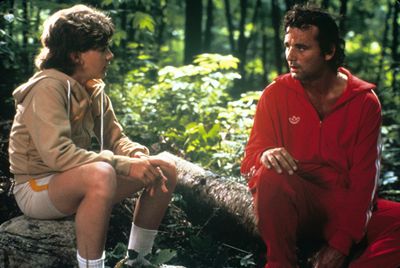
Meatballs is a very silly movie with a very important, kind (and apparently subversive) core message: if you can make one good friend, you’re doing very well. That group identities have certain undeniable values, but our intimate relationships are what keep us grounded, and help us to discover and more completely be who we are.
I am so glad my kids are not in the public schools, anymore, but if they were still little, this latest bit of nonsense would be yet another reason to consider homeschooling.




Well, I keep referring this to folks, and I know at least two other sites are doing it, too– so maybe more than you thought, SJG.
Re: the value of friendship, there was a nice aside in the Pope’s general audience talk about St. Thomas Aquinas on June 2 (probably a preview of stuff he’ll say about Newman). I bolded some of it.
He was assisted in the composition of his writings by… his confrere, Reginald of Piperno, who followed him faithfully and to whom he was bound by a sincere brotherly friendship marked by great confidence and trust. This is a characteristic of saints: they cultivate friendship because it is one of the noblest manifestations of the human heart and has something divine about it, just as Thomas himself explained in some of the Quaestiones of his Summa Theologiae. He writes in it: “it is evident that charity is the friendship of man for God” and for “all belonging to him” (Vol. II, q. 23, a. 1).
Left wing maniacs like Obama and his followers can never just let things be the way they are. They always must be changed, disturbed in some way. I think deep down they are afraid of “being still” and knowing that God is God.
Correct me if I’m wrong, but way back when (19th, early 20th centuries) didn’t certain religious orders and boarding schools run by them used to discourage or forbid “particular friendships” among the nuns/monks or their students, on the grounds that it would distract them from their prayer, studies, or work, or lead to favoritism?
–Is there something wrong with parochial school as an alternative to public school? Granted there are good and bad parochial schools too.
Yes, the parochial school is no longer an alternative at all. The teachers come from the same ed schools as public school teachers. The administrators comes from the same schools and from the public schools. Their faith formation is practically nil in most Catholic schools, because their parish faith formation is practically nil, too. There is nothing specifically Catholic about the actual education–they don’t see how Catholicism should inform their choice of curricula, textbooks, teachers; they don’t see how Catholicism should inform their virtues, behavior guidance, academic demands, etc.
In parishes in my urban area, the priests are only in one parish 12 years, max. Rectors might last that long. Most associate rectors/2nd priests last 2-3 years at most before moving on. But parochial school administrators outlast them by many many years–they know they merely have to hold out, and the parish priest’s plans will come to naught.
Elaine,
I think you are right at least about religious orders; I don’t know about the schools. But I always thought that it was part of the discipline of religious community life, that such friendships were a good thing (like marriage) that the members chose to give up for the sake of becoming more united to the community. In other words, religious giving up particular friendships reflected the idea that people living in the world should have them.
Needless to say, a school is not the same kind of community as a religious order, and the pupils have no choice whether to belong to it.
My main question about this article, though, is: how representative is it? One expensive country-club private school is not a national trend.