

 Sometimes it feels like supernatural is a dirty word. It’s as if believing in anything unexplainable makes me a doubter of science at best, and delusional at worst. I love science, and I generally believe the things scientists and other informed people tell me. The Earth is not 6000 years old and it is getting hotter, there’s no disputing a whole host of things out there. However I’ve had some really amazing experiences over the years, experiences that just can’t be explained by conventional means. I believe in the supernatural, and by the definition of the word, any other believer in the gods (or even just “a god”) believes in the supernatural too.
1: of or relating to an order of existence beyond the visible observable universe; especially : of or relating to God or a god, demigod, spirit, or devil
2a : departing from what is usual or normal especially so as to appear to transcend the laws of nature
2b : attributed to an invisible agent (as a ghost or spirit)
I believe in the gods, I believe in magic, I even believe in ghosts. I used to believe in the Loch Ness Monster and I still desperately want to believe in Bigfoot. Life is more interesting with a little bit of the unknown in it. In all seriousness, I’m usually a skeptic, but I’ve had just enough of the extraordinary that it’s impossible for me to dismiss the supernatural.
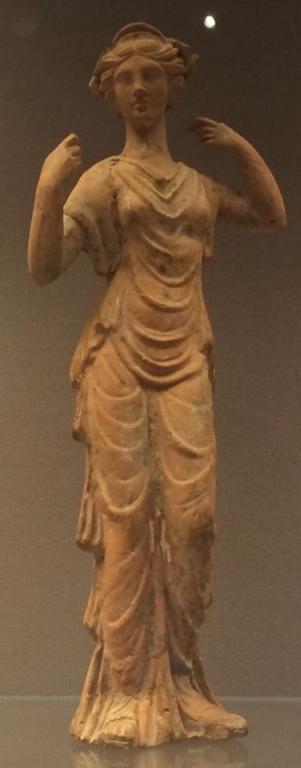 I’ve Experienced the Gods My main attraction to Modern Paganism has always been deity. I love the gods and think they are real and mostly distinct beings worthy of honor and respect. Like most people I’ve had my doubts over the years, but when I’m reminded of their reality it hits hard. I’ve been in circles where we’ve drawn down the Moon and have witnessed people I know intimately turn into something (or someone) else completely.
I’m sure the skeptical out there can rationalize such experiences in a variety of ways but when you watch your partner of sixteen years leave her body it’s hard to simply explain away. There’s also the energy and awe that comes with a good drawing down, and it’s all stuff I don’t have a natural explanation for. When my wife draws down the Lady she draws down the Lady and I don’t believe it’s anything less or more than that.
What’s extremely interesting about some of these experiences is that our interactions with certain deities seem to match up with the experiences others have had. At a recent Ostara ritual we called upon Eostre, not exactly sure what we would get. A guest at our circle told us that “our” Eostre acted just like the Eostre she saw summoned the previous week at a different ritual. I’m sure some will simply explain that away, I just take it as further confirmation that the gods are real and interact with us.
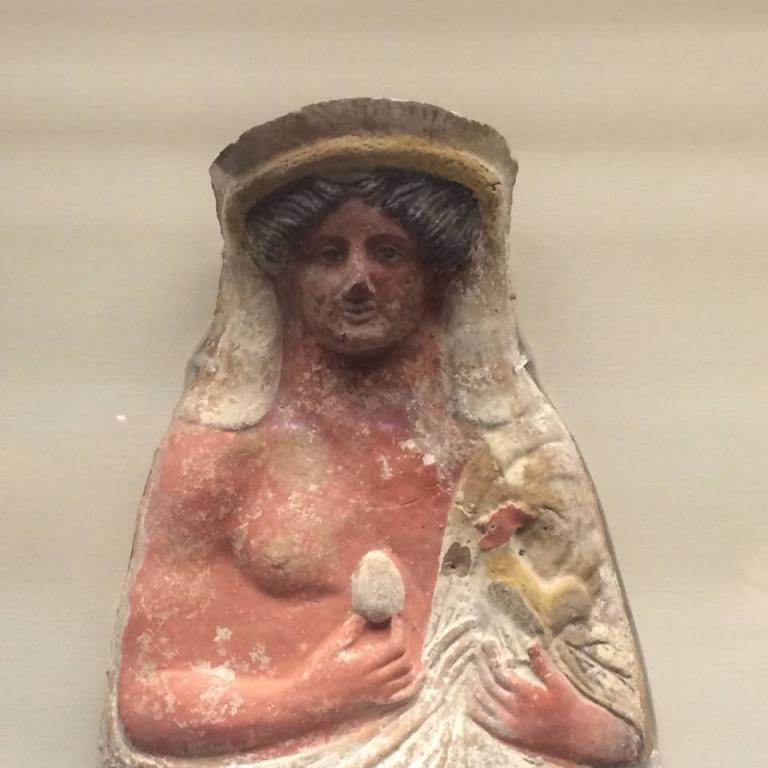 The Gods Listen It was back in December of 2011 and my wife were at a favorite pub preparing to do some holiday shopping and discussing whether or not to renew the lease on our town house. I was against it, I’m a “house” sort of guy, but finding an affordable place to live in the Bay Area is much like looking for a needle in a haystack. My wife utters a prayer to Dionysus as we prepare to leave the bar and downs a shot of whiskey in honor of our favorite Olympian. Before we go I stop by the little boy’s room and she uses that time to call a shady looking number on Craig’s List about a house for rent. Her prayer? For a new place to live that would make us happy. We signed a lease for that house three days later and moved in the following month. My life isn’t always so charmed, but we really felt as if Dionysus was looking out for us that day.
I Had a Very Real Experience With a Ghost I’ve written about this before, but I had a very real experience with a ghost while I was in college. This wasn’t just a bump in the night either or someone “channeling” a spirit, this all involved my sense of touch. It was 90 degrees (F) that particular night with about 80% humidity (I lived in a town built on a swamp next to the Mississippi River). There were no windows open in our dining room where we conducted our seance so imagine my surprise when something ice-cold slithered over my wrist and into the center of the table my friends and I were gathered around.
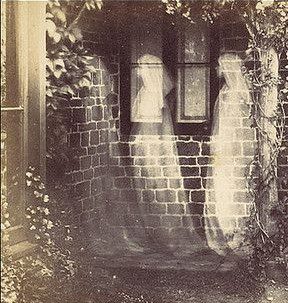 I wasn’t the only person to feel the cold crawl over their wrists. The guy I was holding hands with looked at me a mili-second after the spectral presence passed over me and said “Did you feel that!?!” Most ghost stories can be explained as tricks of light or whatever, but that icy-cold touch can’t be explained to my satisfaction. Was it a ghost that night? I think so. Can I prove it? Of course not, but it’s made me slow to dismiss other ghost stories out of hand. (Junk like Ghost Hunters is another story entirely.)
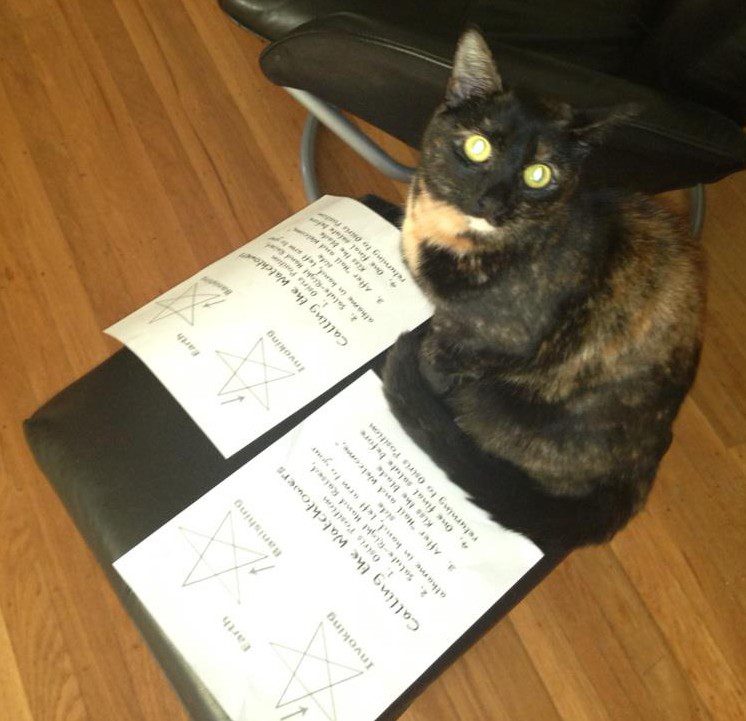 Magic Works Magic won’t cure cancer and it won’t win you the lottery, but in certain circumstances it seems to work very well. Need employment or a change of direction? Well in my house and in my circle we’ve had some pretty amazing success stories. Anytime I’ve found myself floundering I let my wife direct the spell and begin preparing myself for some real results. After one spell I ended up managing a coffee shop (a job I truly loved) for the next ten years. More recently a “job spell” got me a book deal. Magic requires work on our end of course, you can’t just sit there and wait for things to happen-you have to be proactive, but that little bump of energy out into the greater universe can produce real results.
The more one practices and the more spell work they do the stronger the magic they weave too. Being actively engaged with a coven that works magic every two weeks has made my life better. My writing has improved by leaps and bounds and my self-confidence has increased as well. Rituals and understanding have also improved for the better. Raising energy and directing it into my life has produced positive outcomes. Is this all just the result of wishful thinking? Does it matter? I’m getting results, that says to me that magic works.
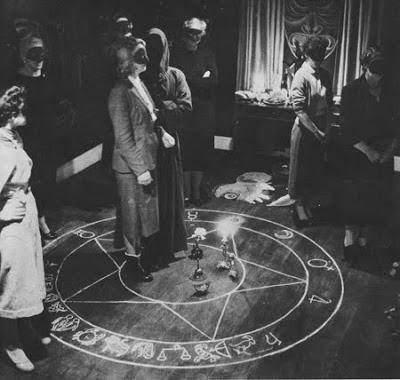 Rituals do Produce Energies Over the years I’ve noticed that a well cast circle seems to heat up faster than normal space. It’s possible that’s all the result of dancing and chanting in the circle, but I’m always surprised at how quickly the temperature drops back down to normal the moment we release the circle. An experienced coven-mate of mine once said “you can tell the circle has been cast well when the temperature in ritual space rises twenty degrees.” I had never thought of it that way, but she was right.
It’s not just the raise in temperature that makes me think about the circle and energies, it’s a whole host of experiences. Two years ago at Samhain I was leading a large ritual at a local Masonic Hall. Even before the ritual started our “Hall of the Dead” felt like it was wrapped in a thick blanket of spirit. After two practices that afternoon it felt as if the our beloved dead were already with us, a good two hours before the start of our rite. I wasn’t the only one to feel that blanket either, everyone working with me on the ritual commented on it.
A few years before that I had been asked to lead a “PG-13” Pan Ritual at a large Pagan gathering. Trying to create a mostly tame Pan ritual was a challenge but I think it all worked out. When we were done with the ritual I had a few people I really respect come up to me and say “Wow! I could really feel the Pan energy.” Thinking back on the ritual I felt it too, and the next morning I heard some pretty awesome stories about some of my ritual goers and their amorous experiences. What we do in ritual has an effect, and the energies we raise are real.
It’s easy to get lost in cynicism . . . .but Samhain-season always reminds me of just how weird, wonderful, and powerful my Pagan experience has been over the years. From seeing my High Priestess literally glow in the circle to feeling my ancestors and departed loved ones near me once more the supernatural has been a part of my journey for the last twenty years. Perhaps some can explain away those experiences without the supernatural, but I know better.









 Ad-Free & Subscriber Log-In