A modern Pagan perspectivePosts RSS Comments RSS

Archive for July, 2009

A Few Quick Pre-Lammas Notes

Before we head into the holiday weekend, here are a few quick news items I’d like to share with you, starting off with a very sympathetic (with some slight inaccuracies) article from the Charleston City Paper about being Pagan in South Carolina.

“…one of the problems with being a spiritual minority in America, especially in a culturally conservative state like South Carolina, is that you and your religion are frequently misunderstood by the population at large. Pagans and Wiccans, one of the many groups in this broad religious category, have long been associated with casting spells, riding broomsticks, and otherwise committing godless mischief. From Macbeth to Bewitched to Charmed, they have been the source of terror and spoof — as well as the object of ridicule and persecution. For that reason, many local Pagans remain undercover, or — to use the Wiccan vernacular — they choose to stay in the broom closet.”

They go on to interview several local Pagans, the chair of the Lowcountry Council of Alternative Spiritual Traditions, and even touch on the saga of South Carolina resident Darla Wynne, who successfully sued the town of Great Falls over the matter of sectarian invocations (and garnered 32 votes in her bid for a seat on the Town Council in 2008). Nice to see a journalist go to several sources and local groups to get a broader journalistic picture of modern Paganism.

Meanwhile, in New York, park rangers and the head of a local watchdog group are freaking out about animal sacrifices in Queens. Filled with your usual cult-hysteria sensationalism, the topper is the inclusion of an incident that seems to have nothing at all to do with Vodou, Santeria, Satanism, or the occult.

“Geoffrey Croft, who runs the watchdog group New York City Park Advocates, said he has stumbled upon gruesome examples of animal sacrifice in at least five city parks … “It’s a public-health issue, it’s disgusting, and it freaks people out with the whole voodoo thing,” said Croft … In another grisly discovery, Croft said he once found the dead carcass of a dog that was shot and eaten by a man.”

What does that have to do with animal sacrifice? Seemingly nothing, but why should that stop “journalists” James Fanelli and Rich Calder from throwing it in there anyway. Why let things like context and responsible journalism get in the way of a good guy-eating-a-dead-dog story? It goes without saying that no-one who knows anything about African diasporic religion or the occult were quoted or consulted for the story.

In a final, and more positive, note, today is the start of the massive three-day Faerieworlds festival right in my back-yard of Eugene, Oregon. Expected to draw thousands, it is a celebrations of all things mythic and magical.

“In just seven years, Faerieworlds has become the premiere mythic music festival on the West Coast. Featuring world renowned fantasy artists, Grammy-award winning musicians, spectacular performances and entertainers, an amazing arts and crafts vending village, thousands of fans from around the globe travel each year to Eugene, Oregon to experience the magic of Faerieworlds. We believe that the revitalizing, healing and transforming spirit of faerie is alive and moving actively in our lives: faerie inspires and provokes, heals and reveals, illuminates and transcends. At Faerieworlds, we invite you to enter the Realm as your magical self and release the beautiful, magical faerie spirit that’s inside you!”
Of special note this year is that European Pagan band Faun is making their US debut as musical headliners for the festival! I’m a big fan, and I’m hoping to attend their second performance on Sunday. You can read a story about the festival in the the local Eugene paper out today.
That’s all I have for now, have a great day!

6 responses so far

Why is Robert Wright Writing About Neo-Shamanism?

You have to wonder if Slate.com is getting somewhat hard-pressed to find subject matter and writers for their regular “Faith-Based” section. How else to explain them getting journalist Robert Wright, author of several game theory/evolutionary psychology-boosting books, including his recent “The Evolution of God”, to write about Neo-Shamanism? Wright, who seems to be a proponent of the outmoded and inaccurate idea that monotheism is a more evolved form of belief than polytheism (Publishers Weekly points out that he uses a “naive and antiquated approach to the sociology and anthropology of religion”), is so eager to debunk popular myths about shamans that he makes some rather sloppy assertions right out of the gate.

“The quotes come from Leo Rutherford, a leading advocate of neo-shamanism, which is a subset of neo-paganism, which is a subset of New Age spirituality. But the basic idea—that there was a golden age of spiritual purity which we fallen moderns need to recover—goes beyond New Age circles.”

While there is certainly some significant overlap between modern Paganism and Neo-Shamanism, the latter isn’t a “subset” of the former. Nor is modern Paganism a subset of New Age spirituality. These are all distinct religious/social movements with different starting points, ideologies, and goals. Wright is confusing the overlap of practitioners and subcultures (and the tendency of some academics to lump them together for the sake of convenience) with some sort of neat nesting-dolls order of New Religious Movements. Meanwhile, before Wright talks about all the indigenous shamans who were fakes and confidence men, he wants us to know that he isn’t trying to offend.

“But before I start, I want to stress two points: 1) I think it’s great for people to find spiritual peace and sound moral orientation wherever they can, including neo-paganism; 2) I don’t doubt that back before Western monotheism took shape there were earnest seekers of a “holistic vision” who selflessly sought to share that vision.”

So big of him, don’t you think? Despite admitting that some shamans may have indeed been honorable and wise, he still wants to point out that some were not. As if human nature hasn’t taught us that some people, no matter how exhaulted their status, can still take part in some very real moral failings and abuse their power. In fact, Wright pretty much admits that there may be some real value to various shamanic ideas and practices (he “praises” them by comparing their worldview to followers of early Abrahamic religions), he just wanted us to take off our rose-colored (shamanic) glasses.

“I’m for that! In fact, I once did a one-week Buddhist meditation retreat that gave me just that feeling. And there are traditions within Judaism, Christianity, and Islam that are big on oneness. I recommend trying one of them—or trying neo-shamanism. But if you try neo-shamanism, don’t be under the illusion that you’re helping to recover a lost age of authentic spirituality. Religion has always been a product of human beings, for better and worse.”

So to sum up, Neo-Shamanic adherents (who are a subset of Pagans, who are a subset of New Agers) need to remember that some indigenous shamans were fakers and frauds, but really, there is some  (early Abrahamic-esque) wisdom and good stuff to be found there. Heck, “ordinary consciousness could use some transcending”! So I guess now that the Neo-Shamans (not to mention the traditional indigenous shamans) have been taken down a peg by Wright, those crazy diamonds can all shine on. I have to wonder, was there really a point to this article? Did Slate.com actually pay him to just ramble on about animal bladders full of blood and how often shamans got lucky? Of all the topics he could cover, why was Robert Wright writing about Neo-Shamanism?

6 responses so far

Are Cascadian "Nones" Worshiping Nature?

The past couple years have given much food for thought to those who are interested in the state of religion in the United States of America. In 2008 you had the release of the Pew Forum’s U.S. Religious Landscape Survey, and then at the beginning of 2009 you had Trinity College’s American Religious Identification Survey data from 2008. Both not only showed an ongoing increase in the population of modern Pagans, but that the “religiously unaffiliated” or “nones” now claim around 15% of our total population. But are the “nones” really not religious? While the Pacific Northwest is only second to New England in the percentage of “unchurched” adults (hovering around 25%), some assert that the Cascadian “nones” are actually deeply spiritual and look to nature and the New Age as inspirations in crafting their own belief systems.

“According to the just-published “Cascadia: the Elusive Utopia.” … a lot of these “nones” in the Pacific Northwest are actually very spiritual, walking a path of their own making, but not into organized religions and churches. Sociology professor Mark Shibley of Southern Oregon University wrote the lead essay called “The Promise and Limits of Secular Spirituality in Cascadia.” “This region is different. The people here are not as connected to religious institutions,” he says. The alternative spirituality here shows itself in two main ways, Shibley notes: “nature spirituality,” such as you see in the secular environmental movement, and the more well-known New Age spirituality, where the gaze is shifted inward.”

If thousands of Cascadian residents are drawing on “nature spirituality” and “New Age spirituality”, you potentially end up with a whole lot of (what we would probably recognize as) Pagans who just aren’t bothering to label themselves that way in surveys. As if to confirm that thesis, the Ashland Daily Tidings rounds up a Pagan priestess and three other residents of the Pacific Northwest to talk about their beliefs. At times, it becomes very hard to differentiate the Pagan answers from the (ostensibly) non-Pagan answers.

“Absolutely. There are lots of different sources [for the spiritual and sacred]. Nature is the core. It’s earth-centered, an awareness of things greater than me, that science can’t explain.”

That’s not the Pagan priestess, that’s Dominick Della Sala, Ph.D. – chief scientist, National Center for Conservation Science and Policy, in Ashland. Sala was raised Catholic in Brooklyn, NY. Perhaps merely living in the Pacific Northwest makes one predisposed to see the sacred within nature, which would explain why Oregon (and the Pacific Northwest in general) is such a Pagan mecca (I moved here after all). So when we parse those surveys to get an idea of how we’re growing, “we” might be far larger than we expected in places where the “nones” thrive. For more on the spirituality of the Northwest, you might want to pick up “Cascadia: The Elusive Utopia: Exploring the Spirit of the Pacific Northwest”, as mentioned earlier in this post, for more insight. Now if you’ll excuse me, I’m going to continue watching the sun rise in Eugene.

4 responses so far

(Pagan) News of Note

My semi-regular round-up of articles, essays, and opinions of note for discerning Pagans and Heathens.

The BBC Radio 4 program “Beyond Belief” devoted yesterday’s program to Witchcraft, ancient and modern, complete with unnecessary links by the host to the latest Harry Potter film.

“Ernie Rea and guests discuss the beliefs underpinning witchcraft. Do modern witches have anything in common with their forebears? And, have the Harry Potter books and films inspired greater interest in the craft?”

Among those interviewed are Christina Oakley Harrington of Treadwell’s bookshop in London, who handled the rather salacious questions of Ernie Rea quite well. You can listen to the program online, here.

Over at the Washington Post’s “On Faith” blog, Pagan panelist Starhawk weighs in on Jimmy Carter’s recent stand against the religious justifications for discrimination against women, pointing out a basic assumption prevalent through much of modern Pagan thought.

“Why does it matter if women can hold positions of responsibility and leadership in spiritual and religious life and communities? Many years ago, Mary Daly wrote: “If God is male, then the male is god.” That which is sacred to us is what we most deeply value and care about. It sets the pattern for what we value, all down the line. So if our only images of the sacred are male, and all positions of spiritual authority are held by men only, inevitably women will be devalued.”

One of the great disconnects between women (and men) attracted to various forms of Paganisms and the patriarchal monotheisms is the role of women. Despite our many flaws, feminine conceptions of the divine aren’t placed into a subordinate (or non-existant) role, and women are given full access to positions of spiritual leadership. This assures us that while we may take an occasional misstep, the institutional discrimination and devaluing of women won’t be among them.

In an update to a story I mentioned on Saturday, the Vodou priest at the center of a mysterious death during a cleansing ritual breaks his silence and speaks to the press.

“Authorities are awaiting results of a toxicology test to determine the cause and manner of Hamilton’s death, which has not been deemed suspicious. No charges have been filed, and Salva, who goes by “Houngan Hector,” said he is “100 percent confident” there was no wrongdoing on his part. Salva, soft-spoken and polite with a constant smile, said that no drugs were involved in the spiritual cleansing called the Lave Tet, but that small amounts of rum sometimes are consumed. “Maybe a sip,” he said, but he added that Hamilton had “passed on the rum.” …  “She was happy, very positive,” he said. “She seemed very fine as far as everyone knew.” What happened about 11 p.m., Salva said, is the same scenario he told dispatchers during a frantic 9-1-1 call. “She was taking a nap and we woke her up to see if she was hungry, and she was nonresponsive,” he reiterated yesterday. “We kept calling her name and she wouldn’t respond.” The other participants in the ritual could not be reached for comment. Salva declined to provide their names.”

The report also says that Hector Salva did contact Lucie Marie Hamilton’s mother (something friends of Lucie criticized him for not doing), and sent flowers to her funeral. Due to the firestorm of press, and negative speculation from neighbors, Salva is moving out of his current home to a new location.

In a less serious update to a previous post, the folks at Wookey Hole caves in Somerset, England have found their new professional full-time witch, Carole “Carla Calamity” Bohanan.

In the end, the judges opted for 40-year-old estate agent Carole Bohanan, of Shepton Mallet, Somerset. She will resign from her job and go by the name of Carla Calamity. Carole – or Carla – said: “I am going to be a great witch. All it takes is a little bit of magic and a little pizzazz. It’s a natural progression from my old job as an estate agent. I have been using my witching skills to sell houses for a long time.”

Bohanan apparently won over judges with a song about Wookey Hole and throwing candy snakes to the audience. While many “real” Witches seemingly applied for the job (you can see some pictures, here), there is no official word on if “Carla Calamity” is “one of us” as it were.

In a final note, Louis A. Ruprecht at Religion Dispatches ponders the Christian roots of the New Age movement, specifically “The Aquarian Gospel of Jesus the Christ” by Levi H. Dowling. This 1908 publication set the stage for numerous trance-induced gospels to come and helped spark interest in the new idea of an “Age of Aquarius” to come.

“Among the papers Levi Dowling left at his death was one explaining his conviction that the Earth and our Sun were entering the Dispensation of Aquarius, a literal New Age. Aquarius is an air sign, he noted, and the triumphs of the twentieth century were destined to be aerial rather than watery. Think of the Wright Brothers; think of humanity’s first tentative steps into outer space.”

While the “New Age” is often thought to be something that smacks of Paganism (or Eastern mysticism), it’s good to remember that Christianity had a key role in the formation of the “New Thought”.

That’s all I have for now, have a great day!

2 responses so far

Thorn Magazine and the Future of the Medium

The latest issue (#3) of Thorn Magazine is now out, featuring wonderful writing from Thorn Coyle, Sannion, Erynn Rowan Laurie, Phillip A. Bernhardt-House, Lupa, and yours truly (among many others). Of special note is an article on the future of Pagan journalism and magazine publishing by Jack Lux and Michael Night Sky. In it, the authors interview Ann Newkirk Niven about her recent decision to merge PanGaia and newWitch (into the new Witches and Pagans), Oberon Zell about the up-and-down history of Green Egg, and Keter Elan, former editor of the now-defunct Mezlim magazine. In their conclusion, Lux and Night Sky wonder if Pagan publications are stuck in a transitional time due to the influence of the Internet.

“…the purpose of a magazine changes to suit its audience, and Pagan journalism may be fixating on a role for which it is no longer useful … perhaps the most useful goal of Pagan publications is no longer to disseminate information about outer limits, but to delve deeper into the ideas of the past forty years and fill the gaps between them. With the Internet and the growing festival network, magazines are best suited not for community building, but for culture building.”

In these recessionary times, where niche magazines are folding left and right, it may be hard for the surviving Pagan publications to successfully re-position themselves and weather the economic storm. Which brings us to the sad news that Thorn Magazine is ceasing print publication after its fourth issue.

“…perhaps inevitably, certain market forces have caught up with us at last: the declining economy and the ailing state of print journalism in general. Despite strong enthusiasm for and interest in the work we’re doing, businesses have been unable to afford extra expenses for advertising and potential readers have had their pockets stripped by the Great Recession. Coupled with the usual enormous cost of printing and the spiraling postage rates, these circumstances have finally cornered us into an inescapable conclusion: we no longer have the cashflow available to continue printing this quarterly magazine. The October 2009 issue, Vol 1 Issue 4, will be our last in print.”

They do note that Thorn will survive in an online-only format, with quarterly “issues” and monthly updates, but it remains to be seen how successful that new incarnation will be. As a columnist for Thorn I certainly wish them all the best but the question has to be raised, if a Pagan magazine of such high quality can’t survive for more than a year, what does that say about the appetite for new magazines among the larger Pagan community, and the ability of Pagan businesses to support such endeavors with ad revenue? How many full-size quarterly magazines can our community feasibly support? Will the revamped Witches and Pagans push to the forefront of Pagan publications? Or will it too run into problems?

While I’m certainly a proponent of the Internet for disseminating information and generating discussion, I would find it sad if the world of Pagan publications were to continue to contract. Not everyone reads the Internet, and without a high-quality and well-edited inter-generational touchstone publication we could see the level of discourse within our communities suffer. This doesn’t mean I excuse publishers who remain hostile or obtuse to the new economies and realities of a post-Internet publishing world, only that print vehicles do serve, and should continue to serve, a purpose to modern Pagans. So good luck to the new online-only Thorn Magazine, and the soon-to-be-launched Witches and Pagans, it looks like they’ll need it.

2 responses so far

Another Look at Wicca in India

Sangeeta Krishnan (aka Ashtoreth), an Indian Wiccan, has written in to let me know that she (and the religion of Wicca) has been been profiled twice in the last week. First for the Mumbai Age (link to full article, here), and then for the Times of India (link to full article, here).


A clipping from the Times of India article.

“Sangeeta Krishnan, whose collective is called Astral Hub, screens films like “The Secret”, plans day trips to Madh Island with psychic games and Maypole dances, and initiates debates like the forthcoming one called Harry Potter versus Real Witches. “Wicca is a calling and I’d say there are about 50 dedicated Wiccans in Bombay,” she says. And the headcount may keep growing as Wiccans bravely come out on social networking sites.”

The article also gives credit to Ipsita Roy Chakraverti (whom I’ve covered at this blog previously) with bringing Wicca in India out of the “Indian broom closet” in the 1980s, and interviews an Indian Wiccan who received her initial training from the US-based Witch School. While the number of Indian Wiccans is still very small, the tone of these articles very much reminds me of the early profiles of Wicca in Britain and America, and we all know how our population exploded in the years after the faith was introduced in those countries.

Will later generations of Wiccans in India look towards Chakraverti and Krishnan the way we now look at figures like Alex Sanders or Starhawk? Whatever the outcome, it looks certain that modern Paganism has indeed found fertile soil among this predominately Hindu country (which brings up all sorts of interesting questions about Indian Pagans and Western Indo-Pagans), and that Wicca has truly become a world religion, with thriving communities of practitioners located across the globe (in Brazil, South Africa, India, Russia, Australia, and Mexico for instance). When the modern Pagans go to the Parliament of World Religions in Melbourne this December, they can truly claim that they have a personal stake in what happens outside the Western countries we are normally associated with.

2 responses so far

Back in the Saddle Again…

Now that I’ve safely arrived in the Pacific Northwest (the journey was only a little like this), unloaded my relocubes, and started the long and arduous process of unpacking my books, it’s time to resume my duties here at The Wild Hunt. I would first like to deeply thank all the wonderful folks who filled in at my blog while I was gone, they made my life much easier, and raised the bar for the writing on this blog in the process. I hope you’ll continue to follow their work at their own blogs and web sites. As for me, I’ve got a lot of catching up to do, it’s amazing how much Pagan news you can miss in eleven days. So here’s a quick catch-up of some news of note that emerged during my sojourn.

Professor Ronald Hutton (author of “Triumph of the Moon”), scholar of modern Witchcraft, Druidry, and the English ritual year, has been named a Commissioner of English Heritage.

“The Minister for Culture has appointed Professor Ronald Hutton as the historian to sit on the commission that governs English Heritage. The commission has overall charge of the affairs of the official national body concerned with heritage, and its members act as statutory advisors to the Secretary of State for Culture, Media and Sport (and so effectively to the government) in all matters that involve the understanding and conservation of England’s past. As such, the appointment carries with it a broader responsibility of acting as an advocate for the importance of history in national life. It will commence in October and last for four years with the possibility of renewal.”

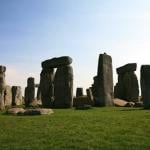
Pagans for Archeology called the news “fantastic” and a “well-deserved honour”. To have such a sympathetic voice for the modern Pagan movement advising the government on England’s heritage could change the existing dynamic over issues of access and preservation for sites like  Avebury and Stonehenge.

Speaking of Ronald Hutton, he makes a brief appearance in a preview for a new documentary about Druids (ancient and modern) produced by the Holistic Channel (no doubt to be re-edited soon for a History Channel program).

This, among other recent developments we’ll get to in a moment, have really peeved off a British academic blogger who calls for more discrimination of modern Pagans (they must, in his mind, prove themselves worthy of “respect”), and resorts to quite a bit of name-calling. He also describes Ronald Hutton as Paganism’s “brain in a jar”, excusing the rest of us from developing critical thinking skills. I personally think my “intellectual depth and rigour” is doing just fine.

Before we leave the isle of Britain, I would be amiss in not noting the fact that there are now enough Pagan police to necessitate the formation of a Pagan Police Association, complete with time off for the various high-holidays (oh, and two official Pagan chaplains serving officers on the force).

“Most recently, the Pagan Police Association has been created, allowing police officers to explore their beliefs with other officers. Alongside this, in some forces, officers are being allowed the opportunity to move away from traditional Christian holidays. In practice this means that Pagan officers, rather like those from more mainstream faiths, can take their holidays on the dates which support their beliefs.”

Not everyone is happy about this, but the growing prevalence of Paganism in Britain seems unavoidable lately. Even the Scottish government has more Pagan civil servants than it does Jews, Sikhs, or Hindus. Maybe the British soul really is Pagan.

Turning our eyes back to the USA, specifically Philadelphia, sensationalism seems almost unavoidable in the case of a trans-gendered woman who died while at a three-day Vodou cleansing ceremony in New Jersey. While no charges have been filed, and no apparent wrong-doing has yet been discovered (nor did any harm come to the six other clients undergoing the same process), that hasn’t stopped the press from airing requests from friends of the deceased for “accountability” from “Houngan Hector” over the matter.

“Her friends there say they want answers and an apology from Salva, who goes by the name “Houngan Hector” on his Gade Nou Leve Society Web site. “I’m certain no one meant to hurt anyone, but she was in their care and there has to be some accountability,” said Randi M. Romo, executive director of the Center for Artistic Revolution, a Little Rock-based nonprofit agency for which Hamilton worked as a youth counselor. “They haven’t even contacted her mother.” No one answered at the door of the Loch Lomond Drive townhouse yesterday, and Salva, who claims he was initiated as a senior priest in Haiti, did not respond to e-mails for comment.”

Considering they may not know why she died, going around and taking responsibility for her death seems a little premature. Plus, with the press running headlines like “Voodoo became a fatal obsession”, and the health department and child services being called on them, I doubt the residents of that house are feeling like opening up. I wonder, if tests reveal that this poor woman died of a brain aneurysm, heart defect, or some other natural cause that had nothing to do with Vodou, will the Philadelphia Daily News vindicate Houngan Hector, or simply move on?

In a final note, for years many Pagans have been trying to separate themselves from the “New Age” label, but in an increasingly shifting economy and world, it looks as if  some New Agers, like The Edge editor Tim Miejan, want that seperation to happen too (much to the chagrin of some).

“Miejan favors articles on stress reduction and spiritual quests … But even Miejan’s open mind sometimes snaps shut. Channelers — people possessed by spirits of the dead — are out. So is the belief that reptile-like aliens have taken over the bodies of celebrities, including Queen Elizabeth and — according to one Web site — former Minnesota U.S. Rep. Bill Luther. Paganism? Out. “I am not saying that because paganism offends anyone,” Miejan said. “But it is a complete niche by itself.” Other New Age leaders are appalled. “He is excluding channeling? Yikes. Or pagans? He should not be doing that,” said Kathy McGee, editor of the Washington-state-based magazine New Age Retailer.”

Call it a result of the Oprah-fication of the New Age section, it’s all about personal growth (and “The Secret”) now, not Atlantean masters or Pagan gods. Those who want to keep Pagans (and Chiropractors, and organic farmers) under the “New Age” rubric are probably more concerned about a shrinking pool of markets to target, rather than if we truly belong with the newly-mainstreamed gurus of self-actualization.

That’s all I have for now, have a great day!

14 responses so far

Older Entries »