A modern Pagan perspectivePosts RSS Comments RSS

Archive for July, 2010

Music, Folklore, and the Esoteric

It’s no secret that I’m a fan of music that explores otherworldly themes, but in recent years it seems like I’ve had more company. Yesterday, I was struck by the fact that there are three separate books coming out in the coming months that address the seemingly ever-vibrant confluence between music, folklore, the occult, and nature religion. The first, “Seasons They Change: The Story of Acid and Psychedelic Folk” by Jeanette Leech explores psychedelic and acid folk’s birth, and its rebirth 30 years later.

“For 30 years it languished in obscurity, apparently beyond the reaches of cultural reassessment, until, in the mid-2000s a new generation of artists collectively tagged ‘New Weird America’ and spearheaded by Devendra Banhart, Espers and Joanna Newsom rediscovered acid and psych folk, revered it and from it, created something new. Thanks partly to this new movement, many original acid and psych folk artists have re-emerged, and original copies of rare albums command high prices. Meanwhile, both Britain and America are home to intensely innovative artists continuing the tradition of delving simultaneously into contemporary and traditional styles to create something unique. “Seasons They Change” tells the story of the birth, death and resurrection of acid and psych folk. It explores the careers of the original wave of artists and their contemporary equivalents, finding connections between both periods, and uncovering a previously hidden narrative of musical adventure.”

Many of these newer “freak folk” (sometimes called “wyrd folk”) artists explicitly explore the esoteric, like Fern Knight’s upcoming concept album centered on the Tarot, or events like Hip Death Goddess that mix Paganism, magic, and psychedelic folk into one package. Which brings us to the second book, Rob Young’s “Electric Eden: Unearthing Britain’s Visionary Music” that explores the “esoteric impulses” of Britain’s ever-renewing folk scene.

“While ostensibly purporting to be a history of that much derided (though currently fashionable) four-letter word, ‘folk’, “Electric Eden” will be a magnificent survey of the visionary, topographic and esoteric impulses that have driven the margins of British visionary folk music from Vaughan Williams and Holst to The Incredible String Band, Nick Drake, John Martyn and Aphex Twin. For the first time the full story of the extraordinary period of folk rock from the mid 1960s to the mid 1970s will be told in a book with the breadth of a social history touching on sonic worship, pagan architecture, land art, ley lines and ther outer fringes of the avant garde.”

In a recent editorial for the Guardian, Young talks about the “silver chains” that bind modern musical visionaries into a continuum with Cecil Sharp, the founding father of folklore revival, who believed that today’s musicians are “the last of a long line that stretches back into the mists of far-off days.” The same thinking that found pagan survivals in every dance, and allowed for the re-emergence of full-fledged Pagan religions into Britain’s (and eventually America’s) collective consciousness.

Finally, author Christopher Knowles proposes in “The Secret History of Rock ‘n’ Roll” that rock n’ roll concerts and dance clubs are our modern mystery religions, and the performers are fulfilling the ancient archetypal roles as gods and goddesses incarnate.

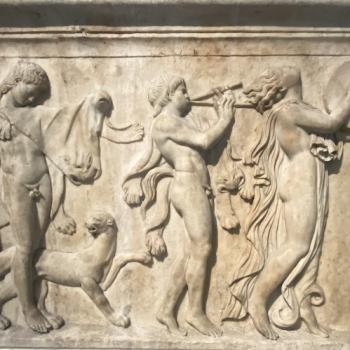
“Sex. Drugs. Loud music. Wild costumes. Pyrotechnics. These words all describe a rock concert or a hot dance club on a Saturday night, but they’re also equally appropriate descriptors for the ancient spiritual phenomenon known as the “mystery religions.” These ancient occult rites used many of the same trappings as rock ‘n’ roll — heavy drinks and drugs, loud, percussive music, outrageous ritual garb, and lots and lots of sex — to bring the initiate out of his or her mundane life and into the transcendent realm of the gods. In this book, author Christopher Knowles shows how, 2,000 years later, the mystery religions got a secular makeover when the new musical form called rock ‘n’ roll burst on the scene. The Secret History of Rock ‘n’ Roll traces the history of the mysteries — their rise, their fall, and their eventual metamorphosis into rock music and other myriad offshoots. In the process, he reveals how readers’ favorite rock bands fit into the same archetypal roles as the ancient gods.”

The work of Knowles, Young, or Leech wouldn’t surprise most folks operating within the modern Pagan communities, where we often discuss the pagan elements of folklore, weave the visionary into our music, or hold a “Morrison Ritual” at events. But what is exciting about these works is that it seems to hint that our subculture is quickly colliding with a much larger renewed creative impulse within a far broader creative underground. It could represent an new opening of our own creative efforts into new avenues of expression, new ways of operating, bringing renewal and new opportunities to both sides of the equation. When music turned visionary the first time around modern Pagan religions, and their creatives, were just finding their footing. Now, 30 years later, who knows what could happen when our paths cross again. I’m excited about the possibilities, and you can be sure that I’ll be covering these works as they are released.

No responses yet

Update on Spiritual Counseling Case and other Quick Notes

The Perils of Spiritual Counseling: It looks like U.S. District Judge Robert E. Payne isn’t going to issue a ruling in the case of Patricia Moore-King v. County of Chesterfield, Virginia at this time. Instead, Payne says both Chesterfield County, and Patricia Moore-King failed to failed to press for a final resolution on a local level before heading to court.

“Payne did not issue an official ruling, but said it seemed that neither King nor county officials followed through on her attempt to get a license and that she needed to press for a formal resolution of the dispute before going to court. “I want her to go back and do it right,” Payne said.”

So it looks like we’ll have to await a formal resolution on a local level, and I’m not sure exactly what that will entail. I’m not anticipating any forward movement on that front. Chesterfield County isn’t exactly what one would call “friendly” to alternative modes of belief. Even if she does head back to federal court, she may not like the outcome. Judge Payne was openly skeptical of her religious rights claims, saying she was the “the author of her own misfortune”, and openly questioning her reluctance to submit to a background check.

“Fortune tellers have fleeced people in the past,” the judge said. “… For all we know she’s been involved in chicanery elsewhere in the United States and doesn’t want her background checked.”

In other words, if you aren’t guilty of something, why shouldn’t you talk? The judge also seemed to agree with defense attorneys that her web site points towards her being a fortune teller, and not a “spiritual counselor”. It’s very likely this may end in a stalemate, or simply grind to a halt. We’ll see if Moore-King presses for a local resolution and tries to move forward with litigation again.

Empowering Tribal Nations to End Rape: Back in 2007 I posted an Amnesty International report that revealed shocking levels of outsider rape being perpetrated on American Indian and Alaska Native women. Later that same year the Senate Indian Affairs Committee heard the testimony of Indian women to start the process of drafting legislation to address the problem. Yesterday, President Obama signed the Tribal Law and Order Act which will give tribal law enforcement more tools and powers to patrol and mete justice on their own lands.

“The new law requires the Department of Justice to collect and share data on crimes that happen on tribal land that U.S. attorneys decline to prosecute. The new law also increases the maximum sentence that can be handed down in tribal court, now up to three years, and it provides more training to law enforcement officials on how to collect evidence in cases of sexual assault.”

Amnesty International is very pleased, as are various Native media outlets and writers. I’m personally very glad to see some forward movement on this issue, one that will hopefully reverse some horrific trends in Indian Country.

The Cosmopolitan Wing of the Tea Party? The New York Press does a spotlight on the Tea Party in New York, compares them with other factions of the movement, and finds them more cosmopolitan, less outwardly radical, than some of their brethren. Since it’s a spotlight of the Tea Party in New York, they spare a moment to discuss one its stars, openly Pagan New York City councilman Dan Halloran.

“Liberty is on the march,” Dan Halloran yells as he clutches a microphone in front of a gathered crowd inside Webster Hall. “Not only is it on the march, but liberty is kicking ass and starting to take names all over the United States.” … About 100 people cheered for Halloran, a self-professed Germanic pagan and a newly elected councilmember from Queens…

It’s an interesting look at the movement, and how wide-ranging it can be depending on where it’s located. Though it remains to be seen if it will coalesce into an enduring political force, or if the more moderate members can learn to get along with personalities like Rand Paul and Michele Bachmann.

That’s all I have for now, have a great day!

No responses yet

The Perils of Spiritual Counseling

The Associated Press reports that a federal hearing in Richmond, VA is scheduled today in the case of Patricia Moore-King v. County of Chesterfield, Virginia over local anti-fortune telling ordinances. I covered this case back in January, where I detailed the absurdly over-restrictive hurdles of practicing an “occult science” in Chesterfield County.

“The current zoning regulations are designed for just one thing, to discourage tarot readers, psychics, astrologers, and other practitioners of “occult sciences” from opening up a shop in Chesterfield. That licensing for this classification is more onerous than for a strip club or pawn shop, and relegates them to the “red light” district (not to mention the character references), tells you a bit about the priorities of the county.”

Patricia Moore-King (aka Sophie King, aka “Psychic Sophie”) has maintained throughout that she doesn’t identify as a “fortune teller” but as a spiritual counselor, and that the ordinances place an undue burden on her free religious expression.

The County of Chesterfield’s laws classify Ms. King’s activities as “the occupation of occult sciences” and therefore defines her as a “fortune-teller” (she does not identify herself as such), which subjects her to numerous restrictions including a background investigation, a criminal record check, review by the chief of police and other requirements related to her “character” and “demeanor” that are not required of any other religious or commercial enterprise within the County. These restrictions also do not apply to other religious or secular counselors, or even to persons “pretending to act” as fortune-tellers.

The County’s zoning code also restricts Ms. King’s activities to a zoning district that includes adult businesses, pawnbrokers, material reclamation yards, and vehicle impoundment lots, and forbids her from the zoning district where her current office is located and where other counselors are permitted. Ms. King is further subject to an additional occupation tax not required of other counselors. The Complaint states that “the negative treatment of ‘fortune-tellers’ is motivated by official hostility to individuals based on the viewpoint and content of their speech, and their spiritual beliefs.”

What’s important about this case is that it isn’t about fortune telling, mediumship, and other psychic services being completely banned (a practice that is becoming increasingly flimsy with each court case win), but about the restrictions local governments put on the practices when they are allowed. Tarot expert Mary K. Greer notes that in many places “legal” fortune-telling often goes with hand-in-hand with unreasonable licensing demands and humiliating hoops to jump through.

“…in Warren, Michigan, laws restricting fortune telling are becoming stricter, while San Francisco has an outrageously convoluted licensing system for fortune tellers. Such laws have little to do with actually protecting people from fraud (anti-fraud laws do this adequately) and more to do with ameliorating complaints and protecting special interests. Many states and city or county ordinances require licensing for fortune-telling, and they are very inconsistent with the range of fields that require such licenses as summarized here.”

While those “special interests” can be religiously motivated, they can also be about property values and keeping the “wrong” kind of businesses out of certain shopping areas. Whatever the motivation, these laws often place an unconstitutional burden on religious freedom and free expression. We should pay very close attention to this court case and its outcome, because the decision could have far-reaching ramification on fortune-telling ordinances across the country.

No responses yet

Haiti: Six Months Later

We’ve passed the six month anniversary of the 7.0 magnitude earthquake that devastated Port-au-PrinceHaiti’s capital. The quake killed nearly a quarter of a million people, and over a million are still homeless. After the quake, this blog tried to focus on the often unheard and maligned voice of Haitian Vodou within this tragedy. First we had to deal with triumphalist smears concerning Haiti’s history from a noted Christian pot-stirrer, then there was a veritable onslaught of of pundits, many of whom had never set foot in Haiti, opining on how Vodou was the main detriment to its forward progress and recovery.

“The kind of religion one practices makes a huge difference in how the community lives — for better or for worse. I suppose it’s at least arguable that the Haitians would be better off at the Church of Christopher Hitchens rather than as followers of voodoo.- Rod Dreher, Beliefnet

But amidst the wave of stunningly wrong-headed criticism,  there were also several pro-Vodou voices, within and without Haiti, that came to the fore. Most notably Max Beauvoir, the appointed “supreme master” of a coalition of Haitian houngans, who ended up being the de facto voice for Haitian Vodou to the Western press in the months after the quake. While I counselled reporters to remain aware of the decentralized nature of Haitian Vodou,  the much-publicized attack on Vodouisants by evangelical Christians in Haitiand its aftermath, created little room for nuance in those hectic first weeks (not to mention tensions over insensitive and controversial missionary activities). Sadly, the centrality of Vodou in Haitian society was often ignored, though there were the occasional nods in that direction.

So where are we six months later? While aid has been pouring in, there have been many accusations that reconstruction is going too slowly, or in the wrong direction, prompting a “blame game” amongst various parties. Longtime Haiti activist and advocate Dr. Paul Farmer says that the U.S. needs to allow Haiti to lead reconstruction efforts if the country is to survive, while Haitian-born human rights attorney and Vodouisant Ezili Dantò (aka Marguerite Laurent), echoing Farmer, says that some U.S. aid initiatives are more geared towards corporate profits than uplifting the Haitian people.

“Instead of enabling the millions of small Haitian farmers to become food self-sufficient by growing rice, millet, corn and a variety of fruits and vegetables, however, [U.N. envoy Bill] Clinton has announced that Coca-Cola will be running a project to use Haitian fields to grow mangoes for a new drink. In the last six months, a number of industrial parks have been built by foreign corporations to take advantage of Haiti’s $3-a-day minimum wage. The “new Haiti” after the earthquake is not much different from the old Haiti the United States has been attempting to bring forth for two centuries: a place governed by business-oriented Haitian technocrats who take their marching orders from Washington.”

There do seem to be growing signs of tensions between the struggling Haitian government and the United States, Haitian President Rene Preval has rejected U.S. Senate recommendations on holding an election for his successor, though an election date in November has been set (Preval is prevented from running again under Haitian law). It was noted that the National Confederation of Haitian Vodou had a hand in helping to select the eight-member Provisional Electoral Council. As to who will be President, that seems to be anyone’s guess. Singer and activist Wyclef Jean is supposedly mulling a run, though some Haitian commentators think he hasn’t met all the requirements to do so.

As for coverage of religion in Haiti, not much of it has focused on Vodou. Though there was a nice article from last week about a yearly pilgrimage to the Saut-d’Eau waterfall in the town of Ville-Bonheur, venerated both by Catholics and Voudisants for its healing properties.

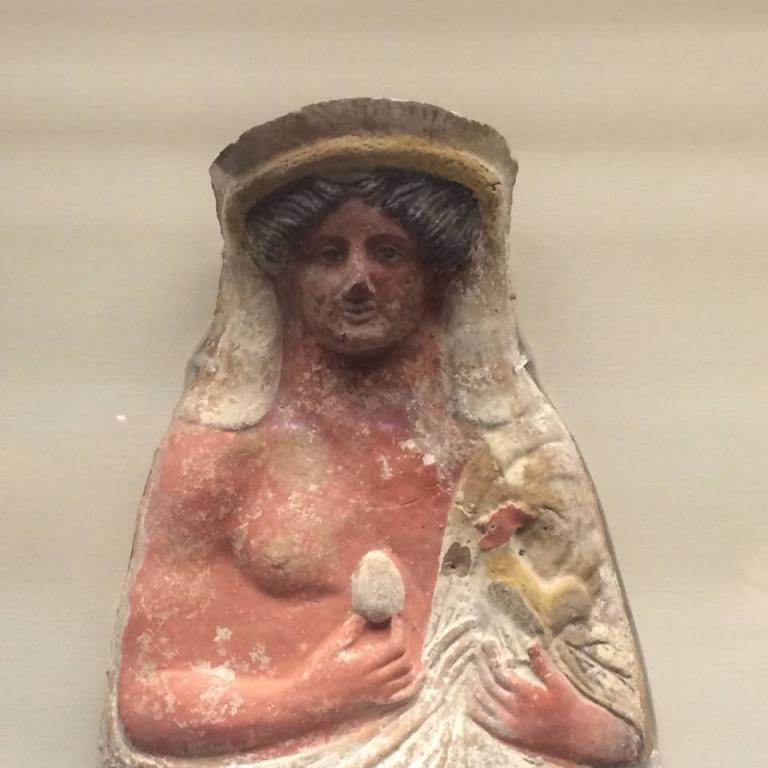
“She needs Erzulie Dantor’s help, she said. As she spoke of her wish, a crowd began to gather a few feet away. A female worshiper was calling Erzulie, hoping to invoke her presence. “The spirit that is here in the yard, come and grant me my chance,” the woman sang. “Erzulie Freda bring me luck. If there is a spirit in the yard, I will name its name and adore it.” As she sang, the pitch of her voice began to crack. She seemed to be in a trance, her lithe body falling onto the rocks. As others watched — now believing that Erzulie had possessed her — revelers rushed to her side, whispering their demands in her ears, sure they were speaking to the goddess.”

There were also some photo essays of the recent Plain Du Nord Festival, which draws thousands of Vodou practitioners. But beyond that, not much else.

Haiti is in a perilous situation. The massive tent cities are at the mercy of the weather should a hurricane hit the already-struggling country. Lawlessness and rampant sexual violence are an ongoing problem, and the country could easily collapse politically. If the birthplace of Haitian Vodou with its rich culture of arts and music is to continue, it is imperative that we don’t allow it to fall off our radar. It isn’t so much a question of donations now (though you can still do that), but of making sure those who hold the purse-strings chart the country on a course of renewal and self-sufficiency. To make sure the first priority are the people of Haiti, not the profits of outside interests. While I know we face our own problems at home, I hope we don’t lose sight of Haiti, especially at this crucial moment in history.

No responses yet

Child Witches in the UK and other Pagan News of Note

Top Story: Richard Batholomew points us to an investigative news program on Channel 4 in the UK that exposes an underground of naming and exorcising child “witches” in African evangelical churches. Reporter Juliana Oladipo, who went undercover as a “troubled teen” for the story, shares her frightening experiences amongst Britain’s witch-hunters.

“Throughout the undercover filming process, I was confused and physically harassed by large male pastors. I was screamed at and accused of being possessed by an evil demon. As far as these pastors were concerned, I was 15 years old and had been locking my bedroom door at night … The people that these unholy African priests are targeting are on the whole ostracised by society. As well as having immigration problems, they are often unemployed, uneducated and lost in the system. Is it a surprise then that children like ‘Buki’ (my character in the film) are so angry and disconnected from society? She and others like her are being blamed by pastors for being the cause of family grief because they are ‘witches’.”

The Churches’ Child Protection Advisory Service (CCPAS) has already issued a statement to The Guardian concerning witch-children and exorcisms in the UK.

“…viewers of the programme need to understand that, shocking as these instances undoubtedly are, huge progress have been made over the past few years in developing and implementing effective child protection policies in African churches in the UK. One example is The Safeguarding Children’s Rights initiative. Established in 2007 by Trust for London, this brings together key organisations and agencies tackling faith-based abuse in African communities in London. In addition to CCPAS, it includes AFRUCA, Africa Policy Research Network, the UK Congolese Safeguarding Action Group and the Victoria Climbié Foundation. All these organisations and agencies unreservedly condemn all instances of child abuse, in particular any church that brands children as witches or as in any way demon-possessed.”

The Evangelical Alliance in the UK officially condemned accusations of witchcraft in 2007, after a government report was issued in 2006 that found 38 specific cases since 2000. However, police and activists insist that the reported cases are only the “tip of the iceberg”, and that there are “at least” dozens of cases per year according to Debbie Ariyo, founder of Africans Unite Against Child Abuse (Afruca). Some in the UK fear a repeat of the Victoria Climbie tragedy, where a child is abused to death right under the noses of social services. What is clear is that the problem of “child witches” and the unscrupulous pastors who “exorcise” them for money and power isn’t some localized phenomenon ”over there”, but one that is increasingly “over here” as well. How long before a similar situation is uncovered in the United States, where witch-hunters are feted and funded by an array of churches.

The ‘Pagan Priestess’ Who Seriously Injured a Police Officer: The Australian press is eating up the story of a woman who dragged a police officer over 600 feet after being pulled over. The officer’s arm was stuck in the window after she rolled it up while trying to prevent him from taking the keys. It’s making headlines because the woman pulled over claimed that “your laws and penalties don’t apply”, and that she’s a Pagan priestess and healer.

Eilish De Avalon, 40, has pleaded guilty in the Geelong Magistrates Court to charges including recklessly causing injury and driving while suspended over the February 23 incident. De Avalon said she is tired of being labelled a witch because of its negative connotations, and would rather be known as a healer and an activist. ”I don’t wear the label of witch comfortably,” she told ninemsn. “A lot of witches prefer the title of pagan, or in my case pagan priestess. We are healers. We are psychics.”

I’m somewhat at a loss as to describe how clueless this woman appears. She’s a “healer” who seriously injured a cop after being pulled over on a suspended license for talking on a cell phone while driving? She’s tired of “negative connotations” while turning her faith into a massive joke by her actions and statements? Ms. De Avalon is being sentenced on August 6th, and I can only hope she refrains from issuing further statements and accepts her punishment with some dignity. I truly sympathize with my Australian brothers and sisters who now have to account for the media storm she’s created.

A Report from the PLSC: David Salisbury at Capital Witch has filed his first report from the 4-day Pagan Leadership Skills Conference in Richmond Virginia, featuring Selena Fox, Drema Baker, and Christine Woodman.

“Sunday night I got in from the 4-day NPLSC in Richmond, VA. I can’t even begin to write about it in a way that will do justice to the experience. I can honestly say I’ve never learned so many useful skills for leadership and life within a short amount of time. The speakers were incredible, the rituals were transforming, and the bonds formed will remain strong.

We opened with a dedication ritual honoring the apple and orchard Goddess Pomona, the matron diety of the conference. With Pomona, we reached within ourselves to plant the seeds of leadership and community. Mead created from apples blessed from the previous years conference sealed our libation and set the way for an enriching four days.”

There’s more to come in part 2 of his report, so keep an eye on the Capital Witch blog. My thanks to David for sharing his experiences with us, and I look forward to more DC-centric Pagan reporting.

Tears and Anger For Hypatia: T. Thorn Coyle and Star Foster from Patheos.com have recently seen Alejandro Amenábar’s “Agora”, based on the story of Hypatia of Alexandria, and both seem to have found the film deeply affecting.

“It was an interesting slide into emotion during the watching of Agora. One part of me was stating, “This is one way that humans are. This is about the loss of our humanity to mob rule.” Part of me was responding to this and nodding yes, another part was crushed at the fragile human response to easy violence, and yet another part was mourning our Pagan past. Connecting to all of these, I saw that I could choose to not experience the full force of an emotional response, I could follow the energy of my God Soul and watch humanity playing out this well worn story. I chose, instead, to say to my macrocosmic soul, “Yes, the patterns of humanity upon each other and the earth are varied, and yes, the rise of ignorance is a story as old as our DNA, but right now, I want to simply feel this!” Awash in emotion, I wept. I wept for the burning of the scrolls. I wept for the taking of the scientist and philosopher. I wept for her death. I wept for never having seen the great city of Alexandria at its height, before the Pagans fell into excess and the Christians took false power. I wept for all of those who failed to turn the tide of ignorance, political greed, and mob rule. I wept because tyranny had once again triumphed over freedom.”

Star’s review calls “Agora” one of the most important films the Pagan community has ever received. Another Pagan reviewer, Zan Fraser at The Juggler, agrees, saying that it’s “something that any Neo-Pagan should see”. I predict this will become one of those “must see” films that will be watched and shared within our community. Now if only I could see the dang thing! I can’t believe the art theater in my town hasn’t gotten it.

The Manchester Mona Lisa: In a final note, the Museum of Science and Industry in Manchester has picked its own local “Mona Lisa” to be featured in a new Leonardo Da Vinci exhibition. The winner is goth Witch Carol Hodge.

“Carol Hodge beat a 20-strong shortlist of men, women, dogs and photoshop curiosities to triumph in the online poll, posing against a smouldering backdrop with her faced caked in thick white make-up and black eyeliner, topped with a spiralling black hat.”

You can view the winning portrait, here. You can see some of the other entries, here. The show runs until September 12th. Congratulations to Ms. Hodge on being picked.

That’s all I have for now, have a great day!

2 responses so far

Of Henges and Heritage

From July 25th through August 3rd the World Heritage Committee of the United Nations Educational, Scientific, and Cultural Organization (UNESCO) is meeting in Brazil to consider additions to the list of World Heritage sites. In countries with limited resources or political will, having a site put on the World Heritage list can mean the difference between preservation and destruction (it can also mean welcome tourist dollars). Many of the sites that modern Pagans make pilgrimage to, or think of as their spiritual and religious heritage, the Acropolis, Delphi, Stonehenge, Avebury, and Bath, are all Heritage sites. This year Ireland’s government is nominating the Hill of Tara, along with several other sites, for consideration. In anticipation of this, they’ve debuted a new website featuring the already-listed and “tentative” Heritage sites.

The Minister [John Gormley] expressed his hope that the website would support tourism and increase both national and international interest in our World Heritage properties. “Tourism is a significant contributor to the Irish economy in terms of revenue and employment and Fáilte Ireland has identified heritage as a potential growth area for Ireland’s share of tourism” he said.

The problem with drawing “international interest” in the sites is that many believe the Irish government has been systematically destroying the Hill of Tara and surrounding monuments with a highly criticized highway expansion. One that barreled through despite protests and direct action, and accusations of the government altering research that didn’t line up with what they wanted. Now TaraWatch, Save Newgrange, and human rights lawyer Matt Schwoebel, are launching an online survey they hope will provide the basis for a complaint to the UN Human Rights Committee and UNESCO.

Vincent Salafia of TaraWatch and Save Newgrange said:

“Many Irish people feel their human rights to heritage and culture are being continuously violated by the Irish Government, and we are offering them a chance to do something about it.

“We are launching this survey today to protest against the cynical way in which the Minister for the Environment, John Gormley, has waited over three years, until the M3 motorway was opened two months ago, to nominate Tara as a UNESCO Site and ask for UN protection.

“We are also asking the UN to intervene immediately and address the threat to Bru na Boinne World Heritage Site, since the Minister Gormley supports the bypass route, and has also delayed delivery the new National Monuments Act by two years, meaning planning permission for the N2 can be granted before stronger protections are put in place,” he said.

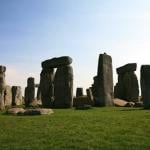
If you would like to participate in this survey, you can find it here. Both the Irish government and the activists are now looking to UNESCO, but will pressure from that body, if it comes, stop further motorway expansion? Other World Heritage sites have been deleted for ill-advised construction, and Ireland could be endangering the World Heritage status of Bru na Boinne with the planned expansion. Even if Tara is listed, will it be enough to stave off further encroachment and harm? One has only to turn to Stonehenge in the UK to see how that World Heritage Site has been treated in recent years. Long in need of improvements, the budget for a new visitor center and to close a nearby road was eliminated by the new coalition government (announced right before the Summer Solstice).

Sky, a pagan from Devon, broke off from a drumming session to explain how crucial it was that Stonehenge was improved. “It’s the most wonderful place and it’s a disgrace that we’re still waiting for a new visitor centre and for improvements to the roads. I bring people here from abroad sometimes. They’re amazed by the stones – but also amazed at how crummy the facilities are. I’d like that David Cameron to come down here and tell us why Stonehenge, our national treasure, is being treated so shabbily.”

English Heritage are still trying to move forward with improvements, but I can’t see how anything will be completed before the 2012 Olympics, when a massive influx of tourists from around the world will want to see the national treasure. A treasure made ever more valuable by ongoing discoveries and revelations.

Britain’s Stonehenge once had a long-lost twin just a stone’s throw away from the prehistoric monument, archaeologists announced Thursday. The discovery, made completely without digging, suggests that now solitary Stonehenge may have been surrounded by “satellite Stonehenges,” archaeologists say. “This finding is remarkable,” said survey-team leader Vince Gaffney, an archaeologist the University of Birmingham in the U.K. “It will completely change the way we think about the landscape around Stonehenge.”

Can the government find room in their new austerity to preserve and improve on the site? UNESCO World Heritage might wield political muscle with countries that desperately need the recognition and tourism revenue, but they can only shame more prosperous nations, and that might not be enough to stop highways from being built or to loosen a tightened national budget. For those of us with an emotional investment in these sites, but who don’t live in Ireland or the UK, it can seem like we are merely spectators to the slow erosion of these precious links to our ancient past. But while we may not walk on those lands, we have friends and family who do, and we can light flames of solidarity, stay informed, and participate in the opportunities presented to us, in hopes that it will have some small effect on this process. So that we can see the heritage passed to another generation, so that they can be moved, inspired, and educated by the lands that so many of us honor.

Thanks to Kathryn Price NicDhàna for providing some of the links used in this post.

No responses yet

Quick Note: Inadvertently Invoking Paganism

The Wickerman Festival in Scotland, while inspired by the cult-classic film, has very little to do with Paganism. It’s a sort of mini-Glastonbury, a family-friendly outing with a few nods to its inspiration (they burn a wicker man every year). However, it seems that organizers are having problems with the perceived ”pagan” elements, despite their best secular intentions.

“…yesterday as more than 15,000 converged on an inclement south west of Scotland for the final day of The Wickerman – one of the foremost alternative music festivals – it emerged organisers have been unable to shake off concerns about its pagan roots. Two marriages made use of a controversial marrying stone on the site yesterday despite calls for it to be removed, leading to criticism that it is endorsing paganism … The highlight of the 2010 Wickerman at midnight last night was the symbolic burning of a 25ft high wicker effigy. Elements of the churchgoing community of the parish of Auchencairn and Rerrick are concerned about the triangular-shaped wedding stone placed at the base of the effigy. It is seen as a pagan alter made from granite with a hole at the top for the couples to link hands. Rev Alistair MacKichan, former minister in the parish, said his concerns were about the stone becoming a centre for pagan rituals. “The Wickerman is actually a lovely family festival,” he said. “But if you start to establish a pagan ceremonial site, so it becomes a permanent fixture, then inevitably those involved with paganism will feel they have a locus around the year and those who have been married there will have other rites of passage there.” The 60-year-old festival founder, director and farm owner, Jamie Gilroy, insists “there are no religious reasons” behind the festival.”

These concerns seem to ignore the fact that most of the weddings conducted at the “marrying stone” are humanist in nature, and aren’t Pagan in any religious sense of the term. But in way, the concerned Christians are on to something. You can’t simply invoke a film so deeply rooted in a (perceived) Pagan experience without also invoking a bit of real-live Paganism along with it. Further, the growth of a “family” festival that features marriages, merriment, and rituals outside of the purview of the local churches must make them very nervous indeed. After all, if you go to Wickerman for your rites of passage, explicitly Pagan or not, the end result is still a growingly irrelevant religious institution outside the festival structure.

I think organizers and critics alike will find that even if they remove the “marrying stone”, it won’t stop marriages on site. The natural human inclination towards collective joy can’t be repressed, or diverted, for very long. Eventually, it will find a way to express itself within, or without, the structures of the culture they live in. If the churchgoing community near the festival want to do something about all the “paganism” on display, they could either throw their own festival, or integrate into the one already near them.

2 responses so far

Older Entries »