

Shakespeare has the legendary stage direction “Exit, pursued by a bear.” My own version of that in my scholarly work has been, “Write, pursued by Theosophists.” In my last few books, I have found Theosophy and Theosophists cropping up in so many different topics, and often, unexpectedly central to that subject, and above all in the era from roughly 1875 through 1940. Among other areas, that includes the Western encounter of South Asian religion; the modern rediscovery of alternate scriptures and Gnostic gospels; the whole world of sects, cults and alternate religions, including the New Age; and surprisingly large sections of avant garde Modernist art and music. And oh my, does it keep surfacing in my present book, on America in the 1890s.
Put another way, Theosophy is either (a) a fringe esoteric/religious movement founded in the 1870s, one of many such marginal sects; or (b) the indispensable key to understanding Western culture in the early twentieth century. I can make a case for either of these extreme statements, but the arguments for (b) are much stronger than you might think.
Today’s post is a field guide to Theosophy, with what is intended as a useful survey of the basic literature.

All images here are in the public domain
Years of the Modern
If you are interested in the years between roughly the 1890s and the 1930s and you are investigating Western literature, visual art, music, film, design, architecture, educational theory, psychology, or generally “culture,” you will come across references to Theosophical interests far more frequently and systematically than you might expect. That statement applies across Continental Europe, as well as the Anglo-American world. When I was writing my book on the First World War era, The Great and Holy War (2014), it was wearying to find so very many references to Theosophical concerns – among American and British novelists, French and German artists, Russian generals and German politicians, and so many others, Modernists of all kinds and shades.
The number of key cultural and intellectual figures who had some interest in Theosophy, ranging from mild dabbling to consuming obsession , was overwhelming. The same holds true for political leaders. I was recently reading about the feminist movement c.1900, and the rise of the New Woman. That meant radical feminist authors like Mona Caird, who – no surprise – joined the Theosophical Society in 1904. And so did so many other feminist intellectuals around that time, especially those interested in emerging theories of women’s spirituality. In diffused form, Theosophical ideas and themes achieved a real mass appeal, partly through popular culture. Some argue that The Wizard of Oz is a Theosophical parable.
In near-despair, I almost felt like compiling a (brief) list of those figures who remained untouched by Theosophy.
If you do not recognize and acknowledge those interests, you are missing a core element of the story, and of the era. Fortunately, as I will show, we now have access to a large body of published writing and research on these topics. Because that literature is now so vast, I will only offer the briefest and most grossly simplified sketch of the movement here. I will then concentrate on identifying the key themes of its appeal, and its influence. Bear with me if I often use the past tense for Theosophical ideas. I acknowledge that the movement survives today, although in nothing like its past glories.
Origins
The key founder was Helena Petrovna Blavatsky, a Russian occultist who claimed to have traveled widely around the world in the 1840s and 1850s. In 1875, she co-founded the Theosophical Society, and published such influential writings as Isis Unveiled (1877) and The Secret Doctrine (1888). You can find a huge range of Theosophical writings online at theosophy.org.

Theosophy was a synthesis of the esoteric and occult ideas of the previous two centuries, including claims to supernatural powers. Also influential was Spiritualism, and its ideas of mediumship. So was New Thought. These ideas were now merged with core themes of Hinduism and Buddhism, including the multiplicity of worlds and the very ancient (multi-billion year) history of consciousness. Reincarnation was a fundamental principle.
While Theosophy grew from older esoteric roots, much of its appeal derived from its seeming congruence with the science of the day, particularly notions of evolution. Theosophists told of the rise and fall of successive races, and also depicted the progress of the human soul through successive lives. At the summit of spiritual evolution were divine redeemers, avatars, or Christs. Following Buddhist notions of the bodhisattva, Theosophy taught the existence of great spiritual teachers who had achieved godlike status, and these Ascended Masters transmitted their wisdom to initiates in each age. Blavatsky herself claimed to transmit the wisdom of such Masters.
Or to quote from my Great and Holy War, “Rooted in Hindu and Buddhist ideas, Theosophy claimed to transmit the ancient teachings of various lost civilizations and races, most not known or recognized by mainstream historians but passed on through visions and trances. Theosophy and its offshoots told the story of a planet vastly older than orthodox historians would ever accept, a world in which successive races had risen and fallen, usually through the purest Darwinian means of conflict and combat, cycles of racial vigor and degeneracy. For true believers, the idea that civilizations collapsed in bloody cataclysm was something like a law of history. Theosophy was messianic, drawing on the Buddhist view of successive bodhisattvas as godlike charismatic leaders who guided the world’s spiritual development. Buddha and Jesus were spiritual masters of earlier eras, and early-twentieth-century Theosophists dreamed that another such world teacher would appear imminently, to lead the world into a utopian Aquarian Age.”
One special feature was Blavatsky’s claims to have discovered secret Asian scriptures revealing ancient truths. She taught the existence of the Akashic records, a compilation of all events and realities that had ever occurred, that were preserved in an etheric plane, and which could be accessed by mystical intuition, and presented as revered scriptures. The Secret Doctrine purported to reveal and expound one such ancient text, the Book of Dzyan. Few modern scholars accept the authenticity of such works, which Blavatsky compiled from existing writings about South Asian religion and lost continents.
Theosophy taught that ancient civilizations had gained vast knowledge and wisdom, which had been ruined and dispersed in successive catastrophes. However, modern inquirers could reconstruct this knowledge by diligent study of ancient texts, primitive mythologies, and archaeological research. Historical religions, including Christianity, contained the misunderstood fossils of these glorious ancient truths.
To summarize, the Theosophical Society declared its goals thus:
- To form a nucleus of the Universal Brotherhood of Humanity, without distinction of race, creed, sex, caste, or color.
- To encourage the study of Comparative Religion, Philosophy, and Science.
- To investigate the unexplained laws of Nature and the powers latent in man.
The group’s motto was: There is No Religion Higher Than Truth.
Although its ideas were very influential, the Theosophical movement itself tended to splinter and fragment, and there were many offshoots and imitators. One of the most powerful was Rudolf Steiner’s Anthroposophy, which attained amazing influence in Continental Europe in the 1910s and 1920s. Theosophy was a prime source for later US movements like Mighty I AM, and the Church Universal and Triumphant. Theosophical ideas and sources also influenced African-American religion, through the Moorish Science Temple, and (indirectly) the Nation of Islam.
If the package of ideas I describe here sounds familiar, it is because virtually every part of it was eventually adopted by the New Age movement.
Beliefs, Discoveries, and Intuitions
So the obvious question arises, just why was Theosophy so phenomenally appealing? What were the core themes that so appealed to highly educated thinkers and the avant-garde – in short, to Modernism and modernity? What made the Theosophical package so much more attractive than traditional Western religions – or in many cases, than secular radicalism and progressivism?

What follows, in no particular order, is my own compilation of Theosophical themes and messages. And as you go along, you might be struck by how much this sounds like the common themes of the original Gnostic movement many centuries ago. So what did those Theosophists teach?
i.All familiar religions and philosophies contain truths, but these are only pale shadows of a glorious higher Truth that is accessible to those who seek it. To quote the summary by L. Frank Baum, in 1890 (he of the Wizard of Oz). “Theosophy is not a religion. Its followers are simply ‘searchers after Truth.’ Not for the ignorant are the tenets they hold, neither for the worldly in any sense. Enrolled within their ranks are some of the grandest intellects of the Eastern and Western worlds.”
ii.Crucially, mystical wisdom is not distinct from Science, and it follows similar principles, with evolution as a core reality. Blavatsky’s 1877 book Isis Unveiled bore the subtitle A Master-Key to the Mysteries of Ancient and Modern Science and Theology. Her 1888 book The Secret Doctrine was subtitled The Synthesis of Science, Religion and Philosophy. Worldly science may not recognize that common identity as yet, but that just reflects its ignorance and prejudice. A major theme of the first volume of Isis Unveiled was to mock “The ‘Infallibility’ of Modern Science.” In the early twentieth century, esoteric thinkers claimed that insights like those of Einstein and Heisenberg provided glimpses into these higher realities. To borrow the phrase of Arthur C. Clarke, any sufficiently advanced technology is indistinguishable from magic.
iii.Any authentic study of Truth must pay due attention to all human cultures, and Buddhism or Hinduism might well include truths much higher than those of the West, notably in its concept of reincarnation. The cultures of India and Tibet were uniquely powerful and authentic bearers of ancient tradition. Western knowledge can claim no privilege, neither Christianity nor materialist science. Nor can the White race – a startling and subversive proposition in 1910 or so.
iv.Each of those very diverse cultures offers its lessons about exactly how to ascend to higher realities and states.

v.When viewed properly, the world’s various cultures have often influenced each other and presented similar truths, despite attempts at suppression by orthodox authorities. Thus Gnosticism and alternative early Christianities contain many of the same truths as Buddhism or Hinduism.
vi.Blavatsky’s example aroused expectations that great truths might still be found in long-lost scriptures that awaited discovery. Newly discovered “gospels” proliferated in the early twentieth century, and some depicted Jesus gaining the authentic wisdom of South and East Asia. The Aquarian Gospel of Jesus the Christ (1908) was one classic example, supposedly derived from the Akashic record.
vii.Acquiring spiritual truth is no mere intellectual matter, but has material consequences in the form of supernatural powers. Theosophy taught how to discover and access the various higher states that made up each individual, each with its different realities and capacities, and operating on different planes. As well as the familiar physical body, those other states included the astral body. The adept or initiate could use the many dimensions of the universe to perform works that seemed almost godlike, but which were rooted in alternative science. These included prophecy and precognition, telekinesis and telepathy, mediumship and astral travel. Rudyard Kipling described his encounter with “the hard-headed Scotch merchant with a taste for spiritualism, who begged me to tell him whether there was really anything in Theosophy, and whether Tibet was full of levitating chelas [disciples], as he believed.”
viii.Without acknowledging and accessing those powers, humanity remained in an inferior state of deliberate denial and rejection, almost a slumber. Informed individuals were called to awaken to full humanity.
ix.Human history is vastly older than archaeologists might suggest. There have been countless races, many forms of consciousness, and many lost civilizations. Some (Atlantis, Mu, Lemuria, Hyperborea) have left their traces around the world. Our souls have lived in many of those past worlds, and those realities can be recovered and explored.
x.Humanity contains people and races with varying degrees of spirituality, and through study, meditation, and mystical exercise, individuals can rise in the hierarchy and achieve special insight.
xi.Because it is so extremely potent and even potentially dangerous, Truth cannot be explicitly declared to the masses, except in coded and symbolic form. Wisdom is gained through the work of small groups, who progress through stages of enlightenment and initiation. These followed the model of the ancient Mystery schools.

xii.Walking among us presently, unseen and unrecognized, are some figures of special spiritual power – Masters or gurus.
xiii.There are critical moments and transitions in the progress of humanity, and we might be approaching one such transformation of consciousness. At least as viewed in the early twentieth century, Theosophy and cognate movements had a strongly messianic and millenarian character. As I wrote in my Great and Holy War, “Another of Russia’s avant-garde heroes of the day was the composer Alexander Scriabin, an enthusiastic devotee of Theosophy …. In the years before the war, Scriabin devoted his attention to composing his Mysterium, a titanic multimedia and multisensory event to be held in the foothills of the Himalayas, with the aim of unleashing Armageddon and initiating a new era in world history.”
xiv.Theosophy appealed because (at least in most versions) its political and cultural messages were strongly progressive. It was feminist, non-racial, and anti-imperial. Given the attitudes of the time, we can find some remarks about “lower races” that contradict this rule (usually concerning Africans), but generally the statement about progressivism stands. And as I have said, it claimed to be rooted absolutely in science.
xv.There is an ongoing scholarly project called Enchanted Modernities, and that phrase demands attention. Theosophy presented itself as ultra-modern and scientific, and yet its content was effectively ancient and magical, mystical and (sorry) superstitious. Yes, you really could have both worlds, ancient and modern! That Enchanted Modernities project covers the intimate relationship between Theosophy, Modernism and the Arts, 1875-1960.
xvi.Cultural and aesthetic activities are spiritual manifestations, quite as much as explicitly religious or mystical enterprises. The Theosophical mythology, its world-view, presented an amazing range of opportunities and themes for creative artists and writers.
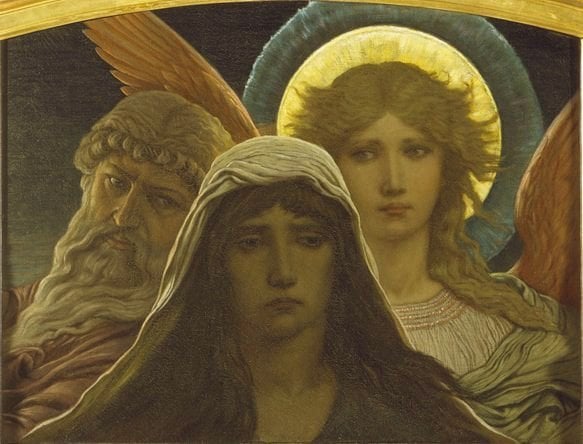
xvii.Artists were fascinated by the Theosophical idea that authentic Truth and Wisdom existed in higher realms that could only be accessed by non-material spiritual powers of the mind and soul, by forms of mystical intuition or visionary experience. Or to use an anachronism, by some kind of “channeling.” I quote from a useful (and seemingly now defunct) website on “Art and Theosophy” that notes the work of crucial innovators like Kandinsky, Mondrian, and Malevich: “This was the key to abstraction, which began to emerge around 1910. And it was also the key to Theosophy. Both busied themselves with investigating the process of cosmic and human evolution, with finding the ‘essence of things’. Both looked for a universal grammar that could communicate this essence. Both were instinctively drawn into the ancient philosophical and religious controversy concerning the relationship of appearance and reality. And both were essentially anti-intellectual movements: they shared the belief that one could understand emotionally the secrets of creation in a way that transcended scientific observation or sheer logic.”
Taken together, this was an enormously attractive package of ideas and beliefs.
Working Bibliography
Julie Chajes, Recycled Lives: A History of Reincarnation in Blavatsky’s Theosophy (Oxford University Press, 2026)
Christopher Coome, The Foundations Of Re-Enchantment : Freemasonry, Theosophy, And The Occult Revival (Oxford University Press, 2025)
Joy Dixon, Divine Feminine: Theosophy and Feminism in England (Johns Hopkins, 2003)
Christine Ferguson, Open Secrets: The Popular Fiction of Britain’s Occult Revival, 1842-1936 (Oxford University Press, 2025)
Joscelyn Godwin, The Theosophical Enlightenment (State University of New York Press, 1994).
Nicholas Goodrick-Clarke and Clare Goodrick-Clarke, G. R. S. Mead and the Gnostic Quest (Berkeley: North Atlantic Books, 2005).
Nicholas Goodrick-Clarke, ed. Helena Blavatsky (North Atlantic Books, 2004).
Olav Hammer and Mikael Rothstein eds., Handbook Of The Theosophical Current (Brill, 2013).
K.Paul Johnson, The Masters Revealed: Madam Blavatsky And The Myth Of The Great White Lodge (State University of New York Press, 1994).
June O. Leavitt, The Mystical Life of Franz Kafka (Oxford University Press, 2012).
Glenn Alexander Magee, ed., The Cambridge Handbook of Western Mysticism and Esotericism (Cambridge University Press, 2016).
Ken Monteith, Yeats and Theosophy (Routledge 2008).
Mark S. Morrisson, Light on the Path: Advancing Occultism Through Esoteric Fiction, 1880–1940 (Oxford University Press, 2025)
Tim Rudbøg and Erik Reenberg Sand, eds., Imagining the East: The Early Theosophical Society (Oxford University Press, 2020)
Anne Taylor, Annie Besant : A Biography (Oxford University Press, [1992]
Maurice Tuchman, ed., The Spiritual in Art: Abstract Painting 1890–1985 (Abbeville Press, 1986)
Peter Washington, Madame Blavatsky’s Baboon: A History Of The Mystics, Mediums, And Misfits Who Brought Spiritualism To America (Schocken Books, 1995).
Leigh Wilson, Modernism and Magic: Experiments with Spiritualism, Theosophy and the Occult (Edinburgh University Press, 2012).
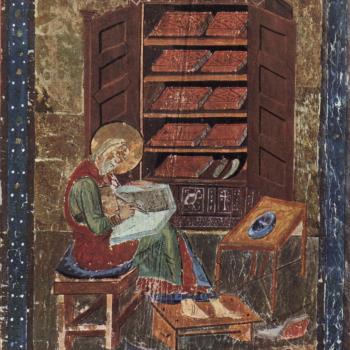
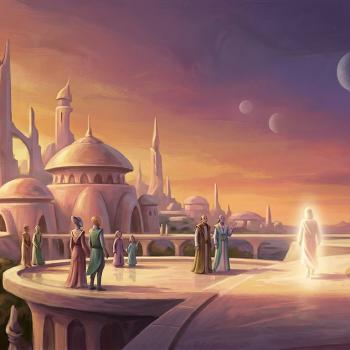
BY WAY OF APOLOGY: Three of my images here are from Elihu Vedder, who was not (to the best of my knowledge) a Theosophist. But they capture the esoteric imagination so perfectly that I could not resist them. If you don’t like my choices, you can tell me all about it on the next Bardo.









 Ad-Free & Subscriber Log-In