2016-04-07T10:32:14-04:00

The centennial of the First World War means that we have plenty of grim events to commemorate, and none more so than in this present year. 1916 was the point at which the war moved into the full-scale industrial mass production of death. We are already reading the accounts of the horrors of Verdun and the Somme, and other atrocities abounded. One in particular demands our attention, although it is not well known beyond the ranks of specialist historians. Briefly,... Read more
2016-04-07T01:12:55-04:00

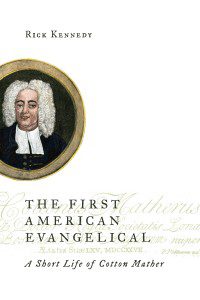
“Nebuchadnezzar’s malady was not unlike a lycanthropy,” wrote Cotton Mather in his Biblia Americana. The Book of Daniel informs that the king of Babylon and conqueror of Jerusalem lived as a beast. He grew claws and feather-like hair. How? God smote him. Was this a disease of the mind? Mather noted passages in the gospels in which people act like animals, and he allowed that he himself had seen possessed persons “bark like dogs, mew like cats, clack like a... Read more

2016-04-14T10:19:43-04:00

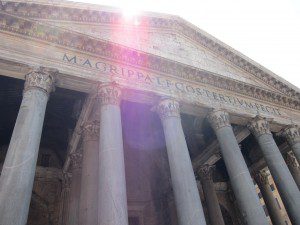
The Roman Pantheon is awesome. And I mean “awesome” in the sense that my good-English-professor-friend would approve: it evokes feelings of awe and wonder. I caught my first glimpse of this 2000 year-old building after stepping from a stone-paved street into the Piazza della Rotonda. We were on our way back from the Roman Forum and, I confess, I was actually looking for a coffee shop (the Sant’ Eustachioe, if you are interested). Suddenly my son stopped and said, “Mom. Look.”... Read more

2016-04-04T10:04:40-04:00

Politicians and pop history writers squabble endlessly about whether America was founded as a “Christian nation.” Skeptics routinely point to the 1796 Treaty of Tripoli, in which American officials declared that “the government of the United States of America is not in any sense founded on the Christian Religion” and “has in itself no character of enmity against the laws, religion or tranquility of [Muslims].” A little-noticed letter to Benjamin Franklin from America’s agent in Morocco, the Italian Francisco Chiappe,... Read more

2016-03-28T11:16:10-04:00

This year, we are of course commemorating the centennial of the First World War, and specifically the titanic battles of Verdun and the Somme. My 2014 book The Great and Holy War discusses the religious aspects of the war, but one thing that really struck me about that theme was the very large range of behaviors that I genuinely did not know how to classify as religious or not. That brings me to one wonderful source that still remains woefully... Read more

2016-03-29T12:02:24-04:00

I recently blogged on the many and various ways in which translators subtly (and usually unconsciously) change the meaning of a text by capitalization and punctuation. Here is an illustration that seems quite powerful to me. Around 170 BC, the former high priest Onias III was murdered as a result of intrigues within the Jerusalem priestly elite, working with officials of the Seleucid Empire. The whole ugly story is told in 2 Maccabees 4. But the affair had a long... Read more

2016-03-31T07:31:03-04:00

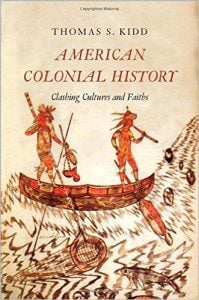
In today’s post I am talking with fellow Anxious Bench blogger, Baylor University historian, and prolific author Thomas Kidd about his new book, American Colonial History: Clashing Cultures and Faiths. His previous books include biographies of George Whitefield and Patrick Henry and a history of the Great Awakening. JT: You write that two major themes organize American Colonial History: religion and conflict. What’s new about the way that you approach these two themes? TK: Too many historical overviews throw every conceivable topic... Read more

2016-03-29T11:30:26-04:00

Last week I described an “eating exercise” meant to encourage my students to think historically about the industrialization of food. It seemed to work well. Several of my students pointed out that not everything that is  technologically “advanced” is better. One wrote, “Compared to historical eating, modern eating is over-processed, over-sized, and over-consumed. We eat very few things that come straight from the earth. And when we do eat them, they are usually doused with sweeteners or dressings.” Others contrasted... Read more

2016-03-29T12:10:44-04:00

In today’s post I am talking with Anxious Bench blogger and George Mason professor John Turner about his new book, The Mormon Jesus: A Biography. John has written previous books on Brigham Young, and on Campus Crusade for Christ. TK: Your book is called The Mormon Jesus. What do Mormons actually believe about Jesus? Has that view changed over time, and have Mormons argued among themselves about this question? JT: First off, it’s important to know that early Mormonism in its scriptures,... Read more

2016-03-25T10:47:10-04:00

This post will not be about Easter bunnies, but it will be about animals. In the Christian tradition, animals possess a rich symbolic significance. Ask most Christians whether they would prefer being a goat or sheep in the eyes of the Lord and you will quickly baa-baa. From Genesis through Revelation, animals are regularly invoked to convey spiritual messages. Wolves do not come off they well nor do serpents, but at least in one instance the faithful are admonished to... Read more

Follow Us!


TAKE THE
Religious Wisdom Quiz

What did John see coming down from heaven in Revelation 21?

Select your answer to see how you score.


Browse Our Archives