2016-03-14T10:06:25-04:00

Nicknamed the “Queen of America” in the nineteenth century, Julia Ward Howe (1819-1910) goes often unremembered in ours. Elaine Showalter’s new biography , The Civil Wars of Julia Ward Howe, aims to recollect reasons for her public acclaim while uncovering her private marital distress.   The most beautiful and accomplished daughter of a New York banker, Julia married Samuel Gridley Howe (1801-1876) in 1843. Howe was pretty estimable himself, a Bostonian who fought for Greek independence in 1824 and came back... Read more

2016-03-08T18:33:12-04:00

I have been discussing the effects of global changes in weather and climate on the history of religions. Sometimes, those developments can be related to long-term climatic developments, such as the Little Ice Age, but in other instances, we see the impact of transient catastrophes. A growing number of books have traced the impact of volcanic eruptions on global weather patters. When on a sufficiently large scale, such eruptions have literally darkened the skies worldwide, and caused serious cooling, with... Read more

2016-03-04T23:29:42-04:00

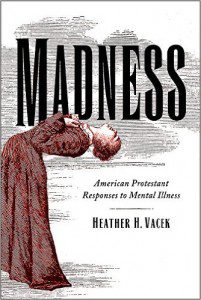
Nearly twenty years ago, I visited a psychiatric unit near the city of Cebu in the Philippines. It consisted of two small sex-segregated wings, each holding perhaps two dozen patients. For my young adult eyes, it was a house of horrors. I had seen slums. I had seen young children scavenging at a filthy dump. I had seen an overcrowded hospital. But nothing I had seen prepared me for the vacant stares, the strange ejaculations of speech, the sense of... Read more

2016-03-15T07:16:00-04:00

I bought Easter candy for my students. It was a mistake. Although the students made a valiant effort to eat as much as possible, they left a few Reese’s Peanut Butter Eggs (a particular weakness of mine) in the candy basket. Needless to say, they didn’t last long. Reese’s eggs are just one of many newer adaptations of older Easter traditions. Recent twitter posts have made me realize how much confusion still persists about these traditions. My favorite was a screenshot... Read more

2016-03-07T11:06:31-04:00

My new Yale University Press book American Colonial History: Clashing Cultures and Faiths is ‘in stock’ this week at Amazon, and officially releases on April 12. My aim in this book is to tell a readable story of early America, including the meetings and conflicts of Africans, Europeans, and Native Americans. It is based on extensive reading of the most-up-to-date scholarly histories in this field, but is presented in a narrative style that should appeal to general readers and students alike.... Read more

2016-03-08T18:32:18-04:00

Climate change, weather, and agricultural cycles all played their part in religious history. On occasion, disasters drove paranoia and persecution – see my columns on the years around 1680. My discussion of the c.1740 era suggested how a deep crisis might create an audience open to revivalism. No less fundamentally, catastrophe could decide something as basic as the world’s religious map, of where different faiths found their main centers of strength. In my Lost History of Christianity, I wrote about... Read more

2016-03-04T11:59:54-04:00

Today’s guest post is from Daniel K. Williams, associate professor of history at the University of West Georgia and the author of Defenders of the Unborn: The Pro-Life Movement before Roe v. Wade. In the Supreme Court hearings this week on the constitutionality of a restrictive abortion law in Texas, lawyers for the pro-life side have advanced a liberal argument. Yet few liberals are taking it seriously.  Pro-lifers have argued that in order for the state to protect women’s health –... Read more

2016-03-04T11:59:54-04:00

In my last post, I described the extreme climatic conditions that formed the background of the Great Awakening as it developed between 1739 and 1742. To give an idea of this period as it affected one area of New England, this is an extract from a well known source, namely Joshua Coffin, A Sketch Of The History Of Newbury, Newburyport, And West Newbury, From 1635 To 1845 (1845). Witness the repeated remarks that this was the worst winter ever remembered... Read more

2016-03-04T11:59:54-04:00

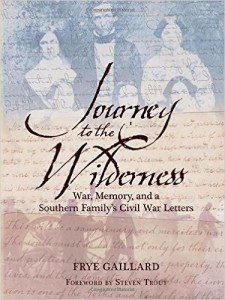
In February of 1864, a Confederate officer named Franklin Gaillard received word of his father’s death. Gaillard was numb to death, having fought at Gettysburg the previous July. “It was the most shocking battle I have ever witnessed,” he wrote after his side’s bloody defeat. “There were familiar forms and faces with parts of their heads shot away, legs shattered, arms torn off.” Bullets rained upon his men “thick as hailstones.” Gaillard blamed the generals, including Robert E. Lee, for... Read more

2016-03-01T13:23:57-04:00

In 2004 the Kempf family farm in northeast Ohio was devastated by blight. Half of their crops, which included tomatoes, cucumbers, zucchini, and cantaloupes, were wiped out. There was one productive area on the farm though: a new section that yielded some beautiful cantaloupes. The family’s 16-year-old son John wondered why. He hypothesized that the new section had not been subjected to years of chemical applications. This realization led John Kempf on a decade of research. With only an eighth-grade... Read more

Follow Us!


TAKE THE
Religious Wisdom Quiz

True or False: The Israelites wandered in the wilderness for forty years.

Select your answer to see how you score.


Browse Our Archives