2016-03-01T13:23:57-04:00

In 2004 the Kempf family farm in northeast Ohio was devastated by blight. Half of their crops, which included tomatoes, cucumbers, zucchini, and cantaloupes, were wiped out. There was one productive area on the farm though: a new section that yielded some beautiful cantaloupes. The family’s 16-year-old son John wondered why. He hypothesized that the new section had not been subjected to years of chemical applications. This realization led John Kempf on a decade of research. With only an eighth-grade... Read more

2016-03-04T11:59:54-04:00

For professors, writing letters of recommendation is a constant part of the job. Wise undergraduate and graduate students should make it as easy as possible for your professors to write them. Although few professors will write overtly negative letters, faint praise can just as easily condemn an applicant, especially when they are applying for highly competitive programs or jobs. I frequently see letters of recommendation that are vague or flat-out sloppy. Some seemed rushed or obligatory. Some fail to change... Read more

2016-03-04T11:59:54-04:00

What is the “big story” that scholars should tell about the relationship of religion to the modern world? For many decades, social scientists believed that modernization led ineluctably to secularization. Modern goods such as science, democracy, technology, social mobility, and the free market meant that, sooner or later, religion was destined to swoon and irreligion would triumph. But that has changed swiftly in the last few decades. The eminent sociologist Peter Berger, a pioneering theorist of “the secularization thesis,” as... Read more

2016-03-04T11:59:55-04:00

I recently posted about understanding the social dimension to religious crises and conflicts.  Briefly, I suggested that pre-Modern societies were prone to severe dangers from crop failures, sometimes linked to climatic changes, and that these echoed through the whole society in terms of dearth and famine, disease and epidemic. At such times, people were prone to look for scapegoats, and that such episodes could result in religious persecution and paranoia. In some instances, though, economic crises could contribute to religious... Read more

2016-03-04T11:59:55-04:00

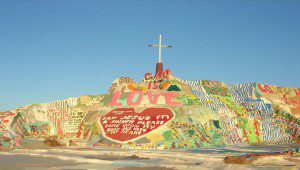
For historians and other scholars, religion provides an endless supply of fascinating narratives. And few experiences are as sweet as encountering a previously unknown but utterly bizarre and remarkable story. I had that experience reading Sara Patterson’s just-released Middle of Nowhere: Religion, Art, and Pop Culture at Salvation Mountain, a lucid chronicle and analysis of the monument to God’s love created by Leonard Knight in the California desert. For a quick introduction, I recommend several things. First, look at Salvation... Read more

2016-03-04T11:59:55-04:00

I didn’t have to interview for graduate school. I did visit the campuses of my top choice schools, but it was very informal. The only graduate students and professors I met were the ones I had contacted in advance. I didn’t even meet the professor who became my adviser until after starting the program because she was out-of-town the weekend I visited. Today the world of graduate education is very different. Most programs accept far fewer students than they did... Read more

2016-03-04T11:59:55-04:00

Last week I posted about a Ted Cruz rally at which Glenn Beck argued that the Constitution and the Bible were both “sacred scriptures.” What would the Founding Fathers think about this? It so happens that, in a little-noticed 1788 editorial, Ben Franklin directly denied that the Constitution was “divinely inspired.” But as usual with the Founders, you have to place this quote in context. Although Franklin did not believe that the Constitution came straight from God, he did think that... Read more

2016-03-04T11:59:55-04:00

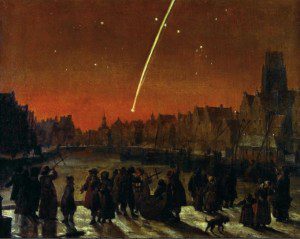
The years between 1675 and 1685 were marked by repeated catastrophes, involving wars and revolts, dearths and plagues, and unprecedented weather conditions. Not surprisingly then, across Christian Europe, many believers imagined the fast approaching end of the existing world. It was in 1678 that the first part of John Bunyan’s Pilgrim’s Progress described the simple Christian beginning his quest after discovering the powerful text, “Flee from the wrath to come!” If all the other disasters were not proof enough of... Read more

2016-03-04T11:59:55-04:00

I have been posting on the catastrophic years around 1680, when climate-induced changes vastly increased social tensions, spawning revolts and social crises. The 1670s was also a turbulent period in North America itself, and weather played its role – as how could it not? In 1676, Nathaniel Bacon led his famous revolt in Virginia, which many historians see as the forerunner of later nationalist and anti-royal sentiment. Causes were complex, but I note this weather-related comment from the National Park... Read more

2016-03-04T11:59:56-04:00

In Paul’s letter to the church at Philippi, he includes what most scholars regard as an early Christian hymn. It praises Christ Jesus, Who, though he was in the form of God,           did not regard equality with God as something to be exploited, but emptied himself, taking the form of a slave, being born in human likeness. Jesus humbled himself and “became obedient to the point of death — even death on a cross.” Because Jesus made himself low,... Read more

Follow Us!


TAKE THE
Religious Wisdom Quiz

What is the main point of the Parable of the Persistent Widow?

Select your answer to see how you score.


Browse Our Archives