

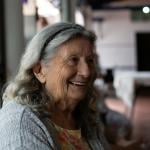
It was while she sat in worship on a Pentecost Sunday in the 1950s that British nurse Margaret Hayes first heard God’s call to her to go to the Congo. The call made no sense: Margaret, a young and newly trained nurse, had never been out of Great Britain. She spoke no other languages – in fact, she had a slight speech impediment that had discouraged her from even studying other languages. She couldn’t even locate Congo on a map. But the voice was nonetheless insistent – and soon, she found herself in a foreign mission office, explaining to the director what she believed that God was calling her to do. The director, realizing that she was ill-equipped at that point to undertake such a medical mission, laid out a study path for her: She would live in France, learn the language as well as take additional, specialized nursing coursework, and pass a battery of exams – in French. And, if she were able to do all of those things, the foreign mission director said that they would take that as a sign from God that she was indeed called to go to the Congo to serve.
Margaret Hayes left her parents, siblings, friends and colleagues to embark on an unbelievable journey, much of which is chronicled in her book, A Reluctant Missionary. Working in the home of a French couple, she learned the language. She completed her studies, passed all of her exams – in French – and then found herself deployed to the Congo, where she began caring for patients in the missionary hospital.
Leaving the familiar, learning a new language
On that Pentecost Sunday, when the Holy Spirit spoke to Margaret Hayes and told her to go to the Congo to serve, the Spirit invited her to leave the familiar and embrace something new: a new language – not only the spoken language of the people, but a new language of care, compassion, and cultural understanding that enabled her to bring healing of body, mind and spirit to the Congolese people. The timing of Margaret Hayes’ arrival in the Congo was difficult: After years of living under Belgian rule and suffering mightily at the hand of King Leopold and his successors, the Congolese people looked upon Europeans with a sense of distrust and misgiving. Whatever preconceived notions with which Congolese people may have approached Margaret Hayes, they knew that she spoke their language – even if awkwardly – and she was able to help them in their sickness. And whatever preconceived notions with which Margaret Hayes may have approached the Congolese people, she realized that beyond cultural differences lay people with kind and compassionate hearts who needed medical care for which she was trained. Margaret came to love the people she served, and they came to love her.
Capture and survival
In 1964, Margaret was captured by rebels during the Congo revolution – and for nearly a year, she was presumed dead. But even her captors knew the care that she had provided the Congolese people – and they kept her alive so that she could continue to care for the people. After she was released by her rebel captors, Margaret returned to serve in the Congo because her heart was with the people among whom she had been called to serve. The barriers between Margaret and the Congolese people had been overcome, traversed by a language of love.
The Holy Spirit brings new language, new life in Jerusalem
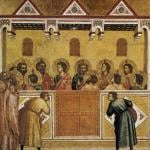
In chapter 2 of the Acts of the Apostles, barriers are being broken down between the many faithful who have come to Jerusalem to celebrate the Pentecost – a day of celebration marking the day on which Moses had brought the law to the people from Mr. Sinai, fifty days past the Passover. But for these faithful Jews, the celebration is different: They have been scattered throughout the region during the exile, and when they return, they speak the languages of the many places where they have settled. The Holy Spirit enables the apostles to traverse those language barriers and speak so that even those who had been distanced from God’s Holy Word were able to access it in that holy place. The moment certainly must have required a lot of trust on everyone’s part: trust on the part of the apostles that these unfamiliar and strange sounds coming from them were truly from God, and trust on the part of the hearers that this wasn’t some kind of joke or stunt – but was really the Holy Spirit bringing the Word to them – just as the law had come from God on Mt. Sinai.
We would expect some naysayers, some who would be filled with doubt at this incredible scene and who would attribute the moment to the apostles just having had a bit too much wine. But in spite of their doubt, the Holy Spirit was at work in the hearts of the speakers and many who heard.
How often do we, like the naysayers in the crowd, approach that which is unfamiliar to us with doubt, distrust and misgiving? And in so doing, how often do we miss out on the gifts of the Holy Spirit that are right before our eyes?
It is certainly worth noting in our own time that on the day that the Holy Spirit breathed life into the church barriers were broken, walls torn down, and instead of the faithful milling about one another unable to communicate, they were suddenly able to speak, to hear, to engage with one another.
What is the Holy Spirit stirring among us today?
And what does that crystallizing moment say to us as Christians today? Well, certainly, it should remind us that we cannot underestimate the power of the Holy Spirit to move and breathe among us, and enable us to be instruments of God’s love, in ways that we might never anticipate. It reminds us that we are not called to remain in our silos, inattentive to God’s people around us. We are called instead to engage, to speak, and to hear.
And when we engage, when we speak, when we truly hear the language of our neighbors, we may find ourselves learning the lesson that Margaret Hayes learned in the Congo: that we as people made in the image and likeness of God are more alike than we are different, that we all are in need of God’s love and mercy, and that as we share God’s gifts with one another, we receive far more than we give. Today we are called to reach across the walls and barriers that separate us to speak to one another and to hear one another anew. And the Holy Spirit could have much to share with all of God’s people – if we are only willing to reach across the walls that separate us.







 Ad-Free & Subscriber Log-In