

The Gutenberg Bible was probably the first book ever printed with movable type, in Mainz around 1455. This invention was in part what jump started the Protestant Reformation because all of a sudden all kinds of mss. could be printed quickly including Bibles, and thus even the Bible was no longer under the control of governments or the rich and the powerful. Previously, apart for the uber wealthy who could afford to bankroll copying by hand, Bibles were chained to pulpits or found in monasteries that had scriptoriums or were excerpted into various languages for special purposes, again usually for the wealthy.
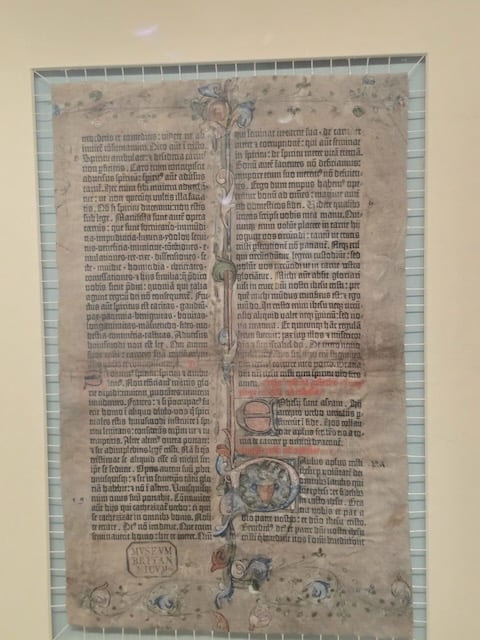
This page above is printed on vellum, and is part of a lost mss. which we know ended up in England in the 1400s. The illuminations were added by hand. 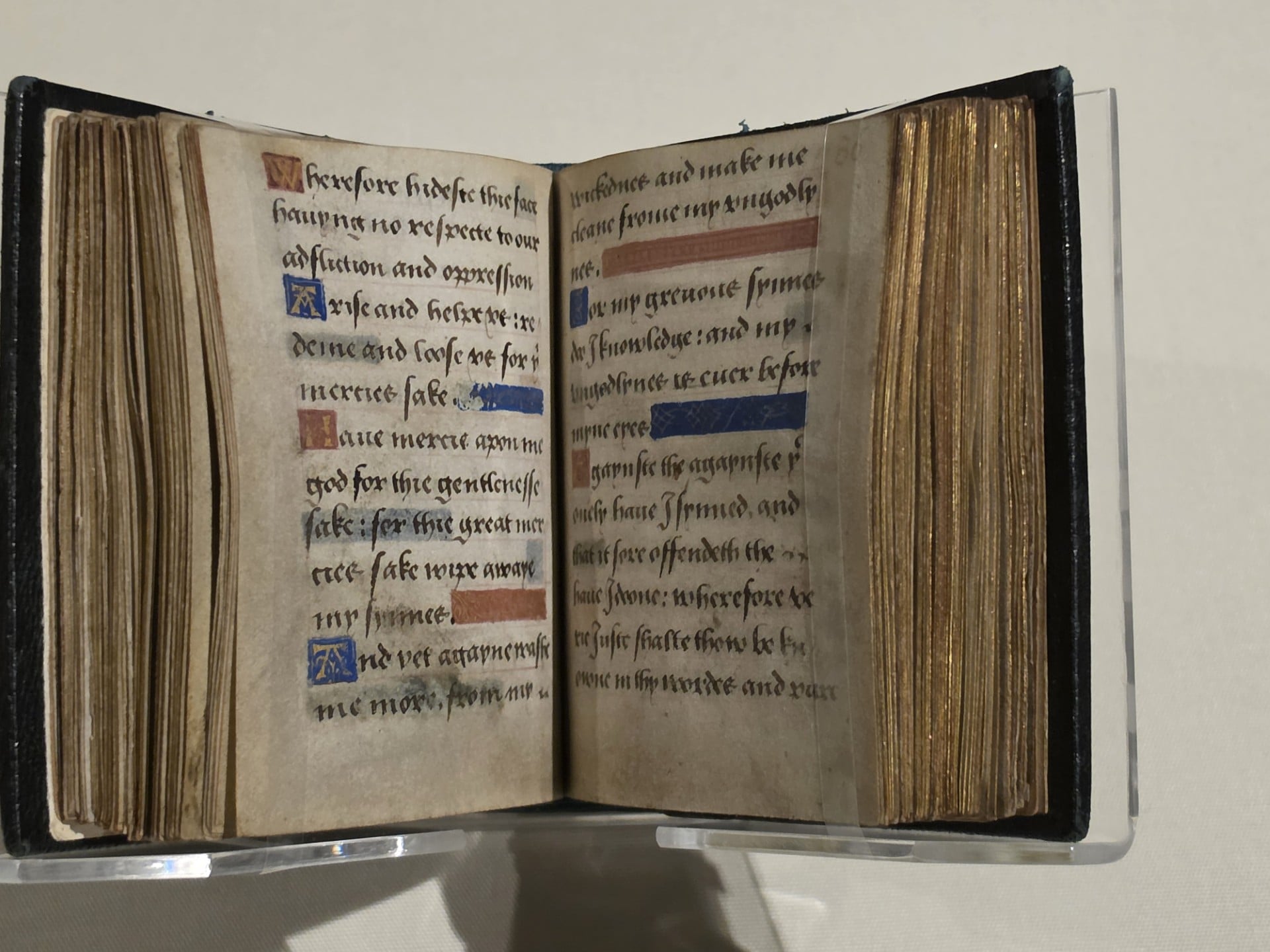
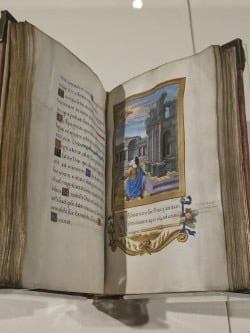
This is King Henry VIII’s illuminated Psalter, and fascinating are his annotations in the margin. The image on this page is King Henry being a penitent like King David, and wondering about the consequence of some of his questionable actions morally speaking. This image accompanied Psalm 68.
The Bishop’s Bible, like Tyndale’s and Coverdale’s was a predecessor, and in part a consulted basis for the later King James Bible from the beginning of the 17th century.
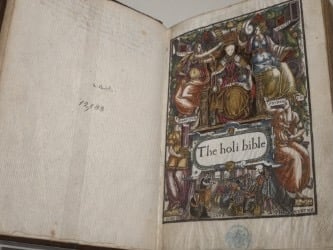
From 1569 the Bishops Bible shows Elizabeth 1 on her throne surrounded by the four virtues—justice, mercy, prudence, and fortitude. It could hardly be more obvious she wanted control of the Bible’s translation into English.
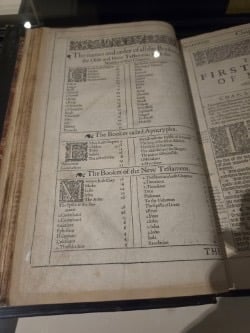
This pulpit Bible Title page reminds us that before the 19th century it was the normal thing to include the OT apocrypha in the Bible, even in Protestant editions of the Bible. The British Bible society in the 19th century stopped following that precedent.
There are many other interesting mss. in this room, ranging from ancient Bibles to modern Beatles and Jane Austen memorability but one of the most interesting, was the attempt by a British person to fight the mechanization of printing toward the end of the 19th century. Here is his illustrated book, and the description that goes with it.
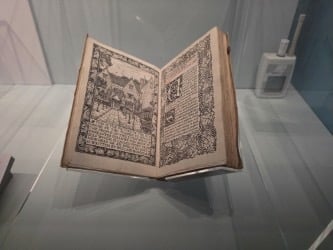
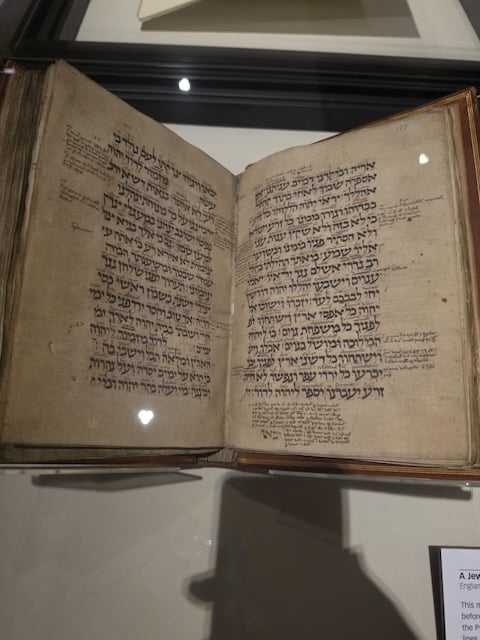
This was the efforts of William Morris a social activist at the end of the 19th century who was alarmed by the effect of industrialization on the making of books. He would have completely freaked out had he seen the machine I saw at Cambridge U. Press some years ago which put paper in one end, then printing happened, including color inserts, then binding, then hardcover,added, and at the other end of the machine, complete whole copies were spit out, without a single human hand doing any of this process directly. Of course they also showed me how the edges of pages were gilded on Bible, not by a machine. Two more things of importance, a joint project of Jews and Christians who wanted to understand the Hebrew text of the OT. Sadly this happened not long before Jews were expelled from England in 1290 A.D. Monks from an Abbey in Cambridge added a Latin translation and commentary.
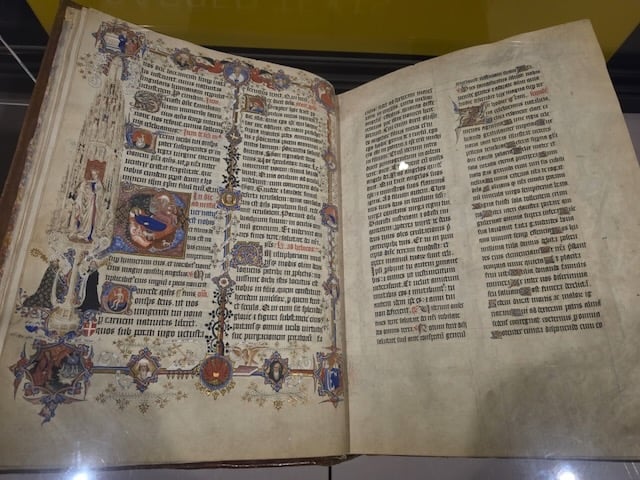
This is the spectacularly illuminated Sherbourne Missal, turned to the pages of the Christmas story. Produced between 1399 and 1407 and illustrated by the monk John Siferwas, it reminds us of the art and artisanship we have mostly lost due to mechanization, and all the more so now with robots and AI, we need to think hard about what we want to leave to the machines, and what the human hands need to keep doing.





 Ad-Free & Subscriber Log-In