

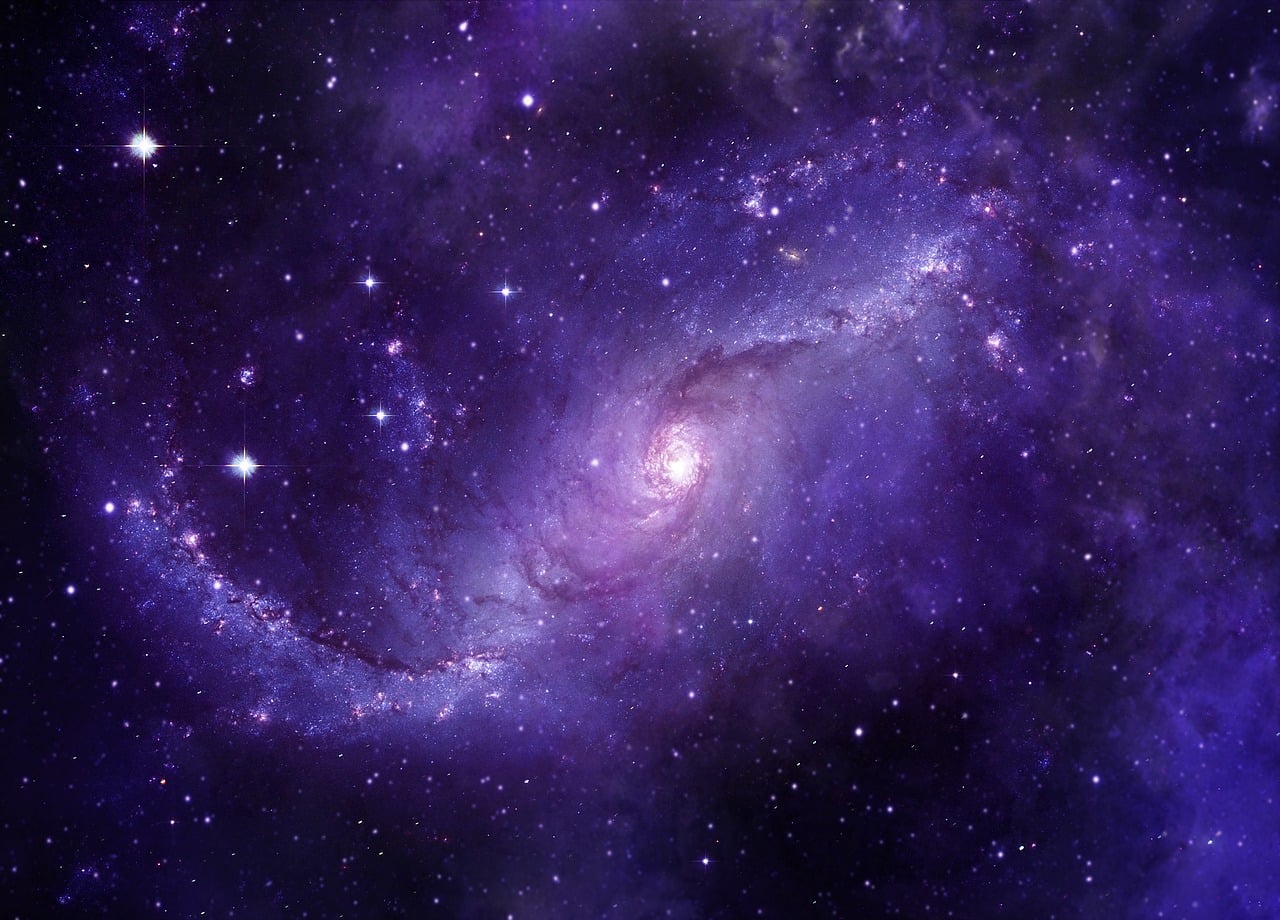
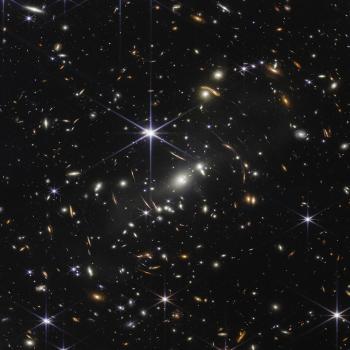
“The eternal silence of these infinite spaces frightens me” (Penseés, #206). So said Blaise Pascal in 1657. That was before we knew just how vast the universe really is, with its millions of galaxies millions of light years away from each other.
More recently, astronomer Carl Sagan said, “We live on an insignificant planet of a humdrum star lost in a galaxy tucked away in some forgotten corner of a universe.”
No wonder so many people believe our brief life on this “insignificant planet” is meaningless. And no wonder so many people believe or want to believe in extraterrestrial life. Surely, they say, we can’t be alone in the universe. That would be really terrifying.
In our recent post entitled Would Evidence of Aliens “Shatter” Christian Beliefs?, we discussed claims that the discovery of extraterrestrial life would undermine the Christian worldview. I would argue that the apparent emptiness of this vast universe is much more corrosive to religious faith.
I came across an article by Scott Ventureyra in the Catholic magazine Crisis entitled We Have Never Been Alone. He too cites the quote from Pascal and goes over some of the ideas we discussed in our earlier post. He usefully surveys what other Christians have said about the issue. St. Thomas Aquinas, for example, was open to the possibility of other worlds. And the modern Catholic theologian Karl Rahner even entertained the possibility, like C. S. Lewis, of multiple incarnations.
In the course of all of this, he makes this illuminating, paradigm-shifting statement:
The modern framing of the question “Are we alone?” often assumes a purely material universe. Yet from a Christian perspective, humanity has never been alone in creation, for God remains immanent in His creation.
Ventureyra goes on to cite angels and demons and continues with his discussion. I want to linger on this point. As of His Ascension, says St. Paul, Christ “fills all in all” (Ephesians 1:23; ESV). Other translations render the text as Christ “fills all things.” Or Christ “fills everything.” Or Christ “fills the universe.” The Greek is even stronger, if that is possible: “τὸ πλήρωμα τοῦ τὰ πάντα ἐν πᾶσιν πληρουμένου.” The fullness of all in all fullness.
Christ fills the infinite spaces. Pascal was the great Christian apologist. As Ventureyra says, Pascal “viewed humanity’s fascination with other worlds as a form of divertissement: a way to avoid confronting our own spiritual emptiness and need for God, the only one who can fill that vacuum.” The infinite spaces are not in the universe, but in us. The vacuum is not in outer space, but in us. But Christ can fill our emptiness.
Another 17th century Christian writer raised these same issues and came to the same conclusion. At several points in Paradise Lost, John Milton raises the possibility of other worlds, without taking a definite position on the issue. For example, Satan, flying through outer space to tempt Adam and Eve on earth, moves
Amongst innumerable stars, that shone
Stars distant, but nigh hand seemed other worlds;
Or other worlds they seemed, or happy isles,
Like those Hesperian gardens famed of old,
Fortunate fields, and groves, and flowery vales,
Thrice happy isles; but who dwelt happy there
He staid not to inquire. (Book 3, lines 565–571)
When Milton describes God’s creation, he brings up the “infinite spaces” problem and then resolves it. These are some of my favorite lines in Paradise Lost. This may be the most sublime passage in the poem, and thus in all of literature. God, on the verge of creation, speaks:
Boundless the Deep, because I Am who fill
Infinitude, nor vacuous the space. (Book VII, lines 168–169)
The reason “the Deep” is boundless is because God is boundless. “Because I Am”–note God’s name: I Am (Exodus 3:14), connecting Him to absolute being. (In the very next verse, Exodus 3:15, God reveals His name as the tetragrammaton, YHWH, meaning “He is.” Scholars say “I Am” is how God speaks of Himself; “He is” is how others must speak of Him.)
God, “I Am,” fills infinitude! Space is not a vacuum after all, because He is there and everywhere!
We are not alone in the universe after all. And the “infinite spaces” are inhabited by the infinite God.
As for our interest in extraterrestrial life on other planets, Milton has an answer for that too. In the epic poem, the angel Raphael reveals to Adam what he needs to know. He concludes with this:
Heaven is for thee too high
To know what passes there; be lowly wise:
Think only what concerns thee, and thy being;
Dream not of other worlds, what creatures there
Live, in what state, condition, or degree;
Contented that thus far hath been revealed
Not of Earth only, but of highest Heaven. (Book VIII, lines 172-178)
And here is what the Psalmist says about our alleged insignificance in the vastness of the universe:
When I look at your heavens, the work of your fingers,
the moon and the stars, which you have set in place,
what is man that you are mindful of him,
and the son of man that you care for him?
Yet you have made him a little lower than the heavenly beings
and crowned him with glory and honor.
You have given him dominion over the works of your hands;
you have put all things under his feet. (Psalm 8:3-6)
Yes, we are small compared to the moon and the stars and the vastness of the universe. But the Creator of it all is “mindful” of us. He “cares” for us. He gives us dominion over His creation. He puts “all thing” under our feet. This is fulfilled not just by man, but by the “Son of Man,” to whom we are engrafted by faith.
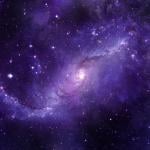
Image: Galaxy, Star, Universe by lumina_obscura via NeedPix, https://www.needpix.com/photo/1674253/, Public Domain.







 Ad-Free & Subscriber Log-In