

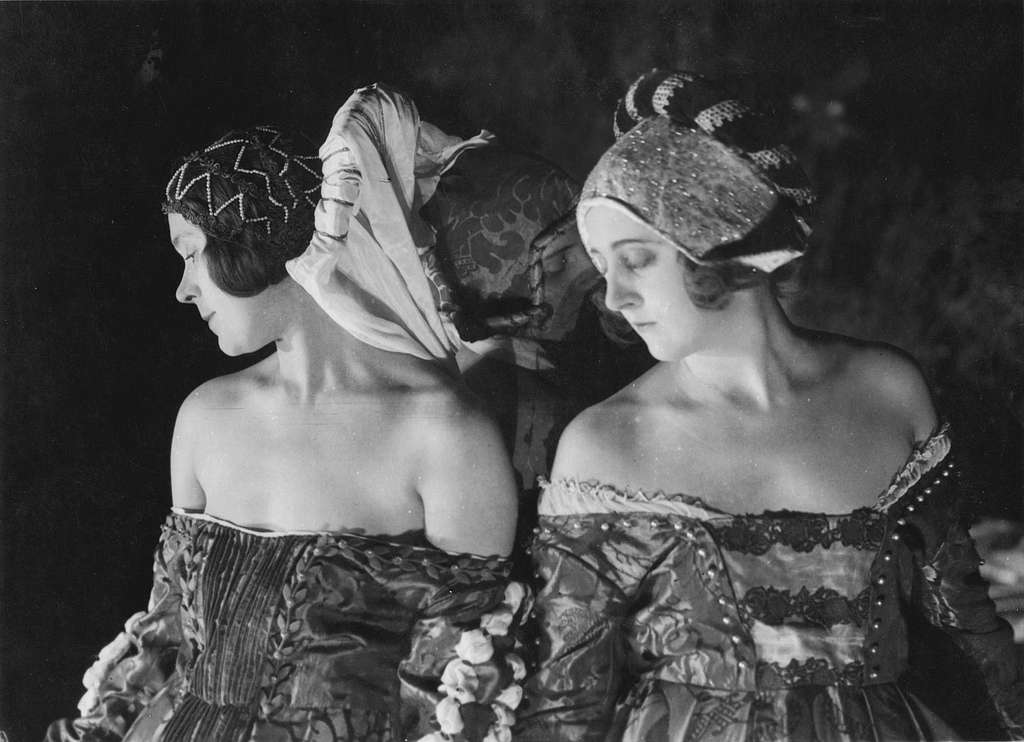
Source: Picryl
Public Domain
Benjamin Christiansen’s Häxan (1922) is one of those movies any filmhead knows they should watch. The stills one sees online are stunning. Horrific-looking monsters stand over cauldrons. Satan himself wags his tongue at God knows what. And it’s all so clear, crisper than what we get on the silver screen today. But, then again, it’s a 100-minute silent film with a quasi-documentary tone. Think The Thin Blue Line (1988) with no talking and guys in demon suits. Fun yes but daunting. There’re too many YouTube videos to watch.
But, as usual, that little voice is wrong, or so I discovered. Häxan is majestic. Five bags of popcorn, etc. Watching the film feels a little like a road not taken in cinema. Its free play of dramatic recreation and (then current) scholarship on witchcraft never lost me. I forgot the film had no spoken dialogue. I lost myself in the images and began to, so to speak, pick up what the film was putting down. Christiansen seems to have set out to use the new medium to bring to life a dark past—the persecution and execution of a subset of the European population—with concomitant lessons for the present. The intertitles describe the action, comment on his own actors’ lives and performances, and cite copious research. Cinema, with its ability to visually blur real and fake proved the perfect medium, both for the topic and for its rhetorical purpose.
And his heart was undeniably in the right place. Christiansen’s essential point is that such persecutions were bad. In the end, he argues they are not only part of the past, that we remain intolerant, plagued by superstition, and open to the forces of unscientific evil. The problem (if we can call it that) is that his position now feels quaintly ignorant. World War I, eugenics, race science, Richard Dawkins, Sam Altman—the trouble is that the scientific and the superstitious are not quite so cleanly separable. Magical thinking can affect just about anything. Not that I blame him for perhaps not realizing that. It’s just difficult to ignore the capital-P Progressivism of Christiansen’s masterpiece.
As a medievalist, however, I had a few complaints of my own. His understanding of medieval ecclesiastical courts, the inquisition, and the period during which witch hunts reached their numerical apogee leaves a lot to be desired. He has the sort of view we’d expect from one committed to the scientific humanism already mentioned. The film assumes the people of the past to have been more-or-less ignorant stooges, their legal systems to have been nothing more than overt barbarity, and the religious inklings of the middle ages to have been mass delusion. Agree or disagree, he’s not got all the facts.
But that’s an issue with the scholarship of the past. And these days no one watches Häxan for its academic bona fides. It’s gorgeous, formally adventurous, and a testament to force of human creativity. Even I can put aside my training to enjoy that.















 Ad-Free & Subscriber Log-In