

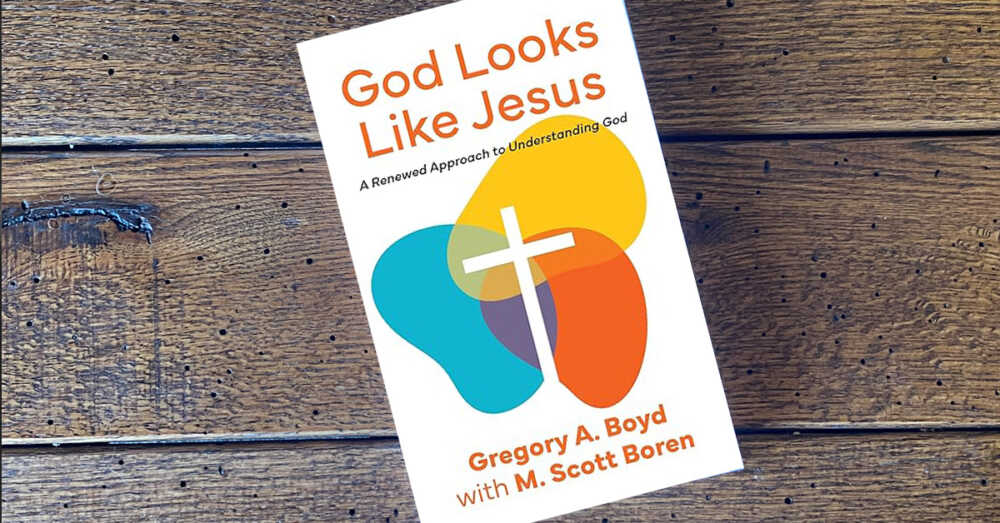
Here I continue discussing the book God Who Looks Like Jesus: A Renewed Approach to Understanding God by Gregory A. Boyd and M. Scott Boren (Herald Press). Chapter 6 is Rethinking God. If you have read the chapter, feel free to comment; if not, feel free to ask a question.
Chapter 6: Rethinking God amounts to a full assault on “the classical view of God” by which Greg means the Greek philosophically-inspired view of God as immutable, impassable and pure actuality with no potentiality. Its main representative in Christian history is Thomas Aquinas, the Angelic Doctor of the Catholic Church. However, it was also promoted by Anselm of Canterbury and many others. Even some Protestant scholastics such as Francis Turretin and his disciple Charles Hodge held versions of it. It is still promoted by many evangelical theologians (among others).
Greg admits that some, perhaps many, Christian theologians have affirmed that God is also relational, something he strongly affirms. However, he says, they appeal to “unnecessary mysteries” and fall into contradiction: “God is immutable, but in some mysterious sense also is relational. God is timeless, but in some mysterious way also interactive. God is impassible, but in some mysterious manner, also suffers.” (109) He says that when we start thinking about God through Jesus, “the ‘mysteries’ of classical theism simply disappear.” (110)
Greg has often said that these metaphysical attributes of God are unnecessary and even unbiblical “metaphysical compliments” people think they must pay to God. They all stem from the presupposition that he calls “the ontology of perfection”—that a perfect being cannot change in any way whatsoever and cannot have any potential at all. The God of the Bible, however, the God of Jesus Christ, suffers and changes—not in essence or wisdom but in experience. Love changes a person. To love another, outside of oneself, is to be open to some suffering. And, the cross signifies that God can suffer. Greg rejects the old notion of classical theism that Christ only suffered “in his human nature.”
The most beautiful and homiletical paragraph is this: “The cross reveals a deeper dimension to the problem of evil. The crucifixion shows us a God who makes evil his own problem. The God who reveals himself in Jesus does not stand aloof from the pain of the world; instead, he enters into the depths of our collective hell to liberate creation from it. If evil is a problem for us, how much more must it be for a God whose capacity for love is infinite and who therefore experiences the world’s collective pain?” (114)
I agree completely with Greg (and his co-author) in this chapter. When I first learned about “classical Christian theism,” that God cannot be affected by anything outside himself, I was appalled. I was by then thoroughly familiar with scripture and embedded in a form of Christian life that believed prayer can make a difference. I believed in a relational, interactive God, not a metaphysical God of Greek philosophers (and those influenced by them). I cam across something Anselm of Canterbury said to the effect that God cannot even feel compassion. I studied Process Theology and Hegel’s philosophy of religion and rejected them as also too philosophical to fit the God of the Bible and of Jesus Christ.
Greg and I had numerous conversation about this subject and I “hear” echoes of things we both said in those conversations in this chapter (and throughout the book). If I could, I would require all students of Christian theology to read this book and especially this chapter. We need to shed once and for all at least the most rigid forms of classical theism and return to the loving, relational God of the Bible and of Jesus.
*Note: If you choose to comment, make sure your comment is relatively brief (no more than 100 words), on topic, addressed to me, civil and respectful (not hostile or argumentative), and devoid of pictures or links.*













 Ad-Free & Subscriber Log-In