


What many miss is that this scene is profoundly political. The disciples are sent back not into safety but into the world that crucified Jesus. The Spirit empowers them to confront those systems of oppression with courage and solidarity. The authority to forgive or retain sins can be understood as the responsibility to name injustice truthfully while also participating in restoration and reconciliation. Forgiveness is not a denial of harm but a pathway toward liberation from cycles of injustice and violence.
Welcome Readers! Please subscribe to Social Jesus Here.
This is Part 2 of the series When Doubt Leads to a More Tangible Experience
(Read this series from its beginning here.)
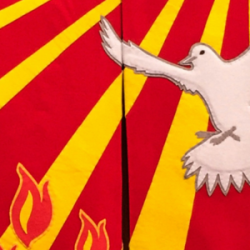
Thus, the breathing of the Spirit in John’s resurrection narrative forms a community shaped by their memory of suffering, their encounter with the Divine’s response to that suffering, and their being empowered to transform our collective human suffering. The risen Jesus sends his followers to continue his work of standing with the marginalized, challenging injustice, and embodying a peace that mere violence and strength cannot give.
Next, let’s consider the portion of our reading that is about Thomas. Those disciples named in the gospel of John honor and legitimize the communities who formed around the lives of each named apostle. This is true of Peter, Mary, and others in John’s gospel. We remember Thomas for his doubt, yet his story is far richer than a simple failure of faith. When the other disciples proclaim that they have seen the risen Jesus, Thomas refuses to accept their testimony secondhand. He insists on seeing and touching for himself, declaring that he will not believe without direct experience. Rather than rejecting Thomas, Jesus meets him in his uncertainty, and invites him to touch his wounds. This moment affirms that doubt is not the opposite of faith but often a pathway into a deeper, more embodied experience.
Thomas offers an important lesson for us: authentic faith does not require suppressing questions or ignoring evidence. In Christian movements for justice especially, people are often confronted with competing narratives, misinformation, and systems that obscure truth. Like Thomas, we are called to seek truth honestly, to question easy answers, and to resist accepting claims without examination. This kind of critical engagement strengthens, rather than weakens, our commitment.
Additionally, Jesus’ response to Thomas models a compassionate approach to those who struggle. He does not shame or exclude Thomas but meets him where he is. This informs us that we too are to create spaces where people can wrestle with uncertainty, unlearn harmful assumptions, and grow at their own pace. Transformation rarely happens through coercion; it happens through deconstruction, reconstruction, community, relationships, and believing the best about one another. (Read Part 3.)
Begin each day being inspired toward love, compassion, justice and action. Free.
Sign up at HERE.
















 Ad-Free & Subscriber Log-In