Patheos
Special Offers
BuddhistCatholicContemplativeEvangelicalGeneral ChristianHinduJewishLatter-day SaintMuslimNew VisionsProgressive Christian
Beliefs
  • Buddhist
  • Catholic
  • Contemplative
  • Evangelical
  • General Christian
  • Hindu
  • Jewish
  • Latter-day Saint
  • More Voices
  • Muslim
  • New Visions
  • Pagan
  • Progressive Christian
Topics
  • Religion News
  • Food and Religion
  • Sports and Religion
  • Religious Art
  • Religious Music and Entertainment
  • Religious Events
  • History and Religion
  • Style and Religion
  • Politics and Religion
  • Women in Religion
  • Recreation Outdoors and Religion
  • Business Finance and Religion
  • Careers Workplace and Religion
  • Education and Religion
  • Family Parenting and Religion
  • Health Fitness and Religion
  • Home and Religion
  • Relationships and Religion
  • Technology and Religion
  • Travel and Religion
Columnists
  • Buddhist Columnists
  • Business Finance and Religion Columnists
  • Careers Workplace and Religion Columnists
  • Catholic Columnists
  • Contemplative Columnists
  • Education and Religion Columnists
  • Evangelists Columnists
  • Family Parenting and Religion Columnists
  • General Christian Columnists
  • Health Fitness and Religion Columnists
  • Hindu Columnists
  • History and Religion Columnists
  • Home and Religion Columnists
  • Jewish Columnists
  • More Voices Columnists
  • Latter Day Columnists
  • Muslim Columnists
  • New Visions Columnists
  • Nonreligious Columnists
  • Pagan Columnists
  • Politics and Religion Columnists
  • Progressive Columnists
  • Recreation Outdoors and Religion Columnists
  • Relationships and Religion Columnists
  • Religion News Columnists
  • Religious Art Columnists
  • Religious Events Columnists
  • Religious Music and Entertainment Columnists
  • Sports and Religion Columnists
  • Style and Religion Columnists
  • Technology and Religion Columnists
  • Travel and Religion Columnists
  • Women in Religion Columnists
Resource Library
  • 2026 Calendar
  • Library of World Religions
  • The 100 Most Holy Places on Earth
  • Patheos Answers
  • Podcasts
  • Videos
  • Faith Leaders Database
  • Anglican Episcopalian
  • Bahai
  • Baptist
  • Buddhism
  • Christianity
  • Confucianism
  • Eastern Orthodoxy
  • Hinduism
  • Holiness and Pentecostal
  • ISKCON
  • Islam
  • Judaism
  • Lutheran
  • Methodist
  • The Church of Jesus Christ of Latter-day Saints
  • New Age
  • Paganism
  • Presbytarian and Reformed
  • Protestantism
  • Religion Behind the Scenes
  • Roman Catholic
  • Scientology
  • Shia Islam
  • Sikhism
  • Sufism
  • Sunni Islam
  • Taoism
  • Zen
  • See all religions
Research Tools
  • Comparison Lens
  • Preacher Resources
  • Teacher Resources
Video
Podcasts
Thought Readers
Faith In Media Tracker
E-Books and Other Special Offers
  • God's Cheat Sheet to Finances
  • Books of the Bible Study series
  • History of the Bible
  • 7 Day Prayer Challenge for Spouses
  • A Different Kind of Christian
  • Jesus is Love
  • Prayer Devotional
  • The Saints We Love
  • FaithChatter Conversation Cards
Newsletters
Special Offers
Ad-Free & Subscriber Log-In Subscription Support
Patheos
Ad-Free & Subscriber Log-In Subscription Support
Follow Patheos Patheos on Facebook Patheos on YouTube
  • Trending:
  • Lent
  • |
  • Ice
  • |
  • Trump
  • |
  • Forgiveness
  • |
  • Marriage
  • |
  • Deconstruction
Evangelical

The Reward of the Seeking Is the Seeking Itself: Preaching Gregory of Nyssa

August 07, 2011 by Daniel Harrell
"Like" the Patheos Evangelical Page on Facebook to receive today's best commentary on Evangelical issues.

Editor's Note: Below is a "Monday Sermon," from our series of sermons at the Patheos Preachers Portal that pastors can enjoy and learn from. It is our hope that this particular series from Daniel Harrell, which preaches through the Church Fathers, will encourage pastors, show them a way of approaching theological education from the pulpit, and refresh their theological memories. See Reverend Harrell's columnist page for more information.

Gregory of Nyssa, along with his brother Basil the Great and their friend Gregory of Nazianzus, together comprised the 4th-century church leaders known to us as the Cappadocian Fathers. They are credited with defending orthodox Christianity from various heretical challenges as they fought to formulate the definitive Nicene Creed. Fourth-century Asia Minor was a tumultuous place during a tumultuous time in church history when all of the doctrines we take now for granted were then up for grabs. The nature of the Trinity, the divinity and humanity of Jesus, the contents of the Bible, the role of the Holy Spirit—all of these were debated publicly in the streets with even fiercer fervor than states now debate gay marriage, fiscal policy, and road construction combined.

Into this fray stepped Basil the Great, so named due to his fierce convictions and his readiness to take on the chief heresy of Arianism—basically the 4th-century's version of The Da Vinci Code. Arians held that no man, not even Jesus, could ever be God. Arians believed Jesus to be the highest created being, but he was still just a creature and not the Creator. Gregory of Nazianzus, credited with defeating the Arians, had not been as ready and willing as Basil to join the battle. He only did so because Basil died without finishing the fight.

Basil's brother, Gregory of Nyssa, was even more reluctant than Gregory of Nazianzus to get involved. He preferred instead to settle down in Caesarea with his wife and pursue a career as a professional orator. However, big brother Basil would tolerate none of Gregory's complacency. Now Bishop of Constantinople, Basil ordered Gregory to take over the diocese of Nyssa and secure it for orthodoxy, reminding him that to believe in God was to acknowledge God's right to demand your very life. Death was often the outcome when it came to church jobs in ancient Turkey. Reports abound of ministers fleeing ecclesiastical assignments for fear of losing their lives, only to have church committees then track down the runaway ministers and drag them back into service—all of which gives different meaning to the concept of "feeling called to the ministry." Whether this happened with Gregory is unknown, but what is known is that he stunk as a pastor. In fact, he got along so badly with his congregation that they falsely accused him of embezzling church funds just so they could get rid of him.

However this turned out to be an ironic blessing, as most of God's blessings are. Getting fired from his ministerial duties freed Gregory to write an enormous number of theological treatises that heavily influenced church doctrine regarding the infinite nature of God, the Trinity, the deity and incarnation of Jesus as well as the believer's relationship with Christ. It is in this last area, our relationship with Christ, where Gregory is best remembered. He wrote,

If we put on the name of Christ but do not demonstrate through our life what is meant by this name, we betray the model that was given to us, akin to putting on a lifeless mask that gives human character to a monkey. It is not the nature of Christ to be anything other than righteousness, purity, truth, and alien to every evil. Therefore, if one wishes to define the meaning of Christianity, we shall say it this way: Christianity is the imitation of Christ.

Of course, Gregory of Nyssa knew better than anybody that while imitating Christ may be the meaning of Christianity, that does not mean it's an easy thing to do. All of us constantly find ourselves in those places where we know what imitating Christ looks like—turning the other cheek when offended, going the extra mile for someone who needs our help, taking care of the plank in our own eye before going after the speck in somebody else's; we know what's right, we just don't do it. Of course this makes us feel guilty for being such bad Christians, but the fact of the matter is that most days that's we are. Is it any wonder that Gregory of Nyssa's favorite verse came from Philippians 3? The apostle Paul wrote: "I'm not yet perfect, I don't have it all together, I'm doing my best, I keep trying, I'm pressing on." Paul declares himself the virtual equivalent of a "work in progress." And all God's people breathe a collective sigh of relief. If even St. Paul's no saint, maybe I'm okay too.
Article Continued On Next Page
Page: 1 of 3
8/7/2011 4:00:00 AM
  • Evangelical
  • The Church Fathers ABCs
  • Virtue
  • History
  • Evangelicalism
  • more at patheos
    1
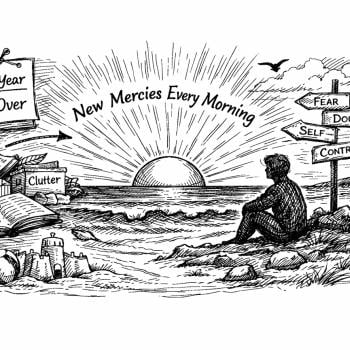
    Forget The "Do-Overs"--Find New Mercies Instead
    Christy Thomas
    2
    Every day is a Good Day: A Thanksgiving Zen Koan
    James Ford
    3
    Reach Out, Chapter 3: The Intervention
    Dorian Cole
    4
    Cardinal Issue: Selective Urgency & Problematic Credibility
    Dennis Knapp
    Daniel Harrell
    About Daniel Harrell
    Daniel M. Harrell is Senior Minister of The Colonial Church, Edina, MN and author of How To Be Perfect: One Church's Audacious Experiment in Living the Old Testament Book of Leviticus (FaithWords, 2011). Follow him via Twitter, Facebook, or at his blog and website.
    Patheos Logo Patheos Explore the world's faith through different perspectives on religion and spirituality! Patheos has the views of the prevalent religions and spiritualities of the world.
    Patheos on Facebook Patheos on YouTube
    Ad-Free & Subscriber Log-In Subscription Support
    • About Us
    • 2026 Calendar
    • Videos
    • Podcasts
    • Library of World Religions
    • Faith In Media Tracker
    • Advertise With Us
    • Write for Us
    • Privacy Policy
    • Terms of Service
    • Do Not Sell My Data
    • Contact Us
    • Radiant Digital
    • Manage Newsletter Subscriptions
    • Unsubscribe From Notifications
    • Sitemap
    Copyright 2008-2026, Patheos. All rights reserved.
    Subscription Support Ad-Free & Subscriber Log-In
    Follow Patheos Patheos on Facebook Patheos on YouTube