
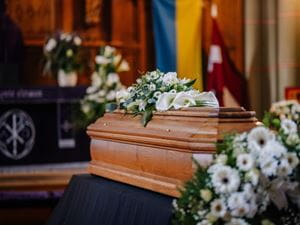
Cards on the table; if I were a British Member of Parliament with a vote on assisted suicide, I would vote against its legalisation. There is an abundance of articles that make similar points in its disfavor: the sacredness of life; the slippery slope; the risk of complications. You can read up on the pros and cons elsewhere. For the time being, I’d like us to examine the phrase ‘dying with dignity’, so frequently deployed in this conversation; what does it mean to ‘die with dignity’? This approach will, I hope, yield more insight than another piece built on the usual arguments.
Almost all of us have known someone, whether a family member or close friend, whose final illness brought us much distress. For me, that person was Uncle Alan, whom we lost in 2021 to leukaemia. The depth of character that Uncle Alan showed in those last weeks, as he bore his affliction to the very last, was nothing short of heroic. He left us, then – after a life of love and laughter: eternal memories – with a demonstration of supreme courage. I had not really known the meaning of bravery till this tragedy struck; neither have I seen the like of it since.
I mention this because Uncle Alan’s experience is my touchstone when it comes to the question of assisted suicide (which wasn’t an option for him, in any case, because it’s illegal in Britain and Ireland). If you too have lost a relative to leukaemia, then you’ll know that it isn’t a pleasant illness, to put it mildly. Nonetheless, it was Uncle Alan’s defiance in the face of his infirmity – the will to fight on, until he could fight no more – that made his death a dignified one. I cannot find words equal to my pride in the man; he truly knew how to die with dignity.
Mine, however, are far from the only valid reflections that could be made on Uncle Alan’s illness. I would not respect any member of my family the less if they – having seen, as we all did, the pain he was in – decided that we needed a law to legalize assisted suicide. I might not be persuaded by the case for assisted suicide but I’m not untouched by the points in its favour.
Which brings me back to the phrase ‘dying with dignity’. There is a lobby group in the UK, Dignity in Dying, which argues that ‘dying people deserve the choice to control the timing and manner of their death’. What seems obvious to me, however, is that ‘dying people’ includes everyone. ‘In the long run, we are all dead’, as John Maynard Keynes put it; or, to quote another Englishman, Tolkien, we’re all ‘mortal men, doomed to die’. There is no basis I can see to distinguish ‘assisted suicide’ from ‘assisted dying’; as if one were more benign than the other.
Was it impossible for death to be dignified in Belgium or the Netherlands before 2002 when assisted suicide was legalized? …in Canada before 2016? …in Spain or New Zealand before 2021? Surely the decent answer, in each instance, is ‘No’, ‘No’, and ‘No’ again. Otherwise, we would insult every generation who went before. Without assisted suicide laws, they did all they could to relieve the pain of others. They believed their efforts at palliative care preserved human dignity. Were they tragically mistaken? Were they somehow deluded by compassion?
Apart from the memories I have of Uncle Alan’s last weeks with us, another cornerstone of my thought on assisted suicide is Viktor Frankl’s widely-read book, Man’s Search for Meaning (1946). Professor Frankly, as you may know, endured the horrors of several Nazi concentration camps. Trained in psychiatry, Frankl rallied the spirits of his fellow victims through profound words of encouragement. After the liberation, he recorded this wisdom in his magnum opus.
Thoughts like those below carry the ring of truth and make assisted suicide hard to support:
•‘If there is a meaning in life at all, then there must be a meaning in suffering’ (p. 76).•‘Sometimes man may be required simply to accept fate, to bear his cross’ (p. 85).
•‘I told my comrades (who lay motionless, although occasionally a sigh could be heard) that human life, under any circumstances, never ceases to have a meaning and that this infinite meaning of life includes suffering and dying, privation and death’ (p. 90).
•‘I only insist that meaning is available in spite of – nay, even through – suffering, provided, as noted in Part Two of this book, that the suffering is unavoidable’ (p. 148).
The pervasive theme in these quotes is how those who suffer can find meaning in their tribulations. The second statement – a reference to Matthew 16.24, ‘Take up your cross and follow me’ – holds particular weight for Christians. Indeed, a central task for Christian theologians has been to flesh out, with much argument back and forth over the centuries, why the Crucifixion was necessary. These debates have spawned various theories of atonement. We can all agree, though, that in his incarnation, death and resurrection, Christ achieved our salvation: a new life in the world to come. This much is to be found in the creeds.
While Christ suffered on the Cross, his tormentors repeatedly tempted him to ‘save himself’. We could interpret this to mean, ‘save yourself from death’; but what if we frame it more like, ‘save yourself from suffering’? Jesus could have escaped from his ordeal by means of death; he might have goaded a Roman soldier until the legionnaire made an end of him – an assisted suicide, of sorts. But he doesn’t. Jesus drinks his cup of suffering to the dregs, true to Frankl’s timeless insight: ‘Sometimes [a] man may be required simply to accept fate, to bear his cross’.
As I close, I’d like to consider how religion, which helps us to bear our cross in life, can also bring a level of dignity to the deathbed. (Kudos, here, to hospital chaplains and parish priests.)
In the Church of Ireland’s Book of Common Prayer, there is an order entitled ‘Preparation for Death’; I suppose it’s our equivalent of last rites. In it we find the much-loved canticle Nunc Dimittis (‘Lord, now lettest thou thy servant depart in peace…’) and sentences of scripture which are chosen specifically to bring solace. How does this confer dignity? Well, it reminds the sufferer that, as Paul wrote, ‘We shall always be with the Lord’ (1 Thessalonians 4.17). God values and loves us; every soul that enters his Kingdom is cause for celebration (see Luke 15.7).
There was one verse, above all others, which comforted me when Uncle Alan died. It was Revelation 21.5, ‘Behold, I make all things new.’ Revelation often gets a bad name for its auguries of apocalypse, but it also has visions of our world made whole. For those who believe, the promise of life to come is our strength and sustenance when we lose a loved one.
So, then, to ‘die with dignity’ doesn’t mean we die when we choose or in a particular physical condition; this is too small an aspiration. To see death for what it is, the threshold of new life, and to face it with a resolute spirit in the fullness of time; this, I believe, is to die with dignity.
6/14/2024 12:05:02 AM







 Ad-Free & Subscriber Log-In