


William Seymour, An Essential Christian Leader
What Does He Teach About the Holy Spirit?
William Seymour is a spiritual leader whose faith and demeanor were instrumental to the Body of Christ during the early 1900s. In fact, his teachings about the Holy Spirit align with the testimonies and experiences of many modern Christians.
What exactly does Seymour teach about the Holy Spirit? How do his convictions submit to an accurate, biblical understanding of the Spirit?
Below, I’ll answer these questions by revealing Seymour’s upbringing, conversion experience, and teachings on the Holy Spirit. Then I’ll explain how Seymour’s beliefs align with teachings in Acts 2 and how they manifest through the Azusa Street Revival.
William Seymour’s Upbringing in Centerville, LA
An Afflicted Yet Faithful Family
William Joseph Seymour was born on May 2, 1870, in Centreville, St.Mary’s Parish, Louisiana. He is the second of eight children of Simon Seymour and Phillis Salabar.
Both of Seymour’s parents were former slaves, and he was born on the Aldin Carlin Sugar Plantation, where his mother lived and worked. Historians are uncertain about where Simon worked as a slave. However, they do know he served in the Northern Army after the signing of the Emancipation Proclamation until the end of the Civil War.
Unfortunately, as former slaves, their family lives in poverty, only owning a bedstead, a chair, and a mattress.
Along with being poor, former slaves, as residents in Louisiana, the family also endures racism and segregation. Despite enduring such harsh, lawful conditions, the family remains steadfast in their faith.
In fact, William Seymour was introduced to two denominations during his upbringing. His parents got married in a Methodist Church, and he received infant baptism at a Roman Catholic Church.
Seymour’s family didn’t just attend church out of religious duty. This is seen as Seymour witnesses his mother praying daily, asking God to use him as an instrument of His.
Her devotion to God becomes an example Seymour relies on as he strives to walk worthy of his calling. God begins answering her prayer by having Seymour learn to read and write while attending a Freedman School in Centerville.
From Centerville, LA to Los Angeles, CA
William Seymour Answers God’s Call to Ministry
Reading and writing are fundamental skills Seymour would use later in life to fulfill God’s will for him. But first, like Abraham, Seymour leaves his family and hometown, going to the places the Lord leads him.
First, he travels to Central America working as a hotel waiter in states such as Illinois, Ohio, and Indiana. While in Indianapolis, Indiana, Seymour surrenders his life to the Lord in a Methodist Church. Shortly after, he leaves this denomination and joins a conservative Holiness group called The Evening Light Saints.
Under their covering, William Seymour receives the call to preach. Interestingly, Seymour doesn’t answer God’s call until he contracts smallpox while in Cincinnati, Ohio.
In 1905, Seymour endures further affliction in Houston, Texas. Segregation hinders him from attending a Bible class on Pentecostal Doctrine with White Christians.
Ironically, the class helps students learn about the Holy Spirit and God’s love while practicing discrimination. Thankfully, the instructor, Charles Parham, allows Seymour to listen to lectures from the hallway.
Jehovah Jireh uses that hallway to increase Seymour’s desire to learn about the power of and Baptism in the Holy Spirit. Most importantly, God uses the unfair trial to build Seymour’s character, as he prays daily to experience the Holy Spirit.
Despite the earnest requests, Seymour has to wait to experience the Baptism of the Holy Spirit, unlike Parham’s other students.
William Seymour Moves to Los Angeles, California
While Seymour waits for a personal outpouring of the Holy Spirit, Parham allows him to begin preaching to Black audiences.
He also preaches at a small Holiness church pastored by Lucy Farrar, who works for Charles Parham. During one service, a guest from Los Angeles named Neely Terry hears him preach.
Afterward, she convinces her small Holiness church to let him attend a meeting. So, Seymour moved to LA in February 1906.
Sadly, the congregation rejects his Pentecostal message mainly because he has yet to experience what he was preaching. Though rejected by this assembly, our heavenly Father uses this rejection as preparation for him to lead countless believers.
Pentecost & The Azusa Street Revival
The Wait is Over
Before explaining the move of God that shakes LA like an earthquake, let’s take a look back at the Day of Pentecost. Pentecost is the Greek name for the Feast of Weeks, which celebrates the end of the grain harvest.
This occurs 50 days after the Offering of First Fruits, as the Israelites must bring a grain offering to the Lord.
Pentecost is also the day when 120 patient believers wait for the promise of the Holy Spirit’s arrival. The promise is made in Joel 2:28-29 and is affirmed by Jesus in Luke 24:49.
The promise is manifest in Acts 2:1-4 as the 120 believers are filled with the Holy Spirit and begin to speak in tongues and prophecy. This promise allows them to feel God’s indwelling presence and empowers them to spread the Gospel worldwide.
Empowerment comes as they’re able to communicate in other languages given by God; they didn’t learn independently. Empowerment also comes through gifts like
- Faith.
- Healing.
- Knowledge.
- Prophecy.
- Speaking in tongues.
- Wisdom.
Spirit gifts like prophecy and the Baptism of the Holy Spirit are still essential for Christians today.
But God doesn’t bless us with the Spirit for our vain glory. In fact, Matthew 5:6 promises that God will fill those who are hungry and thirsty for righteousness.
When William Seymour and Edward Lee seek the infilling of the Holy Spirit, they do so wanting more of God.
Prayer, Power & Partnership
God rewards their genuineness, baptizing them with the Holy Ghost three days apart during one of their prayer meetings. Seymour’s future wife, Jenny Moore, also receives an outpouring of the Holy Ghost during this period.
By the time they receive this baptism, hundreds attend the prayer meeting and receive the infilling of the Holy Ghost.
This experience, based on Acts 2:1-4, is called the Azusa Street Revival. This is because the movement becomes so large that they have to move to the basement of 312 Azusa Street to hold services.
As the Pastor of Faith Apostolic Mission (FAM), Seymour holds services three times a day, every day. He governs the gatherings with much prayer and reverence for the Spirit’s direction. The reverence is so great that he lovingly corrects anyone who disrupts the service by engaging in fleshly acts.
Once again, God honors Seymour’s humble devotion by allowing the movement to last three years. Interestingly, the movement’s longevity exists, in part thanks to Seymour’s “good thing,” Jennie Moore.
Under the Spirit’s leading, Jennie plays the piano and sings hymns during Azusa Street Revival services. While supporting Seymour, Jennie also fulfills her calling as an FAM administrator and city evangelist, who doesn’t neglect prayer.
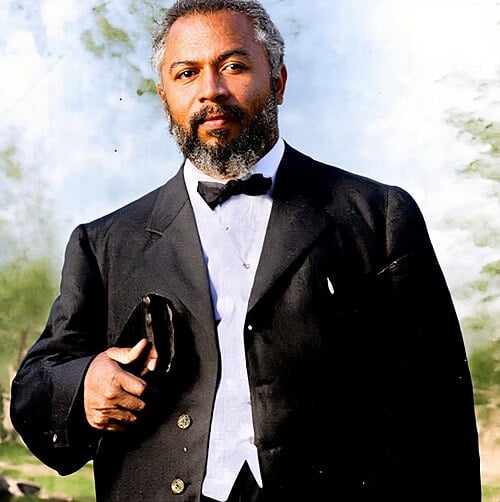
William Seymour Endures Persecution
Prayer is not only the ignition that kept the Azusa Street Revival fire burning, but intercession also sustains the movement amid persecution. As people receive God’s spirit and power through baptism, critics ridicule the revival.
They make terrible remarks, accusing recipients of emotionalism, and they mock the gift of speaking in tongues. Critics also make negative remarks about William Seymour. This isn’t surprising since the 120 believers present at Pentecost are accused of intoxication.
Unfortunately, Seymour’s marriage also comes under attack as members of FAM thought it was an ungodly act, distracting Seymour from focusing on Christ’s return. Such beliefs prompt Seymour to preach a sermon defending the Bible’s position on marriage.
Despite the criticism, God uses foolish things to confound the wise as the revival revives and unites believers globally. This manifestation of the Spirit trumps racism, classism, sexism, and other prejudices that suggest we’re not all one in Jesus.
Leaving a Lasting Legacy
Seymour’s teaching on the Holy Spirit makes a global impact for two reasons. First, with help from an editor and stenographer, FAM publishes a newspaper called The Apostolic Faith. The work features his sermons and updates on the revival.
Second, missionaries from FAM take the newsletter with them to continents like
- Africa
- Asia
- Latin America
- South America
Sadly, Faith Apostolic ends after administrator Clara Lum leaves FAM and ceases the scriber mailing list. Scholars suggest her departure stems from opposition to Seymour and Jennie’s union. Her departure and possession of the mailing list cripples the movement. Without the newspaper, an outreach tool with 50,000 copies in circulation, the Azusa Street Revival ended the following year.
Once the movement ends, Seymour continues pastoring his church. He also establishes other churches and writes a book that helps govern his new church plants. Similar evangelistic efforts are used today, and many trace their religious roots back to Seymour and Azusa Street.
William Seymour takes his eternal rest in the Lord on September 28, 1922. After his death, Jennie pastors FAM for fifteen years. Jennie transitions in 1936, and the couple leaves no offspring, but their faithfulness touches countless lives.
While arguably one of the most influential Black leaders in religious history, William Seymour is known for a humble commitment to prayer.
So, as we celebrate Pentecost Sunday, let’s honor his memory by praying. Let’s spend time seeking God for more of who He is, His spirit, and glory alone.
“And it is impossible to please God without faith. Anyone who wants to come to him must believe that God exists and that he rewards those who sincerely seek him” (Hebrews 11:6; New Living Translation).
Thank You!
Thank you for reading the latest article from the Electi A Deo Experience! Feel free to comment on the article and share it with someone you know. Be blessed and have a great day!












 Ad-Free & Subscriber Log-In