


Basics About Michelangelo’s The Last Judgment
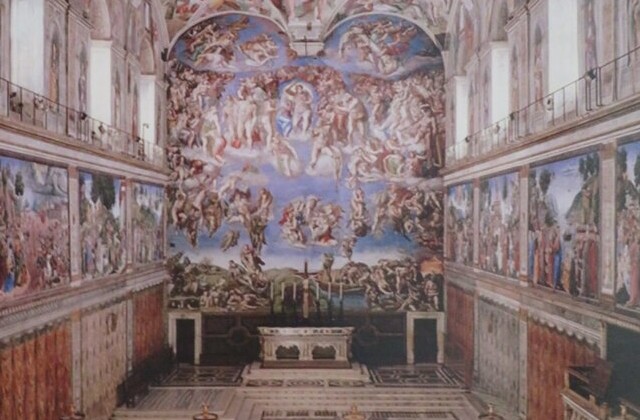
On the entire wall behind the altar in the Sistine Chapel spans a huge fresco of heaven and hell which captivates visitors. This work depicts the Second Coming of Christ and God’s final judgment of all humanity. Christ, surrounded by prominent saints, judges the dead as to their fate.
Production of the piece entailed painting with watercolors on wet plaster to achieve durability. The artwork’s dimensions are 44 feet 11 inches by 39 feet 4 inches, or 13.7 x 12 meters for Europeans. Not only is the fresco big in size, but its value soars as well, an estimated $540 million. Some 300 muscular figures appear in this work, attesting to the need for a large area to depict them. While these figures fill the wall to it edges, the piece is not bound by a painted edge.
The Last Judgment’s Artist
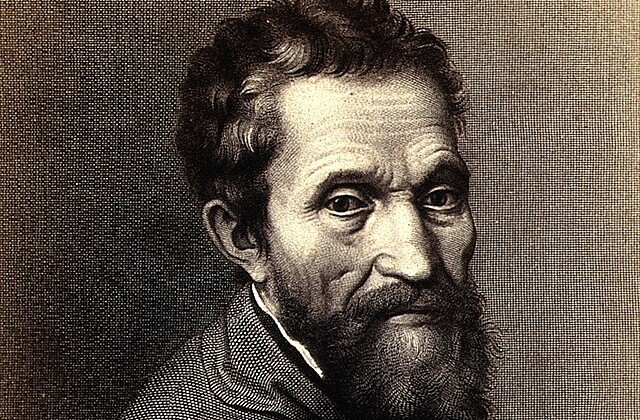
Those not specifically familiar with The Last Judgment itself certainly recognize the name of the artist, Michelangelo di Lodovico Buonarroti Simoni. Usually referred to simply as Michelangelo, he was born in Florence in 1475. Not only an Italian Renaissance painter, Michelangelo worked as a sculptor, architect, and poet. In fact, he was considered the greatest living artist in his lifetime. Since his death in 1564, Michelangelo has been revered as one of the greatest artists of all time. Many view The Last Judgment as his greatest masterpiece.
The fresco of heaven and hell is not Michelangelo’s only work of art found in the Sistine Chapel. The Renaissance artist also painted the “Creation of Adam” which shows God’s outstretched. That work took place between 1508 and 1512. Twenty-five years after finishing the Sistine Chapel’s ceiling, he returned to work on The Last Judgment. He was almost age 67 upon its completion. Interestingly, Michelangelo not only poured himself into this work, but he also placed himself in the fresco. His face appears on the flayed skin St. Bartholomew holds, hanging in the balance between heaven and hell.
Venue of The Last Judgment
The Pope’s official residence in Vatican City, the Apostolic Palace, contains the Sistine Chapel. That chapel holds Michelangelo’s artistic masterpiece, The Last Judgment. Pope Sixtus IV, an art patron who oversaw the construction of the main papal chapel in the 15th century, provides the source for its name.
Today, the Sistine Chapel serves as the private chapel of the papal court. It is also where the College of Cardinals meets to elect the next pope. In fact, it hosted the May conclave that elected Pope Leo XIV. People flock to see the Sistine Chapel, a top destination for the over 6 million tourists visiting the Vatican Museums annually.
History of Michelangelo’s The Last Judgment
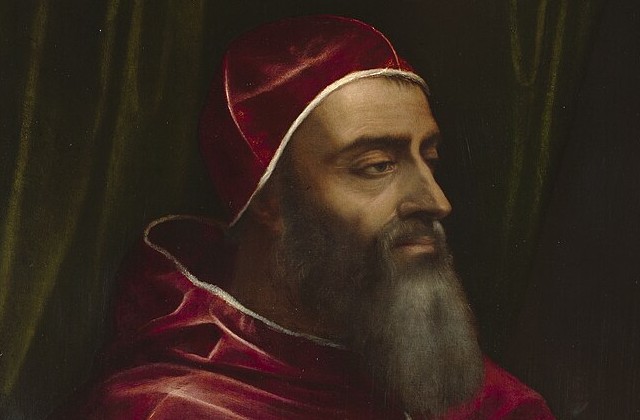
Pope Clement VII commissioned Michelangelo’s work on The Last Judgment, but the work was completed under Pope Paul III. Preparation of the altar wall commenced in 1535 with painting continuing from 1536 throgh 1541.
Today, of course, the artistic piece is iconic and hailed as a masterpiece. Controversy dogged the painting however after its unveiling in Michelangelo’s time. The pervasive nudity on display in his work caused concern, particularly since its display was in a religious setting.
Cleaning The Last Judgment
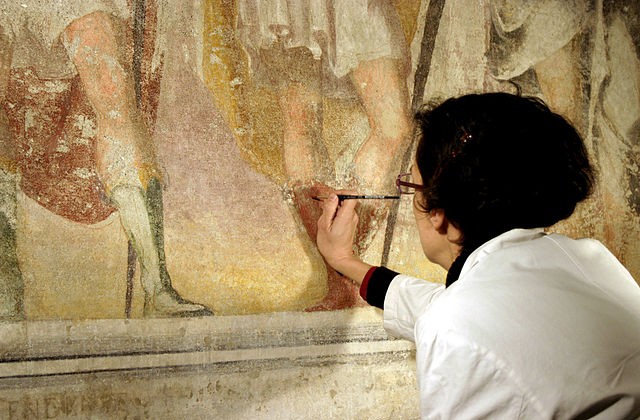
As just announced by the Vatican, Michelangelo’s The Last Judgment will be undergoing its first renovation in three decades, since 1994, to be exact. While the work proceeds, an envisioned three-month project, visitors will still be able to view the masterpiece. Nevertheless, scaffolding will partially obscure it.
Why the need for cleaning? The specific goal is to remove microparticle buildup on the plaster from the parade of tourists passing through the Sistine Chapel daily. The Vatican Museum describes the buildup as a widespread whitish haze resulting from continual deposit of foreign substances through the air. Ongoing protective measures include constant monitoring of humidity and temperature in the small space with a dense number of people. The deposited particles reduce the contrast between light and dark and “homogenize” the fresco’s original colors over time. The plan calls for all deposits made over the years to be systematically wiped off the artwork.
Cleansing Needed
As Michelangelo’s The Last Judgment depicts, a future purging of sinners will take place for God to spiritually cleanse the Earth. Until Christ’s Second Coming, though, physical cleaning of the Renaissance master’s work serves as The Last Judgment’s cleansing. The Vatican’s months-long cleaning project may cause those who view the painting to recognize that both spiritual and physical cleansing are desirable.
Michelangelo’s The Last Judgment Explained











 Ad-Free & Subscriber Log-In