

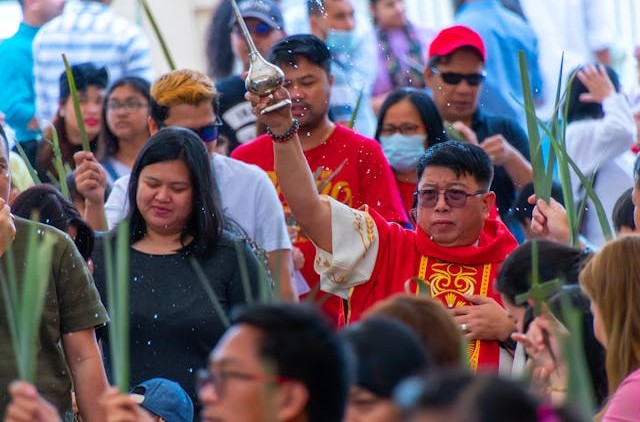
Holy Week begins on Palm Sunday. Therefore, on March 29, 2026, Christians across the world commemorated Jesus’ triumphal entry into Jerusalem. This observance included the waving of palm branches and the reading the account of Jesus riding into the Holy City on a donkey’s colt with shouts of “Hosanna” ringing out from the crowd who threw down their robes in His path. Because the Bible includes these details, they must be important. What is the significance of these familiar elements comprising Palm Sunday props?
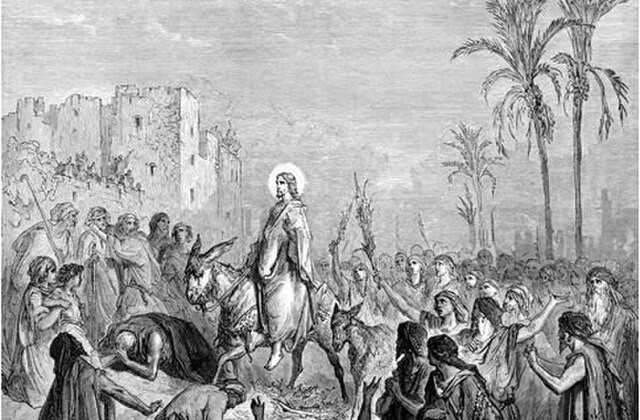
What Is Palm Sunday?
The day Christians observe as Palm Sunday leads up to the Jewish Passover. That holiday, one of the most important on the Jewish calendar, was celebrated by ancient Jews who traveled to Jerusalem for a week-long celebration of their people’s rescue from slavery in Egypt. Festivities included eating a Seder meal, recounting the Exodus story, and sacrificing a Passover lamb at the temple.
All four gospels, (Matthew 21:1-11; Mark 11:1-11; Luke 19:28-44; and John 12:12-19), tell the story of Jesus’ fulfillment of Old Testament Scripture. Around 500 years prior to Jesus entering Jerusalem, the prophet Zechariah spoke of the event Christians now call Palm Sunday. In Zechariah 9:9, he stated that Israel’s king would be coming to Jerusalem “righteous and victorious, lowly and riding on a donkey, on a colt, the foal of a donkey.” Accordingly, Jerusalem, donkeys, and palms became important Palm Sunday props.
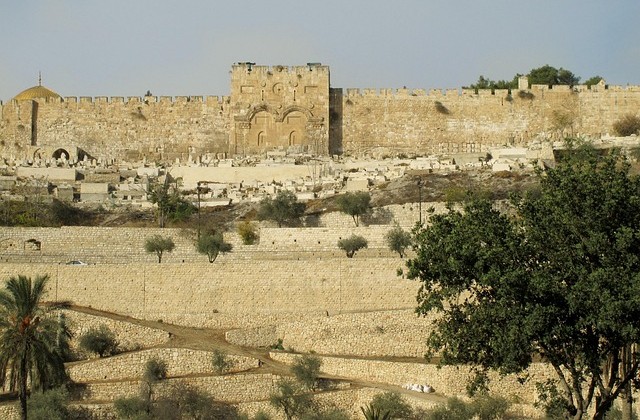
Palm Sunday Prop – The Venue
Every dramatic event unfolds in some venue. The Palm Sunday prop for that location is the ancient city of Jerusalem, site of three yearly pilgrimage festivals for Jews. Jerusalem, one of the world’s oldest cities, offers a history spanning 5,000+ years. Its origins extend back to around 3,000 BC.
Three major religions deem Jerusalem holy—Christianity, Islam, and Judaism. Thus, the name “the Holy City” fittingly describes Jerusalem. The Bible relates that King David conquered the city, taking it from the Jebusites. He then established Jerusalem, also known at the time as the City of David, as the capital of a united Israel. David’s son, Solomon oversaw the building of the first permanent Temple inside this location. What better place than Jerusalem, then, for the long-awaited Messiah to appear?
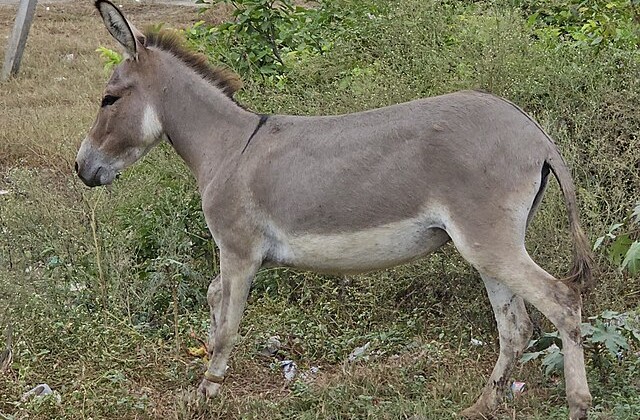
Transportation Palm Sunday Prop – A Donkey
A donkey provides a visual treat at any Palm Sunday re-enactment, serving as a living transportation prop. Although not a common sight today in the US, donkeys were entrencehd in the culture during Jesus’ time in two ways. First, the beast, known for being stubborn, served as a work animal. It could transport not only goods but people too. But despite a donkey’s use as a service animal, donkey ownership and riding a donkey marked one as privileged. This distinction existed not only at the time Zechariah prophesied about the king coming to Jerusalem on a donkey, but also during Jesus’ time.
The fact the Bible identifies the mode of transportation as a donkey is significant. Biblical accounts of Jesus’ birth fail to mention any specific animal with Him. But His triumphal entry into Jerusalem occurred on the back of a donkey. And the donkey was not just any donkey. Jesus directed His disciples to obtain a never-ridden colt from the location where He sent them. Why this particular requirement? Only animals never used as beasts of burden could take part in sacred rituals. Jesus’ entry into Jerusalem as the Savior was a religious occasion, thus necessitating a donkey who had never borne burdens.
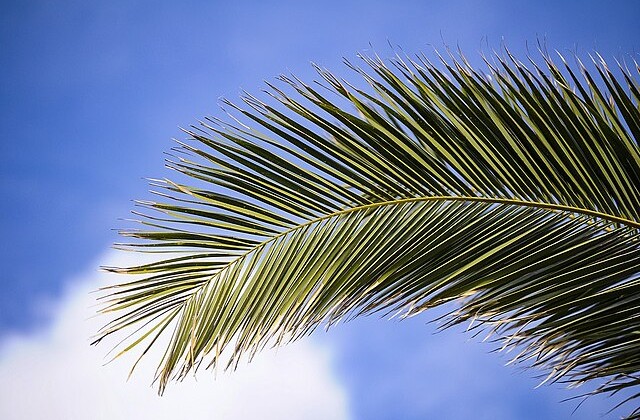
Palm Branch Props
Customary Palm Sunday observances include waving palm branches in a procession. Why this activity? John’s gospel relates that members of the crowd at Jerusalem waved palm branches to greet Jesus as He arrived. Two good reasons exist for using these particular branches. For one thing, they were handy. The majestic, tall date palm tree grows abundantly in the Holy Land.
Further, palm branches symbolized joy, triumph and victory. Because of this symbolism, these branches were customarily used on festive occasions and often depicted on important buildings and on coins. For example, King Solomon directed palm branches be carved into the walls and doors of the temple. The Jews also utilized them in celebrating the Feast of Tabernacles as noted in Leviticus 23:40. People greeted kings and conquerors by strewing plam branches before them and waving branches in the air. In Jesus’ case, He would conquer death in just a few short days with His resurrection.
Palm Sunday Props – Action And Dialog
Seeing the backdrop of Jerusalem, a donkey carrying Jesus, and palm branches waving in the air isn’t complete to tell the Palm Sunday story without dialog and more action. Two Palm Sunday props help to refine the picture. Find a crowd, and it’s likely to be noisy. Those greeting Jesus raised their voices to Him, shouting, words such as “Hosanna.” This Hebrew word means “save us” or “save now.” The crowd likely intended Jesus to save them from Roman occupation, but Jesus had a better plan. He would save them from their sins by offering Himself as a sacrifice to pay for their sins. Others lifted an ancient Jewish song of praise: “Hosanna! Blessed is He who comes in the name of the LORD!”
Besides waving palm breanches, some members of the crowd removed their outer robes and placed them on the road in Jesus’ path. This action conveyed a message without the necessity of words. The gesture conveyed reverence and respect, especially for a king, and an individual’s heightened importance. In 2 Kings 9:13, for instance, those surrounding Jehu, the man God chose to be Irsael’s next king, took off their robes and placed them beneath Jehu.
Understanding Props Enhances The Story
By itself, Jesus’ triumphal entry into Jerusalem makes a great story for kids and adults. But understanding the Palm Sunday props in it gives the story even greater significance than entertainment. The props contained in the account render it more meaningful. Palm branches symbolized joy and triumph, an unridden colt mean the fulfillment of a prophecy as did the location, and the people’s words and actions emphasize the importance of the One entering the Holy City. The Jews were making a pilgrimage to Jerusalem to worship God, but He would meet them there in the flesh, in the person of Jesus Christ on a donkey.
The Palm Sunday Story








 Ad-Free & Subscriber Log-In