

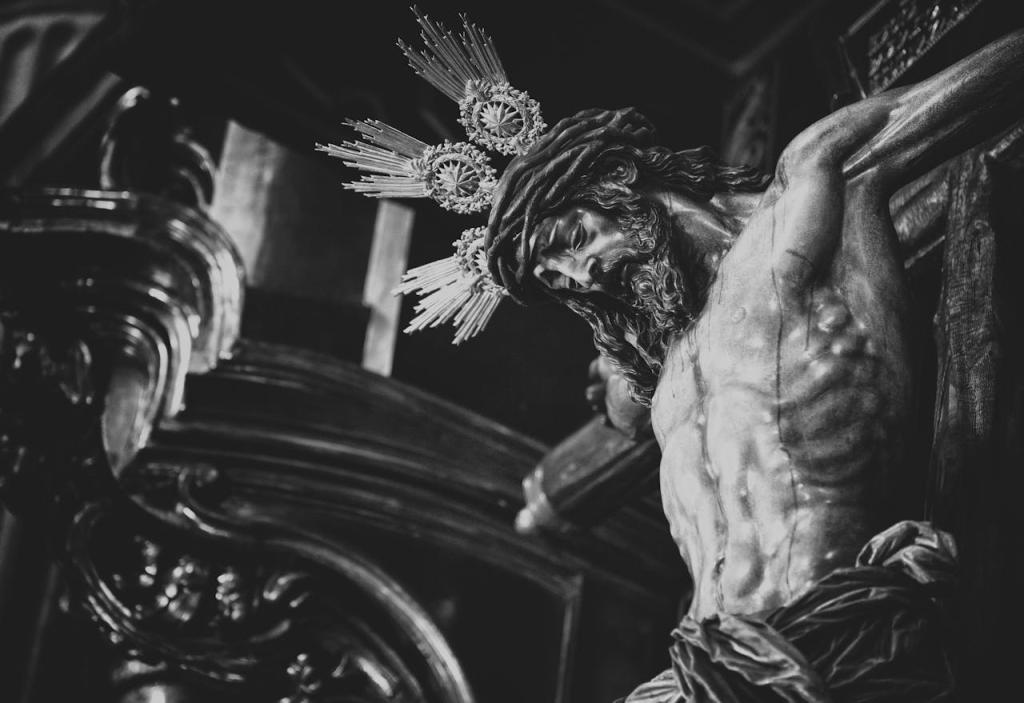
Excerpt from the book Copyright © 2025 by Karl Forehand
Does God Change?
“Immutability means God does not change in any way;
He is unchanging and, for that reason, perfect in every way.” – Gospel coalition
The universe is constantly evolving, mainly because it is consistently expanding. This indicates that galaxies are drifting further apart over time, and this expansion is even accelerating due to a mysterious force known as dark energy.
Molecules are constantly in motion—vibrating, rotating, and translating. Their positions and orientations change continuously due to thermal energy. This movement is called Brownian Motion, which is influenced by temperature; higher temperatures lead to faster molecular movement.
Energy is always in flux, as it can only transform from one form to another. While the total energy in a system remains constant, its form can change continuously due to interactions within the system. This principle is known as the Law of Conservation of Energy.
Atoms are primarily made up of energy, as much of an atom’s mass comes from the energy within its nucleus, according to Einstein’s equation E=mc². Although atoms may appear to be mostly empty space because the nucleus is small compared to the volume occupied by electrons, the energy in these particles constitutes most of their mass. Therefore, the essence of an atom is fundamentally energy.
Theological Assumptions
Most theological perspectives view God not as “energy” or “matter” but as the creator of both. This implies that God transcends the physical realm and is not constrained by the limits of the universe, including energy and matter. Therefore, describing God as “energy” is an oversimplification that does not fully capture the theological understanding.
Religion asserts that God created everything, yet we observe that creation continuously evolves. Nothing remains static. Even if God is the exception, he wouldn’t be perfect if he said one thing and acted differently.
The concept of God’s immutability, or unchanging nature, is a central tenet of Christianity. However, some argue that God is not immutable because He changes His mind or is surprised by certain events.
Some Things to Think About
- God changes his mind. If God changes his mind, then he is not immutable. For example, in the Bible, God regrets making Saul king.
- God is surprised by things. If God can be surprised by events, then he cannot be all-knowing. For instance, in the Bible, God expresses surprise when the Israelites forsake him for a statue of a calf.
- God changes roles. At times, we view God as a narcissistic king who eliminates His enemies. We might even picture Him as a warlord imposing His will on nations and communities, dominating them while seizing their property and mistreating their women and children. Ultimately, He appears as both a lion and a lamb. Predictions suggest He will return as a conqueror, despite not presenting himself this way during the life of Jesus.
- Acting contrary to the Universe. Although humans are described as image-bearers of God, meaning we are created in His image, the source of creation seems to contradict the principles we uphold as reflections of the original. Christians often remind one another to keep in mind that we are image-bearers of God, yet they absolve Him by presenting Him as unchanging and separate from His creation.
- Changes the Covenants with Man. If God is real and all-knowing, why would He need to change His covenant if He supposedly does not? Why did we need a temporary solution that lasted thousands of years, only to switch to a new covenant that is valid until this second time, during which we will operate under different rules?
- Why did God Stop Speaking? In the Old Testament, God speaks directly to His chosen people. The prevailing belief about the time Jesus walked the earth is that He was the Word who would convey messages to us. When even His closest disciples struggled to understand what He was saying, He promised that another aspect of the Godhead would come later to help us grasp the meaning. If he is unchanging, why not use the most effective solution first instead of playing games and pretending to be unchanging?
- Why doesn’t God evolve with the universe? Everything about the universe is expanding and changing, as I mentioned earlier. Animals evolve in response to shifting conditions to adapt for reproduction and survival. We observe much of the universe operating this way, particularly humans with more advanced reasoning abilities. But if everything else in the universe changes, why do we assume that God does not?
- Why is the revelation complete when it’s not perfect? Christians can sometimes be closed-minded toward literature beyond the canon accepted 1,600 years ago. Our world has evolved dramatically since early Christians wandered in the desert, trying to imagine what God was like. We don’t live in the same world as when the Bible was written; we have a deeper understanding of mental health, the complexities of our existence, and the motivations behind our actions. My biggest question isn’t whether God changes, but “Why Shouldn’t He?
The Case Against God
When I began to deconstruct my faith, my aim was not to attack the church or discredit God. I sought to discover the truth and live my life more meaningfully than merely entering a building to repeat past practices and reinforce beliefs in which I was starting to lose faith. I didn’t just gather opinions from others; while I read many books, I also spent ample time in silence, reflecting on the nature of the universe and my assumptions about God and the afterlife.
All the unanswered questions began to emerge, starting with whether God should be superior to me. However, this is one of those questions that theologians have never managed to answer adequately. The writers of the Bible contradicted themselves when they initially quoted God as saying that He never changes, yet they also documented instances when He did. This is simply inconsistent with the truth, does not align with how the universe operates that He supposedly created, and, frankly, it doesn’t make logical sense.
Things that do not adapt tend to die or go extinct. If we assume he is different and perfect, then we must also show that the many mistakes he appears to have made do not support that hypothesis. He created a being that causes us incredible frustration, or if he didn’t create it, he allowed it to impede our efforts. Apparently, due to his foreknowledge, he knew we would fail the system and test he had established. Then, he waited thousands of years to propose the solution, and we are currently awaiting the completion of that process with the Second Coming.
God has violated His own laws multiple times if we consider Scripture reliable. According to the narrative, He is said to have killed far more people than Satan. At times, He became jealous and faced criticism in the New Testament. Even Jesus seemed to contradict himself by discussing unconditional love while also showing favoritism. In most versions of Christianity, Jesus is regarded as equal to God. Yet, He and the New Testament writers accepted slavery and promoted the idea that God only accepts individuals who obey Him.
The absence of quality answers to these questions ultimately led me to leave Christianity. When I asked why God would allow something like rape to happen, it was hard for me to accept that God is both loving and powerful. If He can stop abuse but chooses not to, then He isn’t genuinely loving. He isn’t all-powerful if He has the desire but lacks the ability to intervene.
To make matters worse, Christians have adopted a mantra of blaming themselves for everything they don’t understand or for things that go wrong in their lives. The flip side of that idea is that they give God credit for everything that goes right. While this may serve as a temporary fix, it doesn’t address the core issue or provide an answer to the question. Not only does he not intervene, but according to the narrative, he doesn’t seem to care much either. I should clarify that, according to the narrative, he cares, but since he doesn’t act, I assume he can’t or doesn’t want to. Personally, I don’t need any more privileged people in my life, especially from a God who doesn’t follow the rules he supposedly established.
I’m done making excuses for God. I’ve also stopped blaming myself for God’s lack of communication and the flawed holy texts we’ve attributed to Him based on our assumptions. As I’ve stated, there is value in religion, spirituality, and our imaginations about God and whether there is an afterlife. However, I can’t let my need for certainty overshadow the unanswered questions.
When I persist with my questions, I sometimes uncover puzzle pieces scattered throughout my world. However, I don’t gain insight from centuries-old assumptions that essentially ignore discrepancies and inconsistencies to uphold the business of religion. Like other Mystics, I am on a quest to experience God, if He exists, and to continue asking questions even when the common tendency is to avoid them.
The answer to the question has never been to ignore it. When there doesn’t seem to be a response, the worst thing we can do is cultivate confidence in our guesses. Perhaps the most important lesson I’ve learned during my deconstruction is to confidently say, “I don’t know,” and continue to engage with what I know, feel, and the few things I can prove.
Questions About Questions
What belief(s) did you inherit concerning this question?
How is your response to this question changing?
Learn to be Where You Are (Presence)
Learn to be Who You Are (Authenticity)
Finding Regulating and Somatic Healing
Are you serious about deconstruction and asking bigger questions?
If that’s the case, this book was created for you. As a former pastor, I made the mistake of deconstructing a bit and then trying to start something new, as I was trained to do. The problem with that approach is that I wasn’t ready to begin something new.

I hadn’t delved deeply enough or asked enough questions. The first stage of deconstruction typically includes assessing our beliefs regarding hell and the afterlife, supporting queer individuals and women in their fight for equality, and achieving a better understanding of racism and privilege.
Many people in deconstruction communities expend significant effort criticizing Evangelicals and attempting to gain a following. While I believe they deserve intense criticism, this strategy fails to effectively tackle the problem because they generally don’t listen to us!
Our tendency to punish our former organizations sometimes overlooks the challenging process of healing and growth. It is the same trap we fell into in our former associations.

Campfires occupy a special spot in the mosaic of history. They act as communal hubs across different cultures and faiths. The campfire’s circular design fosters equal participation within the collective group. The flames at the center draw our focus and encourage face-to-face interactions as we exchange experiences, wisdom, and insights about the world beyond. It is where legendary myths and tales are born.
Order Now – Study Questions in each chapter!
This book is named Campfires in the Desert as it stems from nearly 400 discussions we held with individuals on our podcast, The Desert Sanctuary, and our aspiration to improve.
Available now!
Thanks for considering us, autographed copies are $20
Karl Forehand Campfires in the Desert – A Soft Book Release. Karl Forehand is a former pastor, podcaster, and award-winning author. His books include Out into the Desert, Leaning Forward, Apparent Faith: What Fatherhood Taught Me About the Father’s Heart, The Tea Shop, and Being: A Journey Toward Presence and Authenticity. He is the creator of The Desert Sanctuary podcast and community. He has been married to his wife Laura for 35 years and has one dog named Winston. His three children are grown and are beginning to multiply! You can read more about the author here.













 Ad-Free & Subscriber Log-In