
 This was a long Minnesota winter. My snow-bound friends and I bemoaned the stubborn cold and the elusive thaw. We collectively longed for spring and for the warmth, the growth, and the new life it brings.
The renewal of life associated with spring reminds me of the activity of the Holy Spirit. The Spirit is known in scripture and theological tradition as the life-giver, healer, and Perfector of creation. One of the "two hands of God" (Irenaeus), the Spirit draws, awakens, and breathes new life into creation and humanity.
In its original form, the Nicene Creed (325 A.D.) simply asserted, "we believe in the Holy Spirit." In 381, more was added: the Spirit is "the Lord, the giver of Life, who proceeds from the Father; who with the Father and Son together is worshipped and glorified." The Holy Spirit was understood to be fully divine, an equal "hypostasis" (person) with the Father and to the Son. Why did it take so long for the Church to articulate clearly and emphatically that the Spirit is fully divine and equally worthy of worship, prayer, and praise as the Father and the Son?
The reasons are several. The Father and the Son had "faces" (the Father figuratively, the Son literally in his incarnation), while the Spirit seemed faceless. Amorphous. It blows where it pleases. It refers and defers. It is effective but elusive. Its particularity as a person seemed difficult to grasp. And the biblical witness for the full divinity of the Spirit seemed less clear or emphatic than for the Father and Son. An influential Christian sect, known as the "Pneumatomachoi," or "spirit-fighters," argued just this point in their assertion that the Spirit is not fully God. This position did not carry the day; the prevailing, orthodox position was that the Bible manifests a progression of revelation, and that the Spirit's full divinity and personhood is a burgeoning idea—even in the New Testament. So on what basis were early Christians justified in articulating the Spirit as the third person of the Trinity?
Together with the biblical witness, it was partly the collective experience of the early Christians that fortified the belief in the divinity of the Spirit. The Spirit was experienced as Savior, healer, guide to truth, bringer of new life, restorer of harmony, and facilitator of unity. Wherever Christ and the Father were known in the Church, the Holy Spirit too was there, bringing the love and grace of God to bear on communal, liturgical, and individual life. Converts were consistently baptized in the name of the Father, the Son, and the Spirit. Conviction about the Spirit arose from a palpable sense that the Spirit, while instrumental in the creation of the universe and in the original animation of human life, continues to be active in its preservation and redemption. The Spirit brings life and salvation as human beings encounter and participate in the energeia, the divine energies of God.
Eventually, and with consensus, the Church determined that the Spirit, too, is a divine person (hypostasis). The Spirit brings new birth (Jn. 3:3-8); the Spirit empowers us to witness (Acts 1:8); the Spirit intercedes for us in prayer (Rom. 8:26); the Spirit can be grieved (Eph. 4:30); the Spirit guides us into truth (Jn. 16:13); and the Spirit will bring righteousness and justice to the "needy" and "poor of the earth" (Is. 11:4). Gregory of Nazianzus asserts, "it is the Spirit in whom we worship and in whom we pray." Our experience of the Spirit is our experience of God: Father, Son, and Spirit in economic union.
Although interest in the Holy Spirit has revived recently in churches and in academic theology, it may still be true that the Holy Spirit is the most neglected of the three persons of Trinity. This has been my experience in the evangelical Baptist tradition. Just as it took the early generations of the church some time to acknowledge the full divinity of the Spirit, so today there is a gap in our appreciation for and acknowledgement of the Spirit and its significance for Christian communities and individuals. This is not because we are not experiencing the Spirit. It's because, when it comes to the working of the Spirit, we may not know what to look for or how to recognize it. When we assume a dichotomy between the workings of the Spirit and the embodiment ofconcrete practices, we end up looking for the Spirit in all the wrong places.
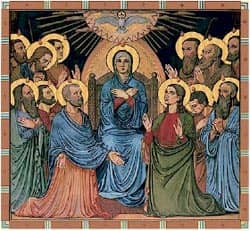
For the most part, the early Christians' experience of the Spirit was a concrete, embodied experience that coincided with practices of the church and discipleship. Experience of the Spirit was eminently bodily, practical, and not only life-transforming but world-transforming as well. As David H. Jenson writes, the Spirit "claims our bodies and our prayers and makes them participants in the life given for the world" (The Lord and Giver of Life, 11). The Spirit grounds and renews concrete visions of hope in and among embodied life and in broken communities. The Spirit proclaimed by the prophets and encountered at Pentecost calls forth justice for the oppressed, salvation for the hopeless, and unity in the Church.







 Ad-Free & Subscriber Log-In