


As of May 2026, the American landscape is being reshaped by the President’s aggressive deportation enforcement strategy. Deportations are happening on a scale and at a speed unprecedented in American history. While political discourse often focuses on the logistics of borders and the mechanics of removal, a deeper, more permanent transformation is occurring within millions of American homes. The current administration’s shift toward “universal enforcement” has moved the focus from high-priority criminal targets to a broader net that catches long-term residents, primary breadwinners, and parents of American citizens. Let’s review the situation and the impact on families.
The End of Discretion
For decades, immigration enforcement operated under various degrees of “prosecutorial discretion.” The government treated all undocumented individuals as removable. It focused its limited resources on those with serious criminal records and prioritized people who threatened national security. Authorities classified many families as low priority. These families had strong community ties and no criminal history. Officials allowed them to check in annually as they continued their daily lives.
In 2025 and 2026, that paradigm shifted. The current policy treats every undocumented individual as an immediate priority for removal. This “zero-discretion” environment has effectively turned every encounter with federal authorities into a potential family separation event. Data from early 2026 indicates that, for individuals without criminal records, the likelihood of deportation within 60 days of arrest has surged to nearly 60%, a stark increase from previous years.
The Crisis of “Mixed-Status” Families
The term “mixed-status family” refers to households where members have different legal standings—typically undocumented parents with children who are U.S. citizens by birth. Approximately 11 million people are living in such households today. When the government initiates a deportation proceeding against a parent, the family is presented with a choice: remove the child from the only country they have ever known, or leave them behind in a fractured household or the foster care system. This is an unconscionable choice that no parent should ever have to make.
The psychological toll on these children is what pediatricians are now calling “toxic stress.” Constant fear that a parent might not return from work or a routine grocery trip has led to a measurable decline in school attendance and mental health. Surveys from the Urban Institute in April 2026 revealed that one in ten immigrant families has withdrawn their children from extracurricular activities or daycare specifically to reduce their “footprint” and avoid potential interactions with authorities.
Collateral Arrests and Community Raids
Perhaps the most visible sign of this shift is the rise of the “collateral arrest.” During targeted operations, such as the widely reported “Operation Metro Surge,” ICE agents entering a residence or workplace to find one specific individual often detain everyone present who cannot immediately prove legal status. This practice has led to a 12-to-1 ratio of non-criminal arrests for every one high-threat criminal taken into custody. The result is a chilling effect across the community.
Across cities nationwide, the “self‑deportation” strategy is taking effect. It aims to make life difficult and fearful for undocumented residents. As a result, many choose to leave voluntarily. However, this approach comes at a cost to local economies and social cohesion. Small businesses in immigrant neighborhoods report sharply declining revenues. Local law enforcement agencies are also raising concerns. Many victims of crime no longer come forward. They fear that reporting theft or domestic violence could lead to their own deportation.
The Birthright Citizenship Debate
Adding to the uncertainty is the legal challenge to the 14th Amendment. The administration’s January 2025 executive order attempting to end birthright citizenship for children of undocumented parents remains a central point of tension. While currently blocked by the courts, the case of Barbara v. Trump hangs over millions of families. If the Supreme Court were to reinterpret the citizenship clause, it would fundamentally change the legal identity of hundreds of thousands of infants born on U.S. soil each year, potentially creating a “stateless” class of residents within American borders.
Economic and Social Fallout
Beyond the moral and psychological arguments, the separation of families carries a heavy economic price. Many undocumented parents are the sole providers for their families. When a breadwinner is removed, the remaining U.S. citizen family members often turn to state and federal safety nets to survive. The American Immigration Council estimates that the mass removal of undocumented parents could push nearly a million children into poverty, placing an enormous strain on local school districts and social services.
The Catholic View
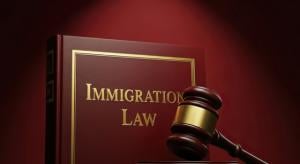
Where Jesus’ teachings and the reality of mass deportations intersect presents a profound ethical challenge to the Christian conscience. Central to Jesus’ ministry was the radical embrace of the “stranger,” as emphasized in Matthew 25:35: “I was a stranger, and you welcomed me.” By prioritizing universal enforcement that separates families, the administration directly contradicts the biblical mandate to protect families and the vulnerable.
The “toxic stress” experienced by children in mixed‑status households mirrors the very suffering Jesus sought to alleviate through compassion. Consequently, this reality highlights a deeper moral concern. A system that treats individuals as “legal units” rather than “neighbors” erodes core Christian values. Ultimately, it undermines our commitments to mercy, hospitality, and the inherent dignity of every person.
When people are forced to decide how to split their families because of policy, we have failed as a people. I call on President Trump to restore compassion to this equation. If we are truly focused on “the worst of the worst,” I believe the vast majority of Americans are behind you. For those who have established roots here, been productive, and led good lives, we must fix the broken legal process and work to bring these people into the country properly.
Please share your thoughts about this article in the “Comments” section below.
Stay updated on the latest articles and insights from the column. Subscribe to my newsletter to ensure you receive every new post. Click here to subscribe to the newsletter.
Peace
If you like this article, you might also enjoy:
Redistricting: Do The Maps Really Matter?
The Holy Spirit: God’s Living Presence
Childhood Cancer: The Story of Neveah and Hope










 Ad-Free & Subscriber Log-In