

The call came in the morning. My daughter. County jail. One phone call allowed. Every maternal instinct I possessed screamed at me to move, to fix, to rescue. But in that moment, exhausted and heartbroken, I heard a different voice.

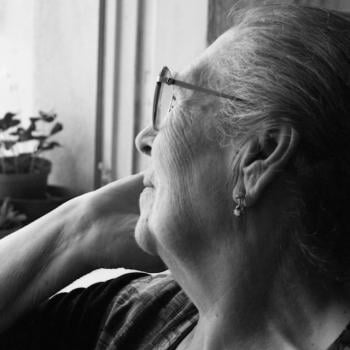
Image courtesy of Pexels
Be still.
I’d been a Christian my whole life, but I’d never truly understood what it meant to “be still” until I let my daughter sit in jail.
The Illusion of Control
For years, I’d believed that being a faithful mother meant fixing everything for my children. I’d weaponized Bible verses to justify my endless rescuing: I was there to catch her, convinced that’s what God would want.
Somewhere along the way, my faith had become about my ability to control outcomes. If I just prayed enough, intervened enough, loved enough, I could save my daughter from herself. I was playing God, and it was destroying both of us.
The Sacred Pause
When my daughter called from jail, I felt the familiar pull to spring into action. But this time, something was different. In my exhaustion, in my brokenness, in my complete inability to fix one more thing, I finally stopped trying.
I paused.
It wasn’t a strong pause. It wasn’t a faithful pause. It was the pause of someone who had absolutely nothing left. But God meets us in those places. In our weakness, His strength is made perfect.
In that pause—that awful, holy pause—I heard what I’d been too busy rescuing to hear: This isn’t yours to fix. Let go. Let Me.
What I Learned in the Wilderness
That day began a wilderness season for both of us. My daughter sat in a jail cell, facing her choices without my buffer. I sat on my bathroom floor, sobbing, wondering if I was the worst mother who ever lived—or if I’d just done the bravest thing.
In the wilderness, I learned that faith isn’t about controlling outcomes. It’s about trusting God even when everything looks like failure.
I learned that sometimes love looks like letting go. God gives us free will, and He lets us face the consequences of our choices. If God Himself doesn’t override our free will, what made me think I should override my daughter’s?
I learned that “be still” isn’t passive—it’s the hardest, most active trust there is. It’s choosing to not act when every cell in your body screams to do something. It’s trusting that God is working even when you can’t see it.
The Biblical Foundation for Tough Love
The more I studied Scripture through this lens, the more I saw the pattern:
God let the Israelites wander in the wilderness for forty years. He didn’t bail them out every time they complained. He let them learn dependence on Him through struggle.
The father of the prodigal son (Luke 15:11-32) let his son go. He gave him his inheritance even knowing it would be squandered. He didn’t chase after him or send care packages. He waited, watching the road, until his son came home on his own.
Paul dealt with his “thorn in the flesh” (2 Corinthians 12:7-10) despite praying three times for its removal. God said no. Sometimes the struggle is the point.
Even Jesus, in Gethsemane, asked if there was another way—and then surrendered to the Father’s plan, even though it meant suffering.
The Pause Technique as Spiritual Practice
What I now call The Pause Technique is really an ancient spiritual practice: surrender. It’s the space between the crisis and our response where we allow God to work instead of forcing our own solutions.
Here’s how to practice the sacred pause:
- Recognize the impulse to control. “I want to fix this right now” is often our will, not God’s.
- Breathe a prayer. “God, I surrender this to You. Show me what love looks like right now.”
- Wait for clarity. Don’t act from anxiety or guilt. Act from peace, even if that action is inaction.
- Trust the wilderness. God does His best work in the wilderness. Don’t rescue your loved one from the place God might meet them.
- Remember: You’re not their savior. That job’s already taken.
The Resurrection After the Pause
My daughter was released months later. Clean and sober, no longer addicted. It’s been several years. She’s building a life on her own, her own choices, her own strength. She still faces substantial challenges, but is rebuilding her life.
As for me? I found my faith again in that pause. Not the faith of doing and fixing and controlling, but the faith of being still. Of trusting. Of knowing that God is God, and I am not.
The hardest prayer I ever prayed was, “Your will, not mine.” The most answered prayer I ever prayed was, “Your will, not mine.”
The Invitation
Maybe you’re in that moment right now. The phone is ringing, the crisis is calling, and every part of you wants to spring into action. Before you do, I invite you to pause.
Not because you don’t love them. Because you do. Not because you don’t care. Because you trust God more than you trust your ability to fix things.
Be still. And know that He is God.
In the pause, you might just find that God was there all along, waiting for you to stop doing so He could start working.
If you want to dig deeper into the rescue-and-regret cycle and how to get out, please look into my program, The Marriage and Motherhood Survival Method.
Let’s Discuss: Have you struggled with letting an adult child face consequences? You’re not alone, and it’s never too late to change the pattern. Have you been able to practice the Pause?














 Ad-Free & Subscriber Log-In