

When Alabama’s Birmingham was “Bombingham”
Sept. 15, 1963 seemed like any other Birmingham Sunday morning for Addie Mae Collins, Cynthia Wesley and Carole Robertson, all 14. Eleven year-old Denise McNair followed the girls and their friends to the washroom after Sunday school and before the church service at 16th Street Baptist Church.
A massive explosion shattered the peaceful morning, killing the four and wounding and maiming nearly two dozen mostly women and children.
White supremacists Robert Chambliss, Thomas Blanton, Bobby Frank Cherry, and Herman Cash murdered the little girls and escaped justice for decades because no white jury would convict white men for protecting white culture.
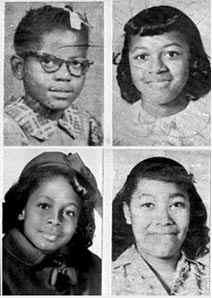
Between 1947 and 1963, more than 50 bombings targeted homes, churches, and businesses owned by Black Americans, simply because they demanded the same rights afforded to white Americans.
At his January 1963 inauguration, Alabama Gov. George Wallace proudly proclaimed, “segregation today. Segregation tomorrow. Segregation forever.”
Throughout the first few weeks of April, Martin Luther King, Jr. and the Southern Christian Leadership Conference led demonstrations and economic boycotts in Birmingham. Night after night, in church after church, King preached nonviolence to a growing following of volunteers, while peaceful protesters were arrested daily.
Violating a court order, King offered himself up for arrest on April 12, Good Friday.
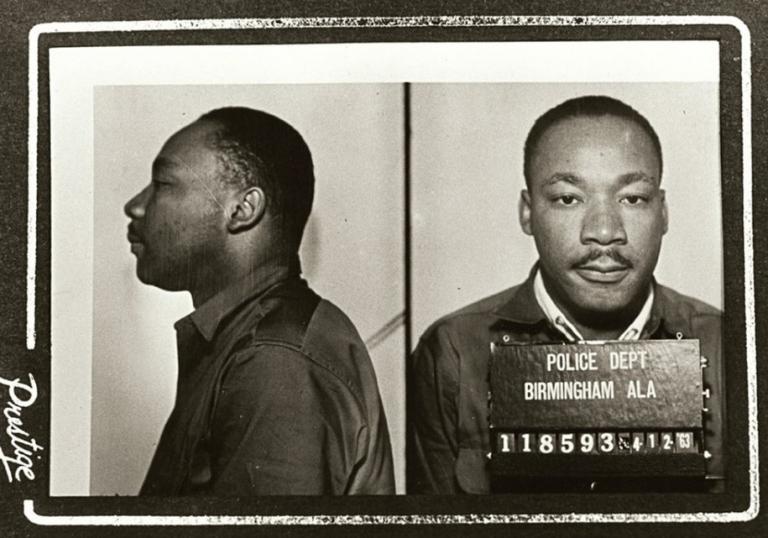
Held incommunicado for more that 24 hours, King was permitted no visitors. It was only after the personal intervention of President John Kennedy and Attorney General Bobby Kennedy, was King allowed to speak to his wife by telephone Sunday afternoon.
On the day of his arrest, eight white Alabama clergymen published a letter in a Birmingham newspaper calling for the boycott and protests to cease, for Negroes to be more patient, and praising the police for their calm during the demonstrations.
“Letter From Birmingham Jail”
Alone in a filthy jail cell, King read the letter and immediately began drafting a response on the newspaper itself. He eventually composed a landmark epistle that addressed their concerns, clearly defined the civil rights movement, touched on far-reaching philosophical questions, and served as an inspiration for generations of the oppressed around the world.
“How does one determine whether a law is just or unjust? A just law is a man-made code that squares with the moral law or the law of God. An unjust law is a code that is out of harmony with the moral law. . . . So the question is not whether we will be extremists, but what kind of extremists will we be. Will we be extremists for hate or for love? Will we be extremists for the preservation of injustice or for the extension of justice? In that dramatic scene on Calvary’s hill three men were crucified. We must never forget that all three were crucified for the same crime – the crime of extremism. Two were extremists for immorality, and thus fell below their environment. The other, Jesus Christ, was an extremist for love, truth, and goodness, and thereby rose above his environment.”
While King’s letter seemed to fall on deaf ears at the time, one modern historian described it as “the most splendid and elucidating prose that King ever wrote. Decades later, it is studied all over the world by those interested in nonviolent struggle.”
As more protesters joined the non-violent effort in Birmingham, white police increased violence.
On May 3, Police Commissioner Eugene “Bull” Connor ordered the use of high-pressure hoses and police dogs against peaceful, unarmed young people demanding equal rights.
Police violence was broadcast around the world, and helped sway a public previously blind to the violent enforcement of segregation.
Deciding the time had come to add his voice to the civil rights struggle, President Kennedy addressed the nation on June 11.
Utilizing a King-like justification of law and God, Kennedy told the television audience that:
“We are confronted primarily with a moral issue. It is as old as the scriptures and is as clear as the American Constitution. The heart of the question is whether all Americans are to be afforded equal rights and equal opportunities. . . Next week I shall ask the Congress of the United States to act, to make a commitment it has not fully made in this century to the proposition that race has no place in American life or law.”
King’s non-violent attack on racism and segregation in Alabama led a presidential assault on racism across the country.
Kennedy’s civil rights legislation ensured the right to vote, and eliminated discrimination in all public places, including hotels, restaurants, and businesses. He also proposed expanding the attorney general’s power to enforce court-ordered school desegregation.
By the summer of 1963, the proposed legislation stalled in Congress, with white supremacists blocking key aspects.
More than 250,000 people assembled in Washington on Aug. 28, demanding equal rights for all Americans.
Just weeks after the march, the morning calm was shattered at 16th Street Baptist Church.
Less than two months later, shots rang out on a Dallas afternoon, striking Kennedy down.
The passage of the Civil Rights Act of 1964 enshrined rights for tens of millions of Americans and King looked on as the law was signed.
It’s important to understand that terrorism against Black Americans didn’t happen in individual vacuums. They were all connected to a deeper level of white supremacy that is just as rampant today.
I’ll make it plain: most of the racists in the 1960s are racists today and they still hold public office.
Donald Trump was 17-years-old when racists murdered children in Birmingham.
Ten years later, in October 1973, the Civil Rights Division of the Department of Justice sued Trump for racist business practices and the exclusion of Black and brown people from his properties.
Trump has opposed equal treatment of Black Americans his entire life, and he continues to marginalize and insult them at every opportunity.
Now is the time to stand up for today’s victims in the spirit of those murdered long ago.
Humanity has the capacity for evil — to blow up churches. To turn blind eyes to suffering. To excuse racism. To believe Black people are inferior and accuse them of eating household pets.
But humanity is blessed with the Divine calling to demand justice and love mercy. To stand up for others the way Christ taught us to.
Churches and the good people in them must stand up for the victims and stand up to racists or rightfully be condemned as irrelevant hypocrites.
Racists must be confronted and justice must be demanded.
Four little girls murdered by white terrorists emboldened by a racist leader deserve nothing less.
Ω
For more from Jim, follow these links:
Trump Supporter Charlie Kirk was a Racist Bigot
Notes from a Sermon: How Do We Respond to the Current Culture?
The Clark Doll Study Documenting the Damage of Segregation
Remembering Civil Rights Martyr Jonathan Daniels
Ω
You can support my online ministry by shopping for books at Bookshop.org, where I’ll receive a commission. Thanks for your support.
Ω
Pastor Jim Meisner, Jr. is the author of the novel Faith, Hope, and Baseball, available on Amazon, or follow this link to order an autographed copy. He created and manages the Facebook page Faith on the Fringe.









 Ad-Free & Subscriber Log-In