


Absurdism reaches new heights when Bill and Ted play air guitar in Samuel Beckett’s Waiting for Godot, running through Jan. 4 at Manhattan’s Hudson Theater.
In the roles of Estrogen and Vladimir, the current production casts Keanu Reeves in his Broadway debut and Alex Winter, known for playing Bill S. Preston, Esq. and Ted “Theodore” Logan in three Bill & Ted movies.
Beckett’s renowned Absurdist play rejects modernist theater and smashes together theology and vaudeville, spirituality and slavery, stark scenery and complex dialogue.
Two archetype vaudevillian tramps in bowler hats and tattered clothes wait on two successive nights for someone who never appears.
The entire production — from costumes to dialogue — represents the futility and absurdity of life.
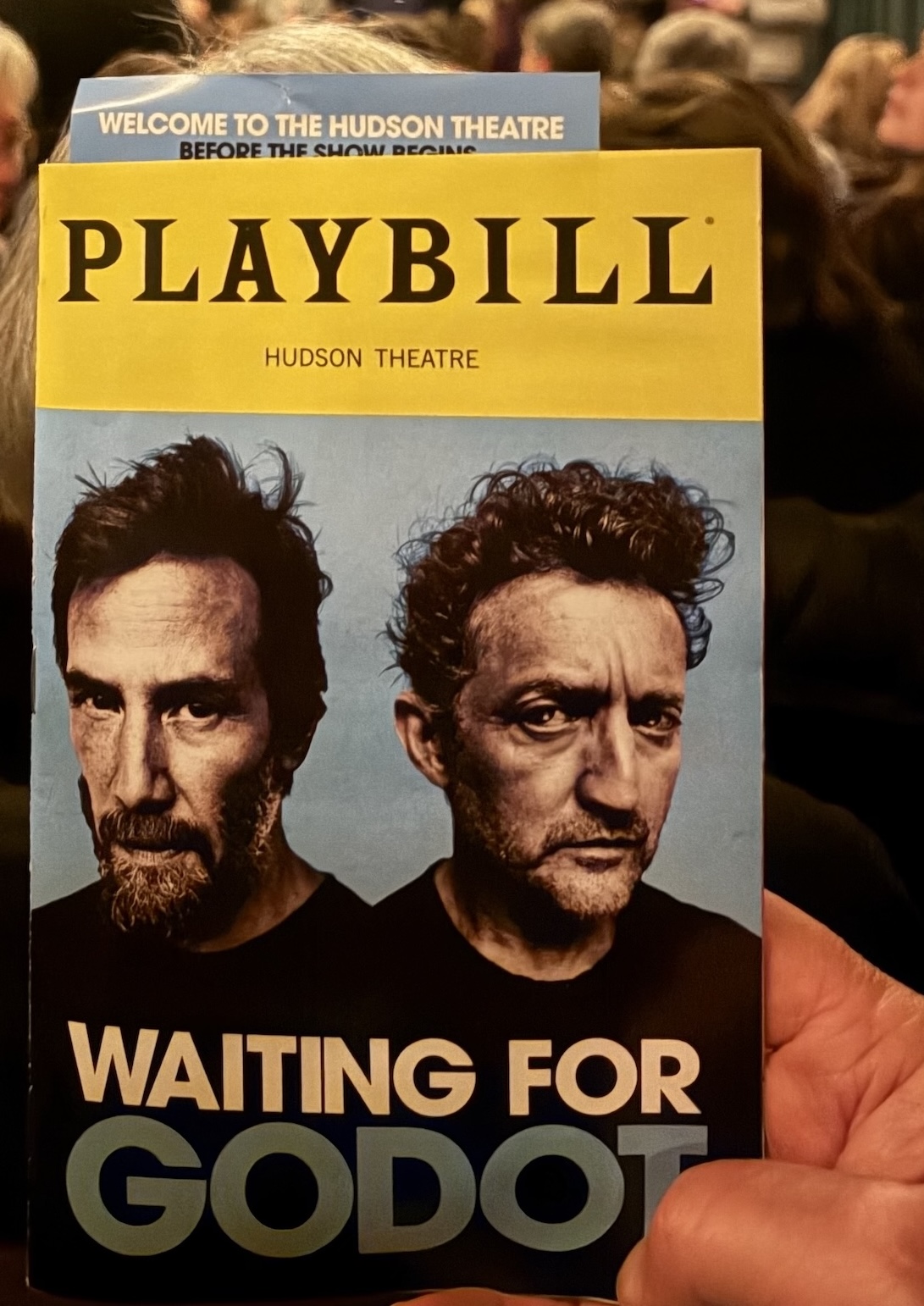
First produced in 1953 in French, it was translated into English the next year.
At a 1957 production in California’s San Quentin prison, inmates responded enthusiastically, seemingly identifying with the futility of the characters that New York audiences fail to comprehend.
I was confused by the audience laughing at lines intended as profound reflections on the nature of life. But perhaps this too is an example of the futility of not just life, but of art.
I wondered if the deeply spiritual musings of the characters flew over the heads of people in $350 seats.
Beckett was “intensely spiritual,” says James Knowlson, a Beckett biographer and friend of the Nobel-winning Irish writer, who died in 1989.
Throughout the night, absurdity built upon absurdity, raising questions about life, spirituality, relationships and the nature of theater.
Channeling his best Bugs Bunny, Reeves loudly eats an invisible carrot, inviting us deeper into the absurdity.
The production reaches it’s crescendo when Reeves and Winter stand back to back in the center of the stark tube that serves as a stage.
“Back to back like in the good old days,” a character says, and then the two play an air guitar riff, transporting us to when we first saw the young men play air guitars on the movie screen.
Winters said he had the air guitar idea when reading the play years ago.
Some Beckett purists have criticized the move as introducing a modern element into a play so specific that it choreographed slapstick business with the bowler hats and says in the stage directions, “they do not move,” after they agree to leave.
These Beckett purists miss the point. The play invites us to consider life and art, and with this production consider how celebrity influences each.
Many of us in the audience burst into spontaneous applause, which swelled until Reeves dropping his head in laughter and gestured for us to stop.
Estrogen and Vladimir. Bill and Ted. Keanu and Alex. Clowns with deeply philosophical perspectives. Or perhaps philosophers with deep tendencies toward clowning around.
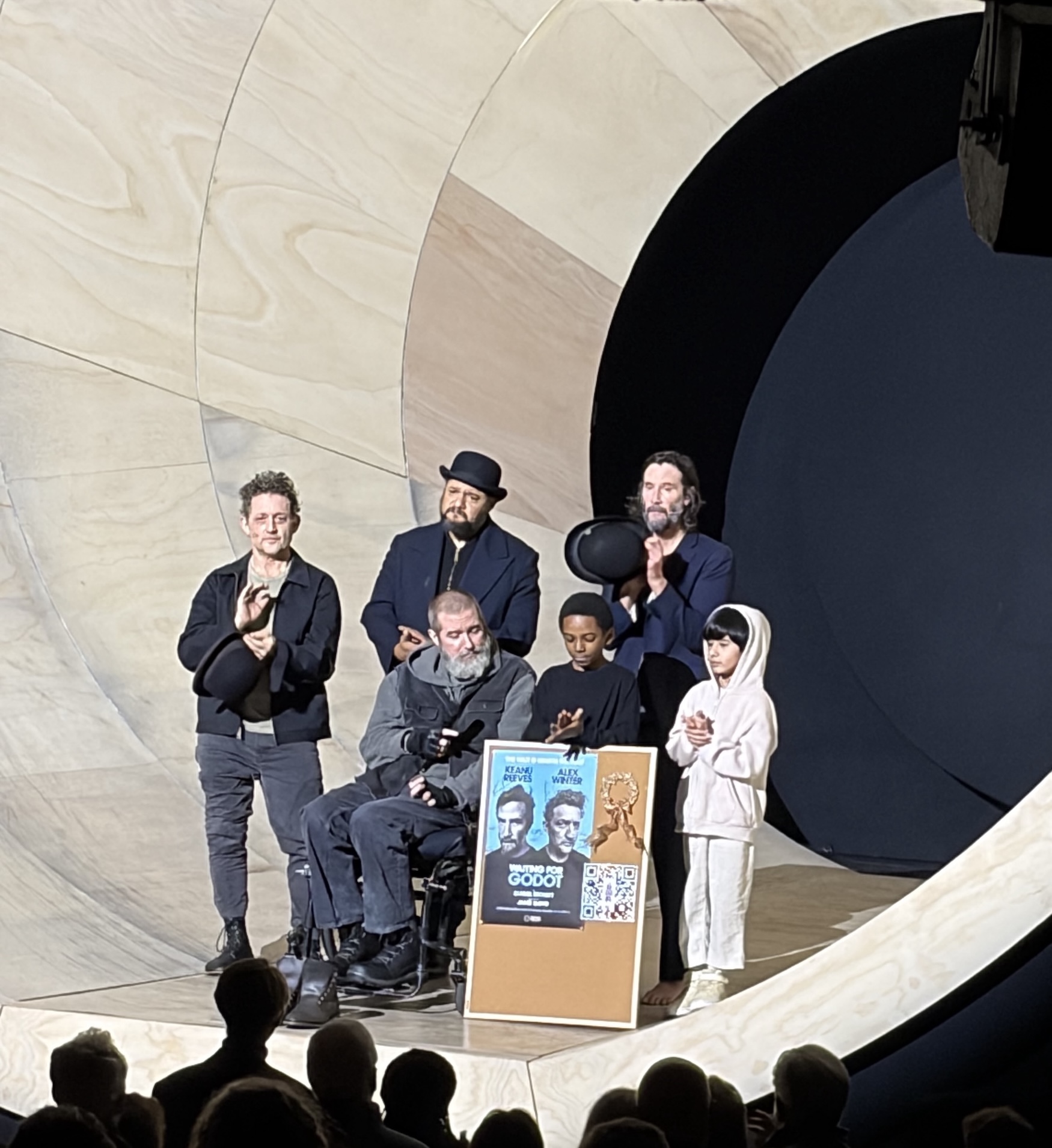
Either way, clowns who invited us into Bill & Ted’s world again invite us to ponder life reflected in the absurd.
As each new generation brings a new perspective to the production, we are reminded to “be excellent to each other” and “party on, dudes!”
For more from Jim, follow these links:
The Secret Symbol in a Charlie Brown Christmas
5 Reasons Christians Should be Pro-choice
Ω
You can support Jim’s online ministry by shopping for books at Bookshop.org, where he’ll receive a commission. Thanks for your support.
Ω
Pastor Jim Meisner, Jr. is the author of the novel Faith, Hope, and Baseball, available on Amazon, or follow this link to order an autographed copy. He created and manages the Facebook page Faith on the Fringe.











 Ad-Free & Subscriber Log-In