

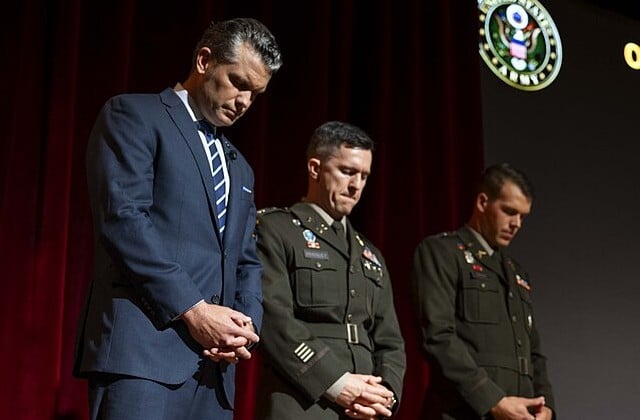
Friendly fire refers to ammunition dispersed by a combatant’s own side. Usually such fire doesn’t target its troops but results from a mistake. Nevertheless, Gen. William Green, Jr., the now ousted Army Head Chaplain, was intentionally removed by “friendly fire.” His boss, the US Secretary of Defense, dismissed him on April 2nd. What led to the chaplain’s removal and what do Army chaplains even do?
The Ousted Army Head Chaplain
Perhaps no one was more shocked than Maj. General William Green, Jr. at his ouster as well as its timing. He became the first Army Chief of Chaplains removed since the position begin in 1920. Moreover, Gen. Green’s dismissal occurred during Holy Week and the US-Irsraeli war with Iran.
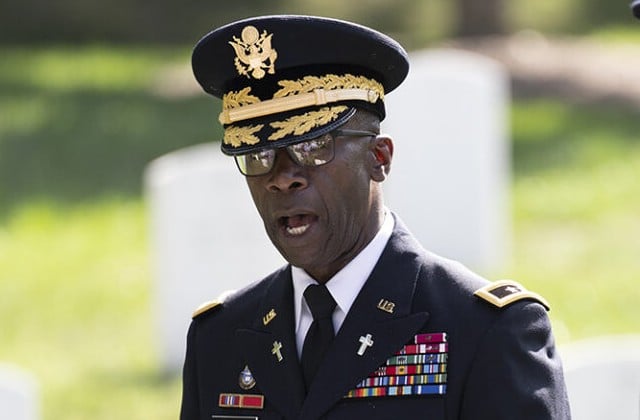
A Savannah, Georgia native, Green first joined the Army after his high school graduation, serving as a cannon crewman and field radio repairman. He left the Army in 1986 to pursue a theological education and ordination. Green received a master of divinity degree in 1992 from Candler School of Theology at Emory University. The National Baptist Convention, USA, Inc., the oldest and larged black denomination in America, endorsed him, with Green becaming an Army chaplain in 1994.
Rising Through The Ranks And Fall
The new chaplain worked in support of Operation Iraqi Freedom, later being assigned to Fort Jackson, South Carolina as a branch chief at the US Army Chaplain Center and School. Thereafter he served as deputy chief of chaplains at the Pentagon.Green received the ultimate promotion to Army Chief of Chaplains in December 2023, beginning the position during the Biden administration. He became the third Black Army member to assume this role. This top chaplain position is a four-year term that often spans presidential administrations.
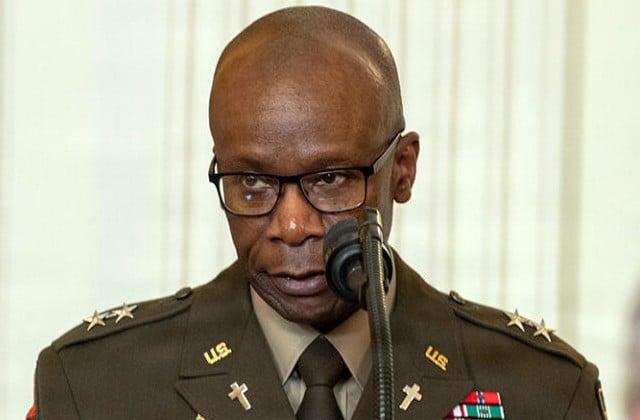
While Green’s tenure began in the Biden Administration, it abruptly ended during the second Trump Administrationwhen US Secretary of Defense Pete Hegseth dismissed him. No reason was given publicly for this decision. As yet, no replacement has been tapped for Green. Meanwhile, religious support operations continue under the Deputy Chief of Chaplains, currently Col. Rich West, an ordained Anglican priest.
Why The Army Head Chaplain Was Ousted
Without an explation for the Army Head Chaplain’s dismissal, the basis for Secretary Hegseth’s action sparked much speculation. Some fingers point to a controversial 112-page, 2025 Army publication called the Army Spiritual Fitness Guide as the reason.
Despite being titled a spiritual guide, the criticized work mentioned God only one time in the entire publication. It has been criticized for relying on secular principles rather God’s Word to build resilience. Additionally, the text leans heavily on personal feelings and secular, rather than spiritual, concepts.
Impact Of Head Chaplain Being Ousted And Corps’ Purpose
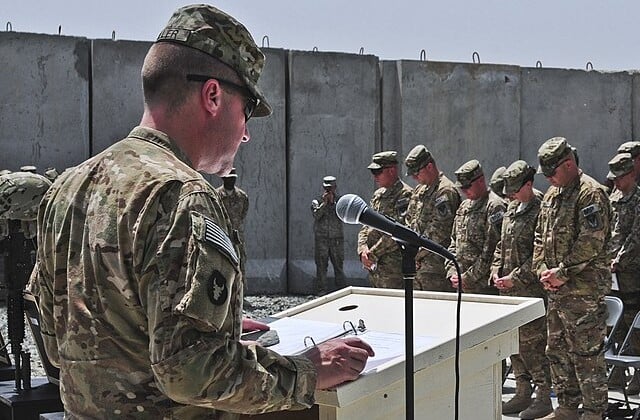
Operations of the Army’s Chaplain Corps will continue seamlessly with a deputy head chaplain taking the reins for now. However, controversy about Maj. Gen. Green’s dismissal could negatively affect morale and distract chaplains from their primary purpose, spiritual care of troops. Specifically, chaplains offer religious church services, counseling, and moral support to military members in both peacetime and in times of war. The ongoing conflict with Iran adds to the stress on troops who are or may be deployed. Taking care of the whole individual includes not only training them for combat and arming them, but bolstering their mental, emotional, and spiritual health. In fact, chaplains deploy with military units to provide support in facing dangerous and challenging situations.
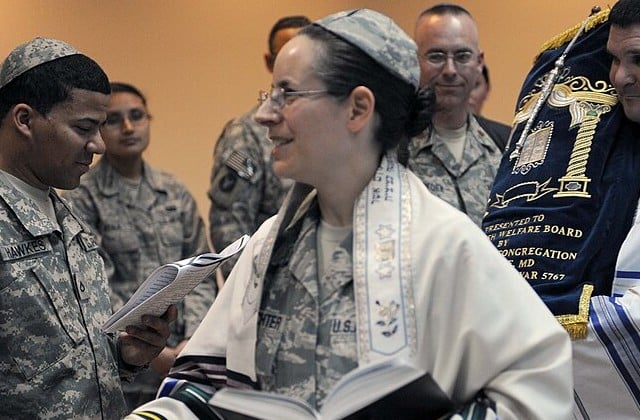
To make sure no man is left behind spiritually, the chaplaincy provides clergy from many faiths. Historically, Christian denominations provided most of the chaplains. Today, though, representatives from Judaism, Buddhism, Hinduism, and Islam, among others, are available to assist military members. Accordingly, ministers, imams, priests, and rabbis and more serve as chaplains. The aim is to ensure all service members can obtain spiritual support in line with their beliefs.
History And Organization Of The Army Chaplain Corps
The chaplaincy’s history extends back to the Revolutionary War and the beginning of our country. In July 1775 Congress established the chaplaincy to serve the Continental Army. Chaplains in this corps have played a part in every armed conflict in which the US has been involved. It wasn’t until 1920, though, that the National Defense Act created the Office of the Chief of Chaplains to better organize the chaplaincy. The Army, the largest branch of the military, indicates its chaplain corps includes up to 3000 members. This number includes active duty, reserves, and National Guard. Thus, organization is key.
Chaplains serving in the Army are commissioned officers who are ordained clergy. Along with an enlisted soldier serving as a Religious Affairs Specialist, the chaplain forms a Unit Ministy Team assigned to battalion-level units or higher. To prepare them for their spiritual mission in the military, chaplains go through a 12-week Chaplain Basic Officer Leadership Course instead of Basic Training. Since they deploy with their assigned unit, chaplains also undergo initial military training. This instruction covers non-combatant skills such as map reading and combat survival.
Army Head Chaplain Ousted But Chaplaincy’s Service Continues
While justification of the ousted Army head chaplain may be debated, military operations go on. The chaplaincy exists to provide support to troops in all types of situations, both on and off the battlefied. Their mission continues despite political debate and turmoil. Given the resiliency of Army chaplains over the past 250 years and through numerous armed conflicts, we can only pray that their resolve will continue in these challenging times which might include “friendly fire.”












 Ad-Free & Subscriber Log-In