

Pentecost stands for a significant event in the Christian faith, yet it receives little recognition compared to Christmas and Easter. Believers joyfully celebrate our Saviour’s birth during an entire season, but the church’s birth typically receives simply a passing acknowledgment on one Sunday. Understanding and celebrating Pentecost deserves more priority.
When Is Pentecost?
Unlike Christmas, but similar to Easter, the date of Pentecost varies from year to year. Although the date changes, it always falls in either May or June. In 2026, Pentecost is on Sunday, May 24th. So, now is the time for understanding and celebrating Pentecost.
The reason for the floating date of observance can be explained by the event’s name. Pentecost comes from a Greek word, pentekoste, meaning fiftieth. Unsurprisingly, then, Christians celebrate Pentecost fifty days after Easter.
Jewish Festival Helps Understanding Pentecost
The Jewish festival of Shavuot, also known as the Feast of Harvest or the Feast of Weeks, provided the setting for the very first Pentecost. The Hebrew word Shavuot means “weeks.” This festival occurs fifty days after the Sabbath following Passover, a seven-week period. Exodus 23:16 speaks of this festival meant to celebrate the completion of the grain harvest.
The Feast of Weeks was one of the major Jewish festivals set out in the Old Testament. In fact, this harvest festival served as one of the three times all Jewish males were to gather in Jerusalem to celebrate. Accordingly, crowds thronged Jerusalem when the first Pentecost took place.
Understanding What Happened On Pentecost
An account of the first Pentecost appears in Acts 2. Reading this passage is essential to understanding and celebrating Pentecost. To set the scene, the disciples were all gathered together in one place in Jerusalem. Jews from all nations, and thus speaking many diffeent languages, had descended upon the city to celebrate Shavuot.
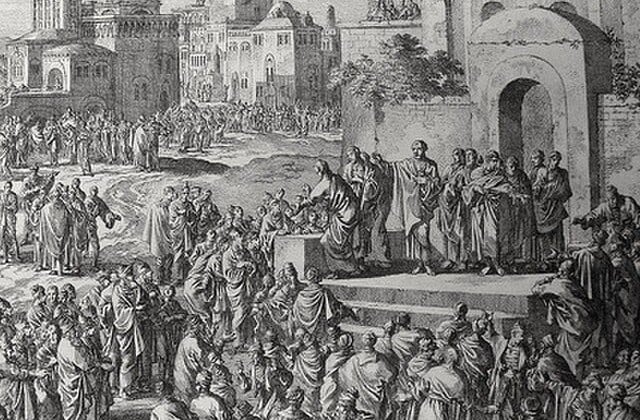
Suddenly, the disciples heard the sound of a violent wind coming from heaven that filled the house where they were. Tongues of fire then rested on them. The Holy Spirit filled all and enabled them to speak in other tongues. A crowd developed based on their curiousity of hearing their languages being spoken. Some concluded the disciples had drunk too much wine. Peter stepped up and dismissed that assumption. He preached to the crowd about Jesus, leading to the baptism of 3,000 who accepted his message that day.
Understanding The Importance Of Pentecost
Today, Pentecost is viewed as the birthday of the church. The large number of people who heard Peter preach, accepted Jesus, and were baptized established the body of the church.
But the day’s importance doesn’t stop there. The infilling of the Holy Spirit empowered the apostles and other believers to begin the church’s mission in the world—sharing the Gospel. And, in fact, that’s the first thing Peter did by preaching to the crowd. This mission, obedience to Jesus’ Great Commission, still exists for believers today. Acknowledging that important assignment and thanking God for the Holy Spirit’s empowerment to carry it out is key to understanding and celebrating Pentecost.
Celebrating Pentecost
In the Middle Ages, recognition of Pentecost was not confined to one Sunday. Some churches and cathedrals literally incorporated the event into their very structure by featuring a Holy Ghost opening. This circular window in the roof pointed to the Holy Spirit’s entry from above into the room where the disciples gathered on Pentecost.
Today churches typically observe Pentecost during religious services that day. These services focus on glorifying and invoking the Holy Spirit. Red church decorations on Pentecost stand for the Holy Spirit’s fire while dove decorations call the Holy Spirit to mind. Banners may be hung to remind worshipers of the wind which swept in to the disciples’ room in Jerusalem.
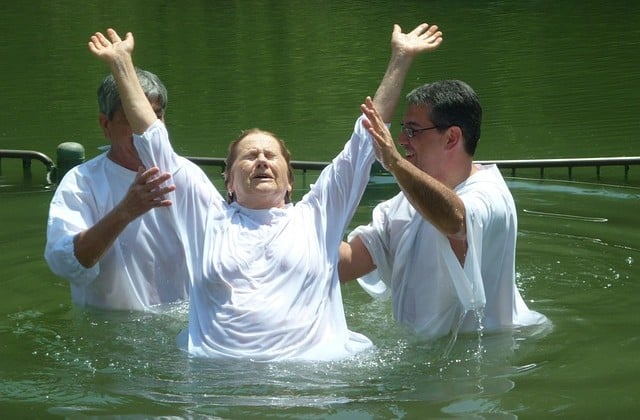
Holding baptisms on that day aligns with the biblical story of the first Pentecost. This year, what’s being called “the world’s largest sychronized water baptism” will occur. The global event led by Mark Francey, a California pastor, will involve congregations from over 60 countries and multiple denominations.
Suggestions For Celebrating Pentecost
Attending a religious service on Pentecost to commemorate the day is likely all that many believers do. Corporate worship is, of course, a wonderful celebration. But celebrating Pentecost can be extended outside the sanctuary and into the home. The observance will be more meaningful and fun by taking some intentional steps to put the event in the spotlight.
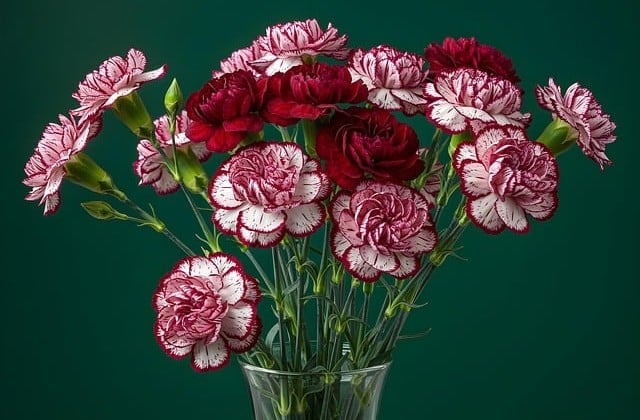
Since red is the color of Pentecost, decorate your home with splashes of red. An arrangement of red flowers on the table brings to mind the reason for the celebration and keeps it front and center. Enjoy a red food or treat like a red lollipop. Reading Acts 2 out loud to the family not only provides a reason to gather, but it reminds (or perhaps informs) everyone what happened on the first Pentecost. A discussion time could follow that reading. Have younger children (or just big kids), make decorations of doves and tongues of fire out of constructions paper and then place them in a visible location in the house. Go fly a kite and discuss the power of the wind and the Holy Spirit.
Understanding And Celebrating Pentecost
Understanding and celebrating Pentecost is crucial to a vibrant faith. That day believers received the power of the Holy Spirit in them, enabling them to fulfill the church’s mission of spreading the Gospel. Pentecost falling fifty days after Easter reminds Christians that Jesus’ resurrection isn’t the end of the story. The story continued with the church being established on Pentecost and believers being empowered to witness to the world. This significant event deserves more attention than just a church service. Believers can truly celebrate Pentecost not only by attending a worship service, but by understanding the event through Bible reading (Acts 2) and by participating in activities in and making decorations for their home.
Explanation of Pentecost









 Ad-Free & Subscriber Log-In