

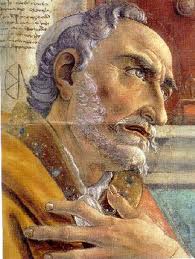
 Time has been on my mind recently. A couple of months ago in my freshman Development of Western Civilization class, Epictetus continually brought us face to face with our mortality and assured us that “death is nothing terrible.” Last week we considered Augustine’s analysis of the mystery of time in Book XI of his Confessions. But my awareness of time over the past few months has, for the most part, been more personal than academic as several interesting markers of time’s passage materialized.
I realized last November, for instance, that I was voting in my eleventh Presidential election. I’ve selected five winners and six losers in those elections, which I suppose indicates the perpetual pendulum of our national political moods and preferences as well as anything. This also means, of course, that anyone roughly my age with opposite political leanings from mine is six and five in those elections, which sort of sucks.
As I calculated how old I would be if I get to vote in ten more Presidential elections, the disturbing visual of me being wheeled to the polling place to cast my vote in the 2056 election at age one hundred became far too clear for comfort. Of course, I probably would be voting by absentee ballot, with either my one-hundred-and-one year old wife or one of my sons, aged seventy-seven and seventy-four, helping me fill out the form. I can hear it now—“What do you mean Republicans don’t exist anymore?? Who the hell am I supposed to vote against??”

The recent Thanksgiving season provided me with even more opportunities to think about time, as we celebrated the thirtieth anniversary of Jeanne’s meeting my sons and me at my parents’ condominium the day before Thanksgiving in 1987. I was thinking how great it would be to have another thirty years together, until I started calculating. What would the two of us be like in our early nineties? We have often said that had we met in our teens or twenties we would not have given each other the time of day. What if by our nineties we have gotten tired of giving each other the time of day? Or what if by then one or both of us can no longer tell what time of day it is?
I was taught as a child that the issues “of this present time are not worthy to be compared with the glory that shall be revealed in us.” In other words, the passage of time in our earthly existence is ultimately an irrelevant matter, since as believers in Jesus we are eternal creatures. We literally will live forever with God in heaven. I never found that information particularly attractive as a kid and, truth be told, I don’t find it very interesting even now. Far more important to me is the question of how to live a life in real time. And a recent Sunday gospel reading is very helpful in that regard.
In response to his disciples’ natural and human concerns about what tomorrow will bring, what should I be doing now to guarantee an acceptable future, Jesus suggests that we take a look at the natural world around us, a world in which the passage of time does not seem to be an issue. We’ve all heard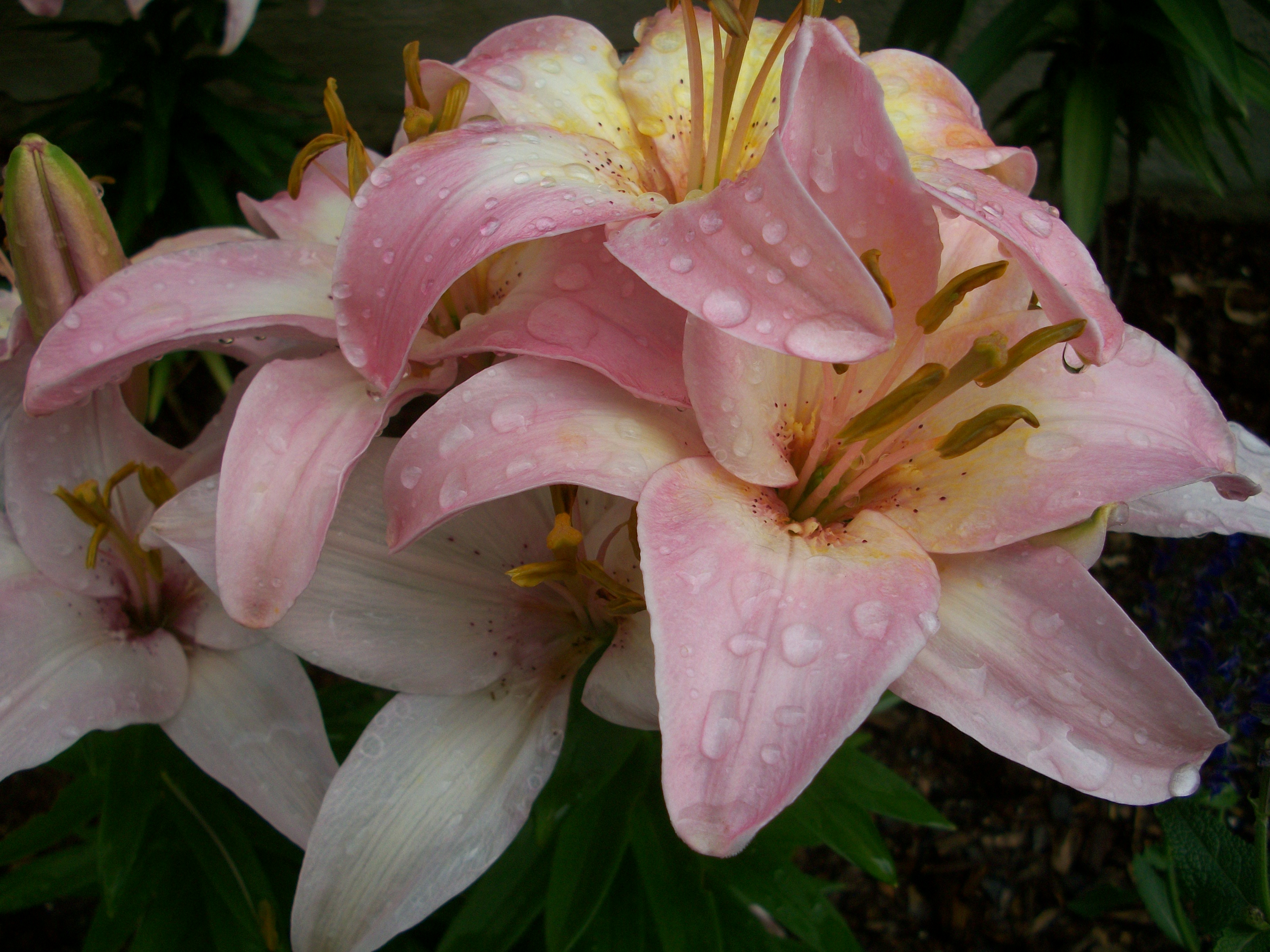 “consider the lilies of the field . . . Solomon in all of his glory was not clothed as one of these” and take Jesus to mean that we should not worry about tomorrow, because such worry cannot produce something better than a simple flower. But we—or I at least—tend to miss an equally important underlying message in this famous passage.
Perhaps the most important reason that we should not worry about the future is because the time we actually have, that we can actually do something about, is very short. In the right season, we have beautiful lilies in our front and back yard, which do their beautiful thing every spring and early summer, then fade away, shrivel up, and get cut back to ground level just a few weeks after they started out. Looking at their spot in the flower bed now in mid-December, it is difficult to imagine that anything beautiful was ever there. As Jesus says about the lilies’ cousins the grass, it “ is alive today and tomorrow is thrown into the oven.” I find little in this gospel that promises eternity. Instead, it promises that if we seek the kingdom of God first—the kingdom of God that is in us and among us now–rather than worrying about the future, “all these things will be given to you as well.”
So what does that mean? How do we do that? I recently finished reading Muriel Barbery’s delightful and thought-provoking novel, The Elegance of the Hedgehog. It is my second time through the book; I first read it early during my sabbatical in 2009. It came to me in one of those wonderful and unexpected ways, as Jeanne sent it to me in Minnesota with a note saying “I picked this up in the bookstore, but I think it’s more your kind of book.” She was right—it became one of a handful of important literary passageways into life-changing transformations. Now, over eight years later, I don’t recall all of the reasons it blew me out of the water then; its effect on me now is different, but just as powerful.
One of the two main characters in the novel is Paloma, the extraordinarily intelligent and precocious twelve-year-old daughter of a mid-level French governmental bureaucrat and his wife with pretensions of aristocracy and wealth. From her acute observational perch, Paloma critically evaluates the fellow residents of her upscale hotel apartment building in the heart of Paris. Paloma rejects the pretensions of the adults around her and the myth that with age comes wisdom. “Once children become adults themselves,” Paloma writes in her journal, “they exact their revenge by deceiving their own children. ‘Life has meaning and we grown-ups know what it is’ is the universal lie that everyone is supposed to believe.” Paloma is having none of it. If there is any meaning to life, her parents and the other adults in her life certainly don’t know what it is. She suspects that there actually is no meaning to life at all, and at the beginning of the novel is planning to commit suicide on her thirteenth birthday a few months down the road.
Paloma has many opportunities to mine the circumstances of her young life for meaning throughout the novel. For instance, Paloma’s family has to place her grandmother, “Mamie,” in a retirement home. It is the best situation that money can buy, yet Paloma and her family come face to face with the life-deadening circumstances of most of the residents when they move Mamie into her new home.
As they drive away, Colombe—Paloma’s pretentious older sister who is a philosophy major at the renowned Ecole Normale Superieure (Paloma can’t stand her)—says “Okay, it looks like Mamie is nicely settled in. But as for everything else . . . we have to hurry and forget about it, and quickly.” Colombe is expressing what many of us spend a good deal of time expressing—please don’t remind me that I am mortal, that a human being is an embodiment of planned obsolescence.
Paloma’s reflective response provides an alternative to running away from our mortality. What if we embrace it instead?
We mustn’t forget any of this, absolutely not. We have to live with the certainty that we’ll get old, and that it won’t look nice or be good or feel happy. And tell ourselves that it’s now that matters: to build something, now, at any price, using all our strength. Always remember that there’s a retirement home waiting somewhere and so we have to surpass ourselves every day, make every day undying. Climb our own personal Everest and do it in such a way that every step is a little bit of eternity.
As Renee, the other main character in the novel, says, the goal of a life must be “the contemplation of eternity within the very movement of life.”
Toward the end of the novel, Paloma—who no longer is planning to commit suicide—suggests that the purpose of a human life is to “find the task we have been placed on this earth to do, and accomplish it as best we can, with all our strength, without making things complicated or thinking there’s anything divine about our animal nature.” A wonderful insight, except that Paloma is wrong about one big thing. There is something divine about our animal nature. And that is what makes it possible to seek the kingdom of God now, in this place and at this time.














 Ad-Free & Subscriber Log-In