


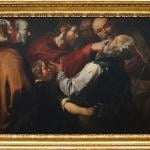
Paul tells us that the Gospel of Christ is not man-made because it is God’s revelation to us. Yes, it comes to us in a form that allows us to apprehend it and discuss it with human conventions, but the truth itself, the Gospel itself, transcends those conventions. Paul did not always know this. He had to learn it like we all do. Indeed, he resisted it until he came face to face with Christ, and then, in that encounter, he experienced first hand the truth of the Gospel. He realized that all his theological education, all that he had learned, was nothing in comparison to the truth revealed to him in his encounter with Christ. “For I would have you know, brethren, that the gospel which was preached by me is not man’s gospel” (Gal. 1:11 RSV).
We must not confuse the theological reflections we make concerning the Gospel, however necessary they are, as being identical with or comprehensive of the Gospel itself. While they serve our needs, they will always be derivative in nature. They help us come to some level of understanding of the truth; we must always remember there is more truth for us to learn, and to do that, when we reflect upon the truth we must do so with an apophatic caveat. We must accept that the absolute truth is greater than any convention we can make to represent it. Paul had to learn this, and he learned it the hard way: he was, for some time, so caught up in his theologizing that he became hostile to anyone who challenged his own theological system. He believed those who did so undermined God’s glory. “For you have heard of my former life in Judaism, how I persecuted the church of God violently and tried to destroy it; and I advanced in Judaism beyond many of my own age among my people, so extremely zealous was I for the traditions of my fathers.” (Gal. 1:13-14 RSV).
We should learn from Paul’s mistake and not repeat it; we must not theologize in such a way that we create a closed system, one which limits the truth to that which we can comprehend. We certainly must not reify protect our conventions so that we turn them into idols, idols which we are willing to sacrifice anyone or anything, including our own humanity, to try to sustain it. We must leave room for God, for God’s incoming and continuing presence in the world, and make sure we do not get so caught up in man-made structures we fight against God, sometimes, like Paul, in the name of God, but other time times, like Herod, for the sake of power in the world
Then Herod, when he saw that he had been tricked by the wise men, was in a furious rage, and he sent and killed all the male children in Bethlehem and in all that region who were two years old or under, according to the time which he had ascertained from the wise men. Then was fulfilled what was spoken by the prophet Jeremiah: “A voice was heard in Ramah, wailing and loud lamentation, Rachel weeping for her children; she refused to be consoled, because they were no more” (Matt: 2:16-18 RSV).
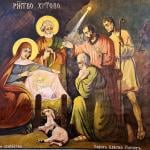
Joseph, serving as Jesus’ guardian and protector, led the Holy Family into Egypt when he found out what Herod intended:
Now when they had departed, behold, an angel of the Lord appeared to Joseph in a dream and said, “Rise, take the child and his mother, and flee to Egypt, and remain there till I tell you; for Herod is about to search for the child, to destroy him.” And he rose and took the child and his mother by night, and departed to Egypt, and remained there until the death of Herod. This was to fulfil what the Lord had spoken by the prophet, “Out of Egypt have I called my son” (Matt. 2:13-15 RSV).
Coptic history tells us that after the Holy Family entered Egypt, statues of various Egyptian gods started to crumble. Egyptian authorities understood that this was connected to the Holy Family, and this made them, as well as many of the ordinary citizens who heard what happened, become hostile to the Holy Family. Their actions, their attitude, was similar to Paul, and so, like Paul, they show us how human-made conventions, when turned into absolutes, can and will get in the way of God and the truth of God. This is always the end of all idolatry. God has shown us, in a very dramatic fashion, that we must take down theological constructs when we find them being reified and abused in this fashion; only then will we be ready to receive even greater apprehensions of the truth and the presence of God found in and with it.
God continues to break through all the barriers, all the idols we create. Our conventions must always be understood as conventions; we must not use any convention beyond its proper use, that is, no convention should be used to deny the greater truth which lies beyond it. This is true, not only in theology, but in other ways, such as when we create borders and use them to deny the duty we have to care for and love everyone. If we hold them as being above our duty, and so, if we find the borders we construct as being more important than the human beings they are meant to serve, we will end up denying the stranger a place of rest, the refugee a place of refuge, the poor and downtrodden the help they need, because they come from “beyond the border” we created. When we do this, we end up denying God, for God is found in those people we have rejected. Paul had to learn this as he had to learn to see the way God was at work, not just with the People of Israel, but with Gentiles:
But when he who had set me apart before I was born, and had called me through his grace, was pleased to reveal his Son to me, in order that I might preach him among the Gentiles, I did not confer with flesh and blood, nor did I go up to Jerusalem to those who were apostles before me, but I went away into Arabia; and again I returned to Damascus (Gal. 1:15-17 RSV).
Paul learned that if we are to follow God, we must not let our conventions become barriers that get in the way of what God expects from us, or in the way God reveals to us some element of the truth. Before his conversion, he put all kinds of limits on God. Then, when he encountered Jesus, he came to know and understand better. God will work with us, God will reach down to us, indeed, God has done so in the greatest way possible with the incarnation. God has broken through the greatest barrier of all, the one that many thought God could not overcome: the barrier that separates or distinguishes the creator with creation. We are to be open to what lies beyond our comprehension so that we can continuously receive the incomprehensible truth of God in our lives. We must recognize both God’s ability to communicate with us in human conventions, and God’s transcendence, accepting by this, that the truth is apprehensible, even if it is also an incomprehensible mystery.
Stay in touch! Like A Little Bit of Nothing on Facebook.
If you liked what you read, please consider sharing it with your friends and family!
N.B.: While I read comments to moderate them, I rarely respond to them. If I don’t respond to your comment directly, don’t assume I am unthankful for it. I appreciate it. But I want readers to feel free to ask questions, and hopefully, dialogue with each other. I have shared what I wanted to say, though some responses will get a brief reply by me, or, if I find it interesting and something I can engage fully, as the foundation for another post. I have had many posts inspired or improved upon thanks to my readers.









 Ad-Free & Subscriber Log-In