

Our conscience is paramount; we are to follow it, doing what it tells us, knowing that through it, God is indirectly speaking to us, encouraging us to do what we know (or at least believe) to be good. We are, by nature, good, good because God made us good, and our conscience is a way for us to engage our innate good nature, to let it direct us, making sure we make the best decisions possible. The problem is we do not always follow our conscience, or, over time, we wound it, because we cut ourselves off from our natural good by way of deliberation; we try to reason our way out of our natural instincts, using our reason, instead of our conscience, as the foundation for our actions. Our reason using many factors, including selfish ones influenced by concupiscence, to come to its conclusion; since it does not have all the facts, since it finds way to refute what our conscience tells us to do, its conclusions will be faulty. We end up denying the law which is found in our hearts, the law inherent to us in and through our humanity. Positive revelation and moral theology often help us by giving substance to what is in our hearts, substance which, if we allow it, will help us overcome our ignorance; but the problem is, just as we ignore our conscience, so we will ignore revelation, we will ignore what moral and ethical analysis suggests, so we can justify the unjustifiable, that is, justify what we deep down know is not right. Our conscience will condemn us so long as we do this, while those who follow their conscience, those who seek to do what is good and just, can find themselves justified, as Paul said:
For it is not the hearers of the law who are righteous before God, but the doers of the law who will be justified. When Gentiles who have not the law do by nature what the law requires, they are a law to themselves, even though they do not have the law. They show that what the law requires is written on their hearts, while their conscience also bears witness and their conflicting thoughts accuse or perhaps excuse them on that day when, according to my gospel, God judges the secrets of men by Christ Jesus (Rom. 2:13-16 RSV).
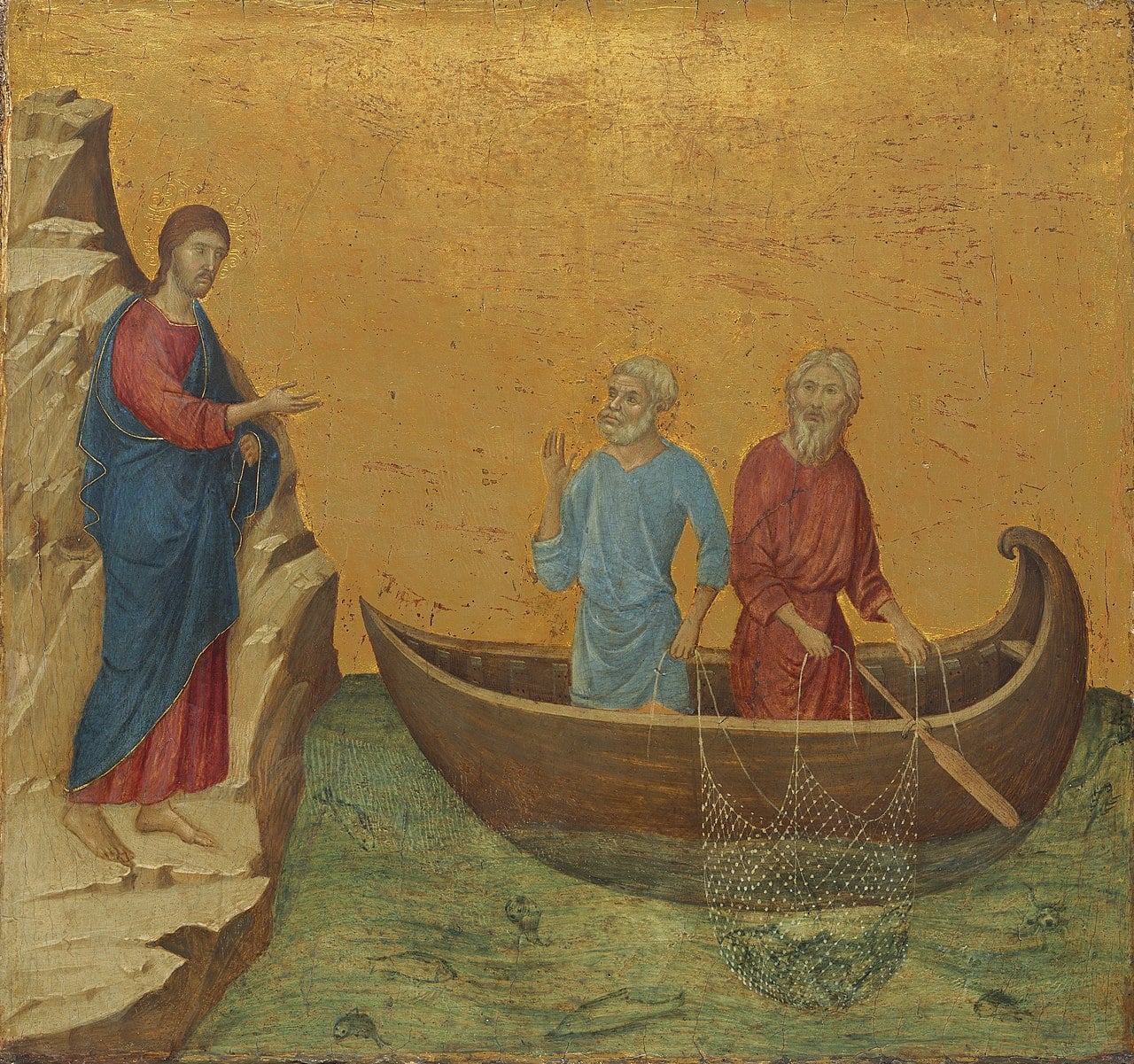
In this text from Romans, we find that faith is more than mere belief, it is the fidelity to that belief; our justification requires us to be doers and not just being hearers of the law. Paul, far from suggesting that belief without works justifies us, said it is “the doers of the law who will be justified.” People misunderstand him when they think he is pitting mere belief against works when he talks about justification by faith. Paul never said we will be justified or saved merely by our beliefs, nor would he, because Jesus made it clear time and time again, we are saved by grace, grace which we must activate by cooperating with it. Our belief can and will save us if we turn belief into faith, if, that is, we act upon what Jesus taught. For then, our belief will be an active faith. Jesus calls us to follow after him. It is absurd to think that means, “I believe that is what he told me, my belief is the same as following him.” No, we must, like the apostles when they were called by Christ, go into action:
As he walked by the Sea of Galilee, he saw two brothers, Simon who is called Peter and Andrew his brother, casting a net into the sea; for they were fishermen. And he said to them, “Follow me, and I will make you fishers of men.” Immediately they left their nets and followed him (Matt. 4:18-20 RSV).
Peter and Andrew dropped what they were doing, “they left their nets,” and followed Jesus. The same with James and John:
And going on from there he saw two other brothers, James the son of Zebedee and John his brother, in the boat with Zebedee their father, mending their nets, and he called them. Immediately they left the boat and their father, and followed him (Matt. 4:21-22 RSV).
Again, Peter, Andrew, James and John, and even the father of James and John, had Jesus call out to them, saying it was time for them to follow him. They didn’t think following him meant they just had to believe in Jesus. They did what Jesus told them to do. They had faith, which led them to do as Jesus told them to do. They followed him. If they didn’t, if they just believed in Jesus without following what he told them to do, they would not have been faithful, and if they were not faithful, they would obviously not have had faith. We must be like them. We must listen to Christ and follow what he tells us to do. What he taught is the way of love; if we are to follow him, we must travel the path of love, engaging it all our lives. We must open up our hearts; we must purify them, so that they can then direct us with love, the same love which Jesus said lies behind the law and the prophets. Those who properly live that law out, those who follow their conscience, follow God, and are faithful to God, because of it:
If you really fulfil the royal law, according to the scripture, “You shall love your neighbor as yourself,” you do well. But if you show partiality, you commit sin, and are convicted by the law as transgressors (Jas. 2:8-9 RSV).
Those who ignore the way of love, those who deny their neighbor the love and honor which should be given, even if they believe in Jesus, are far from being faithful to him; they have a belief like demons: “Even the demons believe — and shudder” (Jas. 2:19b RSV). Belief is not enough. Love is the way. Love is the key to fidelity, the key to the faith. The demons do not follow the way of love because they are too selfish and prideful to do so, which is why, though they know the truth and believe, all they can do is shudder. Paul and James are in agreement. It is not just belief, but faith, being doers and not just hearers of the law, which is necessary. Jesus comes to us on a daily basis. Every day he tells us to come, follow him, to cast aside all that would prevent us from following him. The more we listen to him, the more we follow him, the greater our love will be, and the greater that love, the more we will act on and with that love and in doing so, we will discover at our heart, our nature is itself a reflection of divine love, which is why it is good, because God is good.
Stay in touch! Like A Little Bit of Nothing on Facebook.
If you liked what you read, please consider sharing it with your friends and family!
N.B.: While I read comments to moderate them, I rarely respond to them. If I don’t respond to your comment directly, don’t assume I am unthankful for it. I appreciate it. But I want readers to feel free to ask questions, and hopefully, dialogue with each other. I have shared what I wanted to say, though some responses will get a brief reply by me, or, if I find it interesting and something I can engage fully, as the foundation for another post. I have had many posts inspired or improved upon thanks to my readers.












 Ad-Free & Subscriber Log-In