
 Holy Rover
“The vision which grows in aging can lead us beyond the limitations of our human self. It is a vision that makes us not only detach ourselves from preoccupation with the past but also from the importance of the present. It is a vision that invites us to a total, fearless surrender in which the distinction between life and death slowly loses its pain.” Henry Nouwen and Walter Gaffney, Aging: The Fulfillment of Life

Spiritual Travels is about inward and outward journeys. Our usual fare is pilgrimages to holy sites mixed with descriptions of various forms of meditation and prayer. But our lives, properly understood, are also journeys, pilgrimages we cannot avoid but often try to flee.
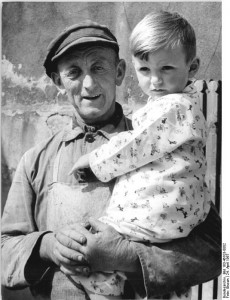
In our culture we have made this most important journey difficult. Nouwen and Gaffney put it this way: “In a society where the basic interest is in profit, old age in general cannot be honored because real honor would undermine the system of priorities that keep this society running.” The manifestations of this dishonoring of old age are many. We worship youth and view old age as a problem; thus we dye and tuck and botox and try to shop away every sign of aging we can. We live in a society where that ubiquitous power, the media, instead of the grandmothers and grandfathers, tell the stories. We send retirees off to play and when they become infirm we pay others to care for them. You know the litany.
What would it mean to honor aging, to experience growing old as the culmination of a life well lived, the final passage of a meaningful journey? The key, ironically I think, lies with kenosis, the Greek word for emptying, giving it away. As Nouwen and Gaffney suggest, ours is a culture that values having and all the symbols of success. The spiritual path, which I believe is the only way to redeem aging, is about loosening the bonds that distract us and keep us from our journey, from being and doing what is most important and meaningful. Every spiritual tradition teaches this.
However, I don’t believe this path requires us to radically renounce all material possessions, take up our cup and lead aesthetic lives. What is most central is that we give, that we give what we can to the betterment of the world. In a beautiful passage Nouwen and Gaffney use the metaphor of the turning of a wheel as an image of our life’s journey:
“Entering into the world we are what we are given, and for many years thereafter parents and grandparents, brothers and sisters, friends and lovers keep giving to us….When we can finally stand on our own feet, speak our own words, and express our own unique self in work and love, we realize how much is given to us. But while reaching the height of our cycle, and saying with a great sense of confidence, ‘I really am,’ we sense that to fulfill our life we now are called to become parents and grandparents, brothers and sisters, teachers, friends, and lovers ourselves, and to give to others, so that, when we leave this world, we can be what we have given” (emphasis added).
To understand how we can regain what almost all cultures once knew—how to help the elderly “be what [they] have given,” we must first comprehend how and why our culture renders the aged obsolete, for this striking turnabout in human cultures—from the aged being revered to their being ignored—is one of our most striking reversals. Once we grasp the sources and meanings of this great historical turnabout, then we can explore a more normal cultural view of aging that says, in the words of Nouwen and Gaffney, “aging is not a reason for despair but a basis for hope, not a slow decaying but a gradual maturing, not a fate to be undergone but a chance to be embraced.”
[Contributed by Bob Sessions]











 Ad-Free & Subscriber Log-In