

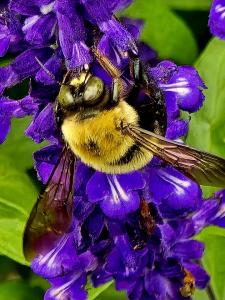
Time Is Honey: Save the Bees!
About Honey … and Bees
As a child, I was terrified of bees, or anything that would sting; however, I was a big fan of honey. Sweet, sticky honey on pancakes, waffles, French toast, and in hot tea! My grandfather lived to his 100th year and had a peanut butter and honey sandwich every day. He knew a secret–honey has health benefits:
- Honey contains antioxidants like flavonoids and phenolic acids that may help protect against conditions like type 2 diabetes and heart disease.
- Honey raises blood sugar like other sugars, however, research suggests it may help improve fasting blood sugar levels and increase adiponectin, a hormone that can reduce inflammation and support blood sugar regulation.
- Honey may help suppress coughing, support wound healing when applied topically, fight allergies, and offer heart health benefits like improved blood pressure and cholesterol levels.
Truth be told, whenever we got sick at home with a cold or flu, Grandma would mix us a cup of hot tea, honey, and whiskey. It worked!
I also fondly remember my grandmother’s special New Years Day treat: Struffoli. They are a traditional Italian holiday treat made with flour, eggs, butter, and orange zest. The dough is shaped into marble-sized balls, deep-fried until golden, and tossed in a warm honey glaze–oh, my! The memories! The thing is, those scrumptious memories could not have happened without the honey, and the honey could not have happened without the bees. [Struffoli recipe at the end of this article]
Over the years, as a gardener, I have learned to make my peace with the actual bee–not just the product. They’re important! “Bees are the primary pollinators for roughly 80% of flowering crops and plants. By transferring pollen between blooms, bees ensure fertilization, leading to higher yields, larger fruits, and improved plant reproduction. Key crops like tomatoes, berries, cucumbers, and squash depend on their activity.”
In my mature years, I have often watched (from a distance) the rather barrel-shaped, fuzzy bodies of honey bees dancing from blossom to blossom in the Rose-of-Sharon or across the precut fields of dandelions. They seem almost merry in their labors!
Declining Bee Populations
Last summer though, I sadly noticed a drastically reduced population of bees in my garden. When I purchased honey from a friend and bee-keeper at Christmas, I mentioned that. She said that their bees had produced significantly less honey than in the past, and that it seemed to be a trend. I did some research and found that “In January 2025, beekeepers across the country began reporting unexpected large-scale honey bee losses—we now know the largest ever recorded in the U.S.,” according to Danielle Downey, executive director of Project Apis. I also learned that, “managed honey bee colonies are facing unsustainable, high annual losses, averaging around 40% in the U.S. due to a combination of factors including pests, pathogens (especially Varroa mites), pesticides, and poor nutrition.” It’s weird, but the more I learned about the plight of the honey bees, the less frightening and the, well, cuter they became.
The reality is that, without bees, “global ecosystems and food production would face catastrophe. The loss would cause massive reductions in fruit, vegetable, and nut production, resulting in severe food shortages and higher prices. Many flowering plants would die, collapsing food chains, while the nutritional value of human diets” would suffer.”
It has also been claimed that “The safety of England depends on the number of cats she keeps. Without the aid of bumble-bees the red clover could not be fertilised. Bumble-bees make their nests on the ground, where they are the prey of mice. Cats destroy the mice and give the bees a chance to live. Hence, no cats, many mice; many mice, no bumble-bees; no bees, no clover; no clover, no cattle; no cattle, no beef; and without beef where would the Englishman be?”—Prof. W. W. Cooke—(American Bee Journal.)
In my research, I discovered that “honey bees are not native to North America. They were brought over from Europe by settlers in the 1600s for honey and wax production. While crucial for modern agriculture, they are technically an introduced, managed species that competes with over 3,600 species of bees native to the continent.”
I want to help those little immigrants!
What can I do?
Helping honey bees involves creating safe habitats, providing food sources, and eliminating chemical pesticides. Gardeners should plant native, pollen-rich flowers, reduce lawn areas, and leave some wild, untended spaces for nesting. Essential steps also include providing a shallow water source, avoiding pesticides, and supporting local beekeepers.
I Can Plant a Bee-Friendly Garden
I can choose native plants–flowers, shrubs, and trees native to the area, which provide the best forage such as:
- Diverse blooms: Plant a variety of flowers that bloom consecutively from early spring through fall to ensure a constant food supply.
- Bee favorites: Bees are attracted to lavender, marigolds, primrose, thyme, mint, and wildflowers.
- Some weeds: Dandelions and clover are among the first and most essential food sources for bees in early spring.
- Grouped plants: Plant in clusters rather than scattering them, as this makes it easier for bees to find food.
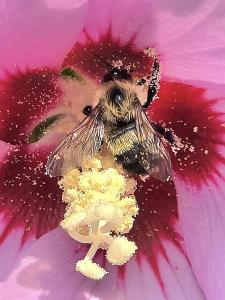
Bees, Honey, and God
I know that bees are some of God’s good creatures, and even though I probably wouldn’t pet one, they are still gentle and very intelligent in their way. In the Bible, honey from bees is frequently mentioned as a symbol of abundance, luxury, and divine favor, most notably describing the Promised Land as “flowing with milk and honey.” It represents goodness, with God’s words and wisdom described as “sweeter than honey.”
And He hath brought us into this place, and hath given us this land, even a land that floweth with milk and honey.
Know also that wisdom is like honey for you: If you find it, there is a future hope for you, and your hope will not be cut off.
*For more information and products that support bee populations, contact Project Honey Bees 212 E Rowland St #1009 Covina, CA 91723*
God bless you and God bless the bees!
Struffoli (Italian Honey Balls) Recipe:
Thank you, Bees!
4 large eggs
2 teaspoons orange zest
1 teaspoon vanilla extract
3 tablespoons granulated sugar
1/4 cup salted butter, melted
2 cups all-purpose flour
1/4 teaspoon baking powder
vegetable oil for frying (5-6 cups)
1 cup honey (or more … or lots more …)
2 tablespoons orange juice squeezed from the orange you zested
1/2 cup granulated sugar
- Beat eggs until frothy. Add orange zest, vanilla, sugar, and melted butter, and beat thoroughly.
- Add flour and baking powder to the mixture and mix until combined. The dough will be very sticky.
- Wrap dough in a sheet of plastic wrap and refrigerate for at least 30 minutes, or up to overnight.
- When dough is chilled, transfer to a lightly floured surface. Divide dough into four even sections. Roll each section into a long rope, about the same thickness as your finger.
- Cut each rope of dough into sections ½ to 1-inch wide.
- Roll each section into a ball – the balls should be no larger than the size of a marble. Sprinkle the balls of dough with flour to prevent them from sticking to each other while rolling the remaining dough.
- Add 3 to 4 inches of cooking oil to a heavy bottomed pot set over medium-high heat. Allow oil to reach a frying temperature of 350°F. (Use an instant-read candy thermometer to determine the oil temperature).
- Roll balls lightly in the oil so they brown evenly on all sides. They will turn golden brown quite quickly. Fry them in small batches of 10-12.
- Using a slotted spoon, lift them out of the oil and transfer to a plate lined with paper towels to absorb any excess oil.
- HONEY GLAZE IS DELICIOUS, BUT OPTIONAL. At this point you may just drizzle lots of honey onto the fried dough and enjoy them. If you can hold on a little longer in order to make the honey glaze: add honey, orange juice, and ½ cup granulated sugar to a large saucepan over medium heat. Stir to combine. Cook, continuously stirring, until the sugar dissolves, about 5 minutes.
- Add the fried dough balls into the large saucepan and toss to fully coat with honey glaze.
- OPTIONAL–Grandma’s Struffoli never made it this far because we couldn’t wait: Spray a tall cylindrical drinking glass with non-stick cooking spray and set it in the center of a small mixing bowl (you can also use a springform pan or a bundt pan as the sides help hold everything in while the struffoli sets).
- Mound the glazed struffoli balls to form a “wreath” around the glass.
- Allow the glazed struffoli to set for 2-3 hours. Before serving, remove the glass from the center of the wreath and decorate it with multicolored sprinkles.









 Ad-Free & Subscriber Log-In