

Introduction
A Conversation
Our conversation today is about demons. When you hear the word “demons,” what comes to mind? For many people, it is fear—images of evil spirits, darkness, or eternal punishment. I remember growing up in a Baptist church where hell was described as a place of constant suffering, ruled by Satan. Truthfully, those sermons were terrifying! The concept of demons has long occupied a complex and sometimes contentious place within religious traditions. Both Judaic and Messianic perspectives engage with the belief in demonic beings through their interpretations, theological institutions, and cultural representations. By examining these perspectives alongside relevant archaeological evidence, we can deepen our understanding of how ancient beliefs about demons have been shaped by and, in turn, have influenced religious thought and historical artifacts.

Hebraic Roots
An Examination
As I began studying the Bible through its Hebraic roots, it became evident that there is a lot more to the topic than I had been taught. Different traditions, especially Judaic and Messianic ones, have their own ways of understanding demons. And when you bring archaeology into the conversation, things get even more interesting. What do I mean? It turns out that what people believed about demons did not stay in their minds or texts, but it showed up in everyday objects and practices.
Judaic vs. Messianic Traditions
Judaic Traditions
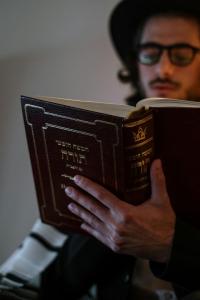
One thing that stood out to me is how differently demons are viewed in Judaic and Messianic traditions. In Judaism, demons, often called shedim or Mazzi Kim, are not central in the Hebrew Bible, but they appear later in the Talmud and Midrash. These texts describe them as harmful spiritual beings that can cause illness or misfortune but are also sometimes seen as part of divine testing. I found it especially interesting that not everyone in Judaism takes demons. Some interpret them symbolically. These beliefs did not develop in isolation. The development of demonology in Jewish thought was influenced by neighboring cultures, including Persian and Babylonian beliefs.
Messianic Traditions
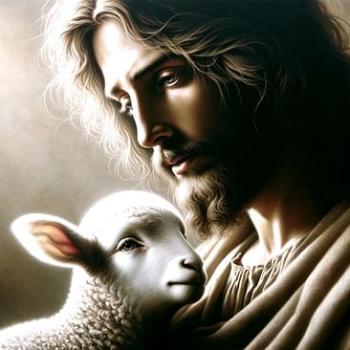
Messianic traditions, particularly those emerging from the early Christian context, build upon and reinterpret Judaic concepts of demons. When it comes to Messianic perspectives, the view seems more direct. Demons are enemies of God. Yeshua and His followers cast out demons. These accounts emphasize the Messiah’s power over these forces. While sharing similarities with Jewish demonology, Messianic perspectives frequently frame demons within an eschatological struggle between good and evil, emphasizing the authority of the Messiah over demonic forces. One major theme in Messianic thought is the role of faith. The belief is that through faith and divine power, people can overcome demonic influence. This raises questions for me. How strong is my faith? How about your faith? Is it enough to face something you believe is spiritually harmful?
What Archaeology Can Tell Us
Archaeology provides us with physical evidence of how people dealt with their beliefs about demons. An example is how archaeologists have found incantation bowls. These incantation bowls had inscriptions written inside them. People would bury these bones under their homes for protection and seek help from God to keep demons away.
Archaeological Evidence
Amulets, carvings, and figurines reflect fears and beliefs. While some depict demons, others depict protective symbols. These were not just abstract ideals. People believed and took practical steps to guard against demonic forces. People then took the time to have a conversation about demons. I suggest it be a conversation we continue to engage in.

Thoughts on the Archaeological Aspect
What I found interesting is how artifacts often combine ideas from various cultures. Interestingly, you might find inscriptions that combine Jewish traditions with influences from other societies. This shows us that ancient religious boundaries are not as clear as we might have thought. They are often fluid and interconnected.
Scriptures where Yeshua casts out Demons.
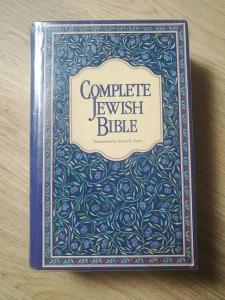
Scriptures in the Complete Jewish Bible (CJB) reflect Yeshua’s supreme authority in the spiritual realm. Yeshua casts out demons in Matthew, Mark, and Luke. Evidentiary passages include Matthew 8:16-17, Mark:1:21-28, Mark 5:1-20, Mark 9:17-29, and Luke 11:14-26. I recommend reading them at your leisure.
Conclusion
Looking at demons through both Judaic and Messianic perspectives and adding archaeological evidence reveals just how complex this topic really is. These beliefs shaped real practices and everyday life. We have learned and hopefully understand that studying demons is about more than examining supernatural beings. Understanding reflects the realization of human fear, faith, and the ways people across history have tried to explain and understand what they could not see. I believe the conversation about demons should be continual. I leave you with a question to ponder. How does your background influence that perspective?









 Ad-Free & Subscriber Log-In