

Source: Chase Padusniak
I respect silent movies. But that’s about it. I’ve seen a couple dozen of them, probably. None has ever gripped me, more artifacts for cinematic excavation than objects of enjoyment. I watch them the way a teen checks off the canon, uncomprehendingly, in awe, but with no real feeling.
I consider my feelings about silent film a source of sadness. If I can read medieval romances—precursors to the novel—with glee. Why can’t I appreciate the pre-talkies? I suspect the issue is style more than the silence itself. Intertitles, exaggerated acting, the strange framerates create an uncanny sense that something isn’t quite right. These don’t feel like movies. I hang my head in shame.
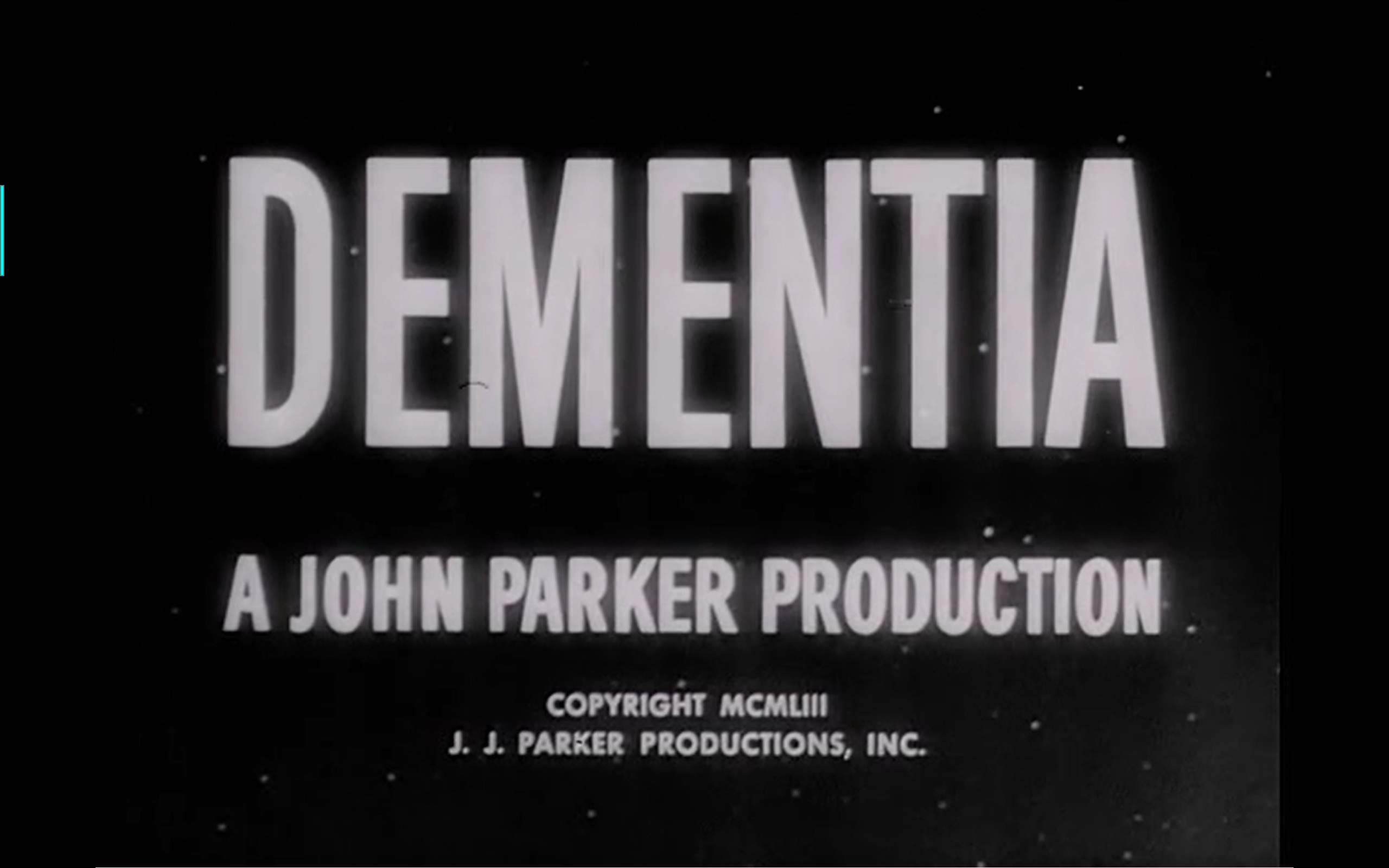
Dementia (1955) broke the curse. I’m forever grateful. It has two things going for it: at fifty minutes, it does not overstay its welcome. It gets its point across, lurid imagery, shadow play, and all—and moves on. Its other virtue is its cinematic language. The movie feels like a 50s noir crossed with fetal David Lynch. The language is one I know and therefore can understand, luxuriate in. It may just have opened the door.
There’s not even much of a plot to follow. A woman wakes up from a nightmare and wanders out of a seedy hotel into the streets of LA’s skid row. Slowly, her wanderings turn more deranged until masked men in graveyards hoist lanterns before tombstones that read only “father” and “mother.” Men proposition her, take her to jazz clubs, pry her with drinks—there’s a feminist reading to be had here. But taken on the whole, not much “happens.”
But it doesn’t need to. You see, the movie is real. It did happen. It’s the cinematic representation of one of the star’s (Adrienne Barrett) dreams. The secretary to John Parker, the film’s director (his only feature-length credit), Barrett told her boss about her nightmare and the two, alongside Ed Wood’s cinematographer William C. Thompson, set out to bring the nightmare to life.
That gives the whole project an air of mystery. The film’s dream logic, its lack of dialogue, make sense when you consider its origin. There’s nothing to discern here, no plot to follow or meaning to discover (except what we make); the viewer is free to let the images wash over them, to take it all in, shadow by shadow, and eerie wordless vocal by eerie wordless vocal.
With that security in place, that liberation from the “problem” of having to watch a silent film, one is left with compositions. And they are gorgeous, deep blacks and bloodshot eyes, alleyways filled with winos and bars buzzing with trombones. Dementia just keeps moving, washing over the viewer.
And quickly at that. It never pauses for long, sweeping its protagonist from one nightmare sequence to the next. A child cries on a staircase, a woman shows a cop her bruised arm, and a dwarf hands Barrett a newspaper, headlined “MYSTERIOUS STABBING.” We’ve just seen her tuck a switchblade into her jacket pocket. Is she in danger? Did she commit the stabbing?
There’s no time to think—a policeman (the same actor who portrays her abusive father in a dream-within-a dream, Ben Roseman) gleefully beats a homeless man as Barrett stands back and laughs. A rich, corpulent man stuffs his face with chicken wings, grease spilling onto his chin, rather than have sex with the dreamer. A mutilated hand, sawn off amidst faceless onlookers, ends up in a sad-eyed, grinning flower seller’s basket. And then the jazz kicks back in.
It just keeps coming. There was no time to be bored, to consider the film’s cinematic importance (indeed, it has none—it was banned in New York on release and would only see a limited run a few years later with film-ruining narration from later Johnny Carson sidekick Ed McMahon). That’s the trick. Dementia keeps coming and coming. I’m still thinking about it.
There’s the obvious Freudianism, the exploration of female vulnerability, the class commentary, and much besides. But that’s for me to continue pondering. For now, do yourself a favor: watch Dementia. Right now, right here.












 Ad-Free & Subscriber Log-In