


Romans 11:32
“For God shut up everyone in obstinacy so that He might show mercy to everyone.” (DBH)
In the book of Romans, the Apostle Paul is doing something that the average Christian never notices. As he opens his epistle to the church in Rome, he begins by setting them up with a scenario that he intends to unsettle them, and this sets the tone for the rest of the epistle.
The technique Paul uses is known as “prosopopoeia,” and it was a common argumentation style used by philosophers and theologians in the First Century. This method of argumentation employs an imaginary debate opponent that the author responds to and debunks.
In this case, Paul argues with a version of himself – the Teacher of the Law – in order to make his case for a more radical Gospel based on the faith of Christ and the goodness of God.
In my book, Reading Romans Right, co-written with Matthew J. Distefano, this method is explained, and the text is broken into more obvious voices so the reader can more easily navigate the back-and-forth argument between Paul, the Apostle, and Saul, the Pharisee of Pharisees.
I mention this because this section of Romans, in Chapter 11, is the culmination of Paul’s argument with that imaginary opponent.
Up to this point, he has employed this technique to explain why we shouldn’t judge people who sin differently than we do, and how God’s mercy is for everyone. Then, he turns to answer his imaginary opponent’s questions from Chapter 9: “Is there injustice on God’s part?” (9:14), and “What if God, though disposed to display his indignation against sin, and make known what is possible for Him, tolerated with enormous magnanimity vessels of indignation, suitable for destruction, in order that he might also make known the wealth of his glory?” (9:22-23).
Paul answers these questions and wraps up his imaginary debate with the Teacher of the Law by saying:
“For I do not want you, brothers, to be ignorant of this mystery, lest you be arrogant in yourselves: that a hardness has come upon one part of Israel until the full totality (pleroma) of the Gentiles enter in, and thus all of Israel shall be saved…for God’s bestowals of grace and vocation are not subject to a change of heart.” (11:25-26a; 29, emphasis mine)
As this chapter concludes, Paul is ready to offer a closing statement that will pull everything that he as argued up to this point together in one triumphant flourish:
“For even as you once did not trust in God, but have now received mercy through (the Israelites) mistrust, so they ow also have not trusted, to the end that, by the mercy shown you, they now might also receive mercy. For God has shut everyone up in obstinacy so that He might show mercy to everyone.” (11:30-31, emphasis mine)
Here, Paul makes it known that those who are not predestined or elect will be saved by God’s irresistible grace and mercy. As theologian David Bentley Hart explains:
“Paul affirms that the estrangement of the elect and “those who stumble” is a temporary providential arrangement that allows the “full totality” of Jews and Gentiles alike to enter in: and there, finally, he affirms that there is then no actual distinction of vessels of wrath from vessels of mercy: rather, all are bound in sin, and all will receive mercy.”[1]
This final crescendo at the end of Romans 11 concludes with a triumphant exultation of praise for God’s incomprehensible goodness and inexpressible mercy to everyone, everywhere:
“O, the depth of God’s richness and wisdom and knowledge! How inscrutable His judgements and untraceable His paths! For ‘who has known the Lord’s mind? Or who has become a counselor to Him?’ Who has given Him anything in the past and will have it repaid him? Because from Him, and through Him, and to Him is everything; to Him the glory, unto the ages, amen.” (11:33-36)
So, in this passage, Paul not only ends his imaginary debate with the Teacher of the Law, but he also affirms that there is no separation between Gentiles and Jews, and that God’s love for humanity can never and will never end.
This is Paul’s quantum theology: All humanity is One in God’s eyes, and nothing can ever separate us from God’s love.
[1] Hart, The New Testament, 311, note AJ
**
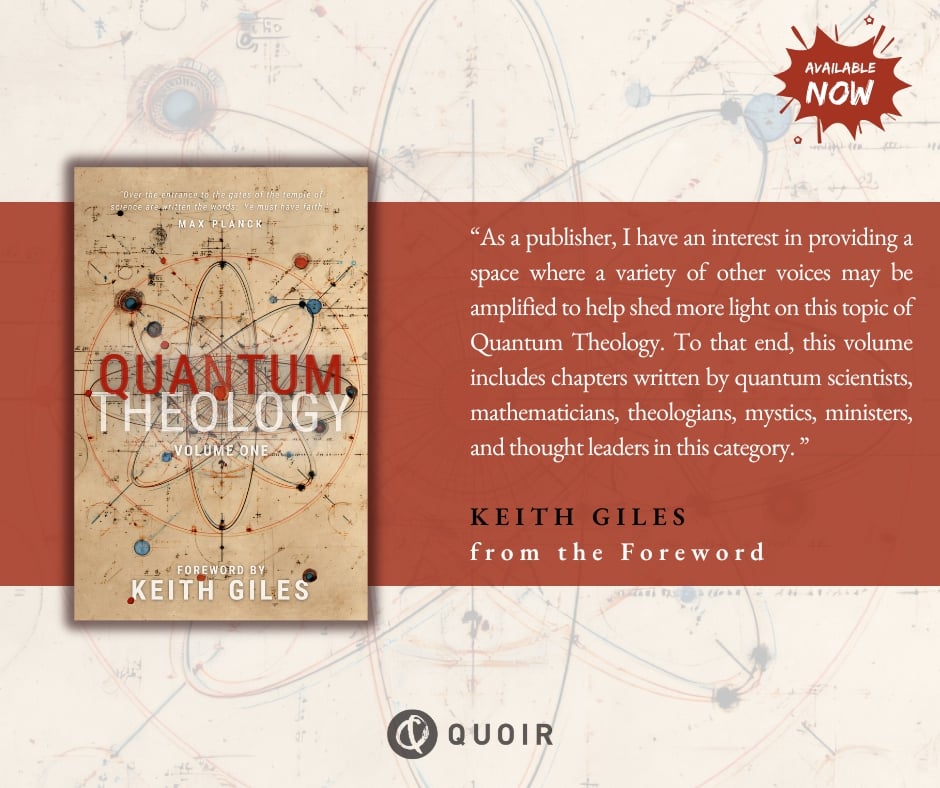
Quantum Theology: Volume One brings together an extraordinary and diverse group of scientists, mathematicians, theologians, mystics, authors, and cultural commentators to explore one of the most provocative conversations of our time: What happens when Quantum Physics and Theology begin to overlap?
Edited and curated by author Keith Giles, this book explores the intersection between science and faith.
My book, “The Quantum Gospel of Mary and the Lost Gospel of Truth” is now available on Amazon.
The book from Keith Giles, “The Quantum Sayings of Jesus: Decoding the Lost Gospel of Thomas” is available now on Amazon. Order HERE>














 Ad-Free & Subscriber Log-In