

Romans 16:17
“I implore you, watch out for those who create divisions and stumbling blocks opposed to the teaching you have learned, and avoid them.”
The Apostle Paul ends his letter to the Roman church with this urgent plea to avoid those who “create divisions and stumbling blocks.” Obviously, he doesn’t want the church to be divided, but I believe this final warning is about more than keeping the peace. In fact, I think it’s a reminder to them that “we are all one in Christ,” and that embracing that reality means avoiding those who want to create the illusion of separation and who preach an “us versus them” gospel message.
What most Christians don’t realize is that one of the main arguments Paul makes in the book of Romans is that God’s plan is to redeem and restore everyone to Godself, regardless of religion, doctrine, belief, or the lack thereof.
In other words, the book of Romans is a manifesto for a Universalist view of salvation. One of the reasons most Christians don’t notice this is that they are taught not to read it that way. Most conservative Bible scholars and teachers are convinced that Romans teaches that God is full of wrath against sinners and the queer community. They read the epistle without realizing that Paul wrote this letter using what’s known as “Prosopopeia,” a popular argumentation device used in the First Century by philosophers and teachers to drive home the points they wanted to teach.
This method involves creating an imaginary opponent to debate against, and this is exactly what Paul does in the very first chapter of Romans: he begins by speaking in the voice of his opponent, the Teacher of the Law, and then, in Chapter 2, he rebuts what the Teacher of the Law said by turning everything around and using that logic against those who think this way. (Note: If you’d like to read more about this back-and-forth debate that’s going on all throughout the first half of the book of Romans, I recommend reading the book, Reading Romans Right, which I co-wrote with author Matthew J. Distefano).
In short, Paul’s argument is that both Jews and Gentiles will be saved, and he wraps up his grand debate with these words: “For God shut up everyone in obstinacy so that he might show mercy to everyone.” (Romans 11:32)
Then, after making the game-winning shot at the buzzer, Paul goes on to celebrate his victory by saying this:
“O the depth of God’s richness and wisdom and knowledge! How inscrutable his judgments and untraceable his paths! For ‘Who has known the Lord’s mind? Or who has become a counselor to him? Who has given him anything in the past and will have it repaid him? Because from him, and through him, and to him is everything; to him be the glory, unto the ages, amen!” (Romans 11:33-36)
Clearly, Paul is quite pleased with himself for winning the debate, and he doesn’t bother to hide his joy at the realization that God’s mercy endures forever and that God’s love will save everyone.
So, if that is one of the main points of this letter – that God’s mercy extends to everyone – then what do we think Paul means when he warns us at the end of the epistle to avoid those who “create divisions and stumbling-blocks opposed to the teaching you have learned?” Perhaps it is those teachers who want to teach that God’s mercy is limited, or that God’s love is only for Christians, or that God plans to save some souls but to damn other souls for eternity.
If Paul crafted the book of Romans as an elaborate philosophical manifesto to establish that God’s love is for everyone, and that there is no separation between God and us, then anyone who denies those things is looking to “create divisions and stumbling blocks.”
Paul’s Quantum Gospel unites us with God and with each other. The false gospel separates us from God and divides us from one another.
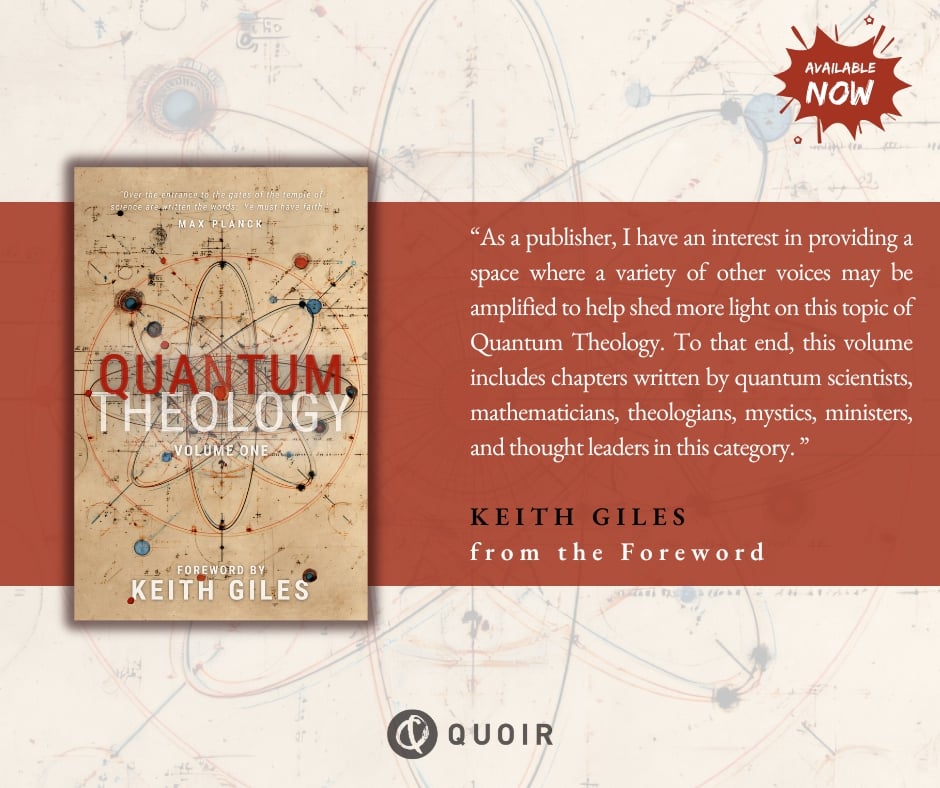
Quantum Theology: Volume One brings together an extraordinary and diverse group of scientists, mathematicians, theologians, mystics, authors, and cultural commentators to explore one of the most provocative conversations of our time: What happens when Quantum Physics and Theology begin to overlap?
Edited and curated by author Keith Giles, this book explores the intersection between science and faith.
My book, “The Quantum Gospel of Mary and the Lost Gospel of Truth” is now available on Amazon.
The book from Keith Giles, “The Quantum Sayings of Jesus: Decoding the Lost Gospel of Thomas” is available now on Amazon. Order HERE>














 Ad-Free & Subscriber Log-In