


Romans 12:4-5
“For, just as we have many members in one body, yet the members do not all have the same function, so we who are many constitute one body in the Anointed (Christ), and are members each one of one another…” (DBH)
The Apostle Paul strongly believed in this notion that we are all part of a single living organism (body) that is the Christ. Our connection to one another and to Christ is the same thing.
We are members of one body, and we are members of one another. Each member is connected to every other member, and every member is connected to the body, or to the Christ.
Combine this with what we know about other things the Apostle Paul has said about being in Christ, “the One in whom we all live and move and have our being.” This connection isn’t conditional. It’s not a metaphor that applies only to those who have prayed the prayer or invited Jesus into their hearts. When Paul first makes this statement about Christ being the source of life and being, he’s talking to idol-worshipping pagans in Athens, not to those who identify as Christians. So, to be “in Christ” is to be alive in the world as a human being. Therefore, our connection to the Christ is universal. Every human being has many members in their body, and every human is a member of a body that is Christ, and “we who are may constitute one body in the Anointed, and are members of one another.”
Paul’s own conversion story on the road to Damascus contains the seed of this idea that what we do to one member of Christ’s body, we do to Christ: “Why do you persecute me?…I am Jesus whom you persecute.” (Acts 9: 4-5) Therefore, it shouldn’t surprise us that Paul continued to meditate on this mystical connection between the people of God and God Himself; the idea that what we do to others we do to Christ, and that God’s Presence permeates all of reality.
As our study continues, we will begin to notice just how pervasive these ideas become for Paul and just how much they begin to inform his personal theology. It’s why he develops his themes of “one another” in his epistles to the churches from Rome and Thessalonica, to Corinth and Galatia, and it’s also why he focuses so often on the importance of oneness in the church and the need to love one another above everything else.
Let’s take a look at an example of this in our next passage.
**
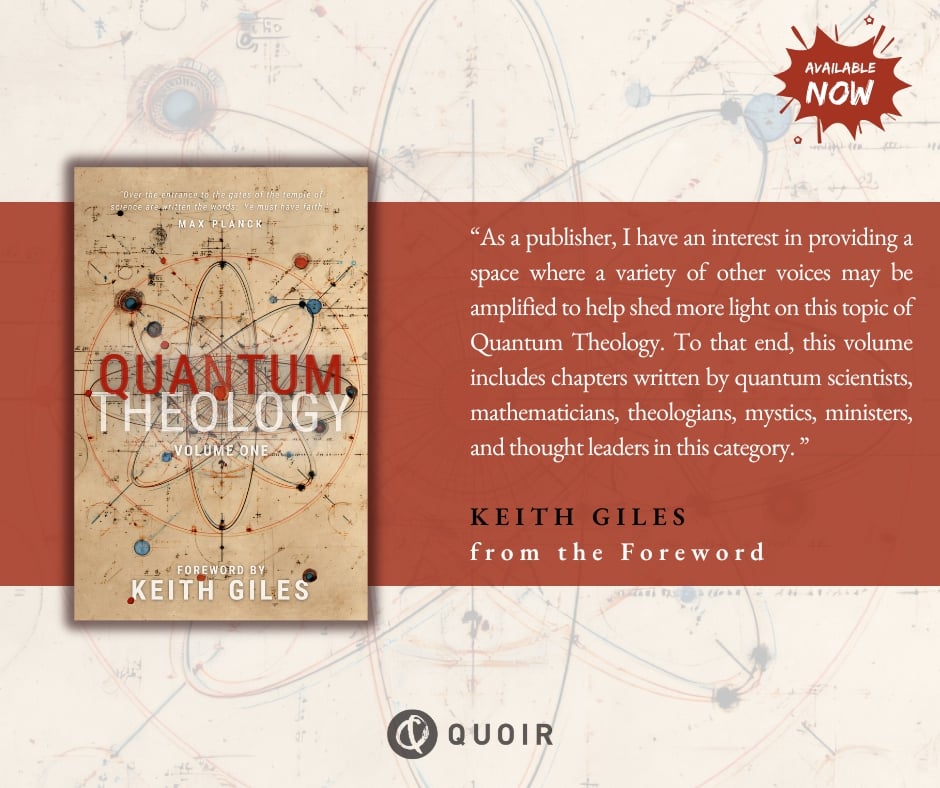
Quantum Theology: Volume One brings together an extraordinary and diverse group of scientists, mathematicians, theologians, mystics, authors, and cultural commentators to explore one of the most provocative conversations of our time: What happens when Quantum Physics and Theology begin to overlap?
Edited and curated by author Keith Giles, this book explores the intersection between science and faith.
My book, “The Quantum Gospel of Mary and the Lost Gospel of Truth” is now available on Amazon.
The book from Keith Giles, “The Quantum Sayings of Jesus: Decoding the Lost Gospel of Thomas” is available now on Amazon. Order HERE>













 Ad-Free & Subscriber Log-In