

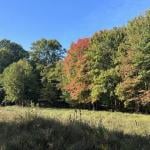
Summer has slowly faded into fall up here in Northwest Pennsylvania. The kids went back to school a couple of weeks ago and the Albion Fair recently commenced. Earlier in September, I did two charity bike rides in grape country, and the grapes were graping, the familiar smell of concord grapes in the warm September sun filled the air. In the human journey of becoming, we all go through seasons of change. This week, I want to reflect on four practices that can make our transitions more meaningful and mindful.
Amid the shifting colors and changes in routine, I am reminded that each transition—no matter how small or grand—invites us to practice letting go, to honor what has passed, and to meet what emerges with curiosity. The cycles of nature echo within our own lives, encouraging us to pause, breathe, and attend to the lessons unfolding in each moment. In navigating these changes, we discover how the art of presence, the acceptance of grace, an openness to new possibilities, and a spirit of questing can deepen not only our awareness but also our compassion for ourselves and others as we move through the inevitable tides of impermanence.
Being Present

My daughter sits across the room from me eating breakfast and completing her morning chores as I am writing this section of this post. For fifteen years, our mornings have looked like this, initially, I ate with the kids, but as they became more mobile and independent, they did not need me there anymore. I suspect now that she thinks I am oblivious, but I watch and am aware, never taking the moment for granted, as someday like the other kids, she will be gone from the breakfast table, and it will be just me sitting in my chair pondering life.
Being present is a practice that requires a long game in order to master. Certainly, in my late 40’s it is easier than it was those early years in my late teens and early 20’s saying my rosary before morning mass.
I discussed in the last few posts how our world is in a bit of a chaotic mess right now. The Practice of being present can impact both our emotional and mental well-being by nurturing a sense of balance, clarity, and connectedness in our lives. For the time we are in currently, where relationships are fractured, being present fosters a deeper connection to others. With two-way attention, we can maintain awareness of both our own emotional state and that of others, leading to more empathetic and authentic interactions.
Grace
As a practice, grace challenges us to be loved by the One who loves us most even when we insist on being unlovable. “Grace is a gift of God. Because it comes to us at God’s initiative, there are some things we can’t do about grace. We can’t earn it. We can’t control it. We don’t have to deserve it.” The practice of grace invites us to approach life’s unpredictability with openness and receptivity, fostering an inner resilience and adaptability.
By practicing grace, we learn to embrace change as a part of life’s unfolding, fostering a deeper understanding and acceptance that can lead to profound personal transformation.
Openness
There are certain aspects of aging that I have found challenging. Some of these experiences may be associated with long COVID, while others reflect changes commonly observed in people as they age. Recently, my father shared a photograph he had taken of my mother. Although it was a lovely image, I noticed signs of aging in her appearance, which was somewhat unexpected for me.
The practice of Openness, like grace requires the cultivation of acceptance. Change is going to happen regardless how much we cling to the way things are. “Openness is an ability to go with the flow, as Taoism puts it, without expecting predetermined outcomes. It means being receptive to new possibilities, without prejudging them. It is an ability to make yourself available to out-of-the-ordinary opportunities. Indeed, openness to the unknown, the exotic, and the bizarre is usually seen as the mark of a free spirit.”
When we engage in the practice of openness, not only do we cultivate acceptance, but we also cultivate a resilience that helps us deal with the uncertainty and stress of it all without closing off emotionally or mentally. Here, I am reminded of the many lessons I have learned from the Stoics. In engaging in this practice, we create a foundation that empowers us to adapt rather than resist, further guiding us in our becoming.
Questing
One of my favorite practices to sit with is the practice of questing. When we cultivate a mind of curiosity and wonder, life truly becomes a journey of discovery. Questing pushes us into the unknown, confront difficulties and dangers and allows us to return with a newfound sense of confidence. In the process of aging, I am finding curiosity to be carrot that keeps me going on this quest.
The practice of questing can be a powerful catalyst for navigating change, as it encourages exploration, curiosity, and continual growth. Questing invites a mindset shift where change is not something to be endured, but a journey to be embraced, enriching your life with new perspectives and wisdom.
In Closing
In a few weeks possibly, we could have our first snow. As we move through September and into October, the days will grow shorter, and mornings will be crisper. Autumn will deepen into winter, and the world will be asleep as it readies for the new year ahead. As I consider this season of change, I find myself drawn to the gentle wisdom that comes from savoring each fleeting moment, recognizing that impermanence is not only a challenge but also a gift. It is in the quiet spaces—between the falling leaves and the gathering dusk—that we learn to trust the process of letting go, to walk bravely into what lies ahead without clinging to what was. In our willingness to participate fully in this unfolding, we craft lives that are not defined merely by what changes, but by how we meet those changes—with presence, with grace, with an open heart, and with a spirit eager to seek and discover. May we walk forward together into the unknown, grounded in the knowledge that every season, every transition, is an invitation to deeper wholeness and wonder.











 Ad-Free & Subscriber Log-In