

What’s In A Name?
In these modern times, at least in Western civilization, there is not a high a regard for the meaning of a person’s name. Parents usually just name their children a name that they like or obscurely choose one from some baby name book or website, with no regard for what the name means. When choosing a baby name, sometimes there is consideration given to naming a child after their father or some other relative. One woman I know, when asked what name to put on a birth certificate, thought quickly, noticed a wall clock in her room made by the clockmaker ‘Seth Thomas’ and named their child Seth Thomas. Sometimes names are used because they sound cool like ‘Dash’. There is also a very colorful naming in certain communities with made-up spellings and pronunciations like ‘Shaniqua’, ‘Mercedes’, ‘Tynasha’, or ‘Deshawn’. During the Black Muslim movement, the names of children took on Islamic-sounding names. It even became popular for athletes to change their birth name to a name that had a Muslim flair to it.
Historically, naming a child was taken seriously
Historically, though, naming a child was taken seriously and the child was named in a way that a parent hoped the child would grow into the characteristics that the name reflected. In some cultures, a child was not named at birth; they waited till a child displayed certain characteristics that made them stand out. Among Native Americans, for example, if a child was a very fast runner, he might be called ‘Running Deer.’
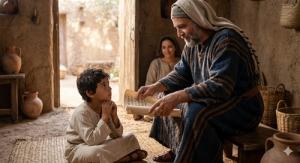
In the Hebrew culture, naming was taken very seriously. In ancient Hebrew culture, a name was far more than a label; it was seen as a prophetic blueprint of a person’s soul, character, and destiny. parents were believed to receive a “spark of prophecy” when choosing a name. A name was not just a hope for the future but a description of the child’s very essence. For example, The name Nabal means “fool.” His wife Abigail later said of him, “As his name is, so is he; Nabal is his name, and folly is with him” (1 Samuel 25:25). Many names were chosen to “anchor” the child to the specific moment of their birth, whether involving family emotions or national events.
- Isaac (Yitzhak): Meaning “he laughs,” commemorating his mother Sarah’s laughter when told she would have a child in old age.
- Ichabod: Meaning “the glory has departed,” named by a mother who gave birth just as the Ark of the Covenant was captured by enemies.
On many occasions, God himself told parents what to name their child. Here are the primary scriptures where God (or His angelic messenger) gave parents the specific name for their child before birth:
- Ishmael (“God Hears”) Before Ishmael was born, Hagar was fleeing in the desert. An angel of the Lord met her and gave her the child’s name as a testament to God noticing her pain.m”The angel of the Lord also said to her: ‘You are now pregnant and you will give birth to a son. You shall name him Ishmael, for the Lord has heard of your misery.'” — Genesis 16:11
- Solomon (“Peaceable”) While David originally named him, the Lord had already spoken to David about the child’s destiny and name, signifying the era of peace he would oversee. “But you will have a son who will be a man of peace and rest… His name will be Solomon, and I will grant Israel peace and quiet during his reign.” — 1 Chronicles 22:9
- Josiah (“Healed by Yahweh”) This is one of the most remarkable instances because God named Josiah through a prophet roughly 300 years before he was actually born. “By the word of the Lord he cried out against the altar: ‘Altar, altar! This is what the Lord says: A child named Josiah will be born to the house of David…'” — 1 Kings 13:2
- Maher-Shalal-Hash-Baz (“Swift is the Booty, Speedy is the Prey”) This is the longest name in the Bible. God commanded the prophet Isaiah to name his son this as a prophetic sign regarding the coming invasion by Assyria. “Then the Lord said to me, ‘Take a large scroll and write on it with an ordinary pen: Maher-Shalal-Hash-Baz… and she conceived and gave birth to a son. And the Lord said to me, ‘Name him Maher-Shalal-Hash-Baz.'” — Isaiah 8:1-3
- John the Baptist (“Yahweh is Gracious”) The angel Gabriel appeared to Zechariah in the temple to announce that his barren wife, Elizabeth, would conceive. “But the angel said to him: ‘Do not be afraid, Zechariah; your prayer has been heard. Your wife Elizabeth will bear you a son, and you are to call him John.'” — Luke 1:13
- Jesus (“Yahweh Saves”) The most famous instance occurs in the New Testament when an angel appears to both Mary and Joseph to declare the Savior’s name. “She will give birth to a son, and you are to give him the name Jesus, because he will save his people from their sins.” — Matthew 1:21 (See also Luke 1:31)
- Jesus changed Simon’s name to Peter. (Matthew 16:16-18)
- Saul’s name was changed to Paul. The Bible does not record a divine name change from Saul to Paul, rather, Saul—his Hebrew name—began using his Roman name, Paul, as he moved into ministry among Gentiles. Acts 13:9 explicitly states: “But Saul, who was also called Paul…”. The shift occurs in Acts 13:9 during his first missionary journey, reflecting his role as the apostle to the Gentiles.
Sometimes they were named according to their physical traits
Sometimes they were named according to their physical traits like Esau (Hairy), Laban (White). And sometimes it was expressing a wish, like Noah (Comfort/Rest). Sometimes names were Commemorative, marking a situation like Moses (Drawn out of water). And very often names were chosen to honor God. Like Samuel (God has heard). And very often the name given to them at birth was changed when certain things happened in their life. Because a name was so tied to identity, a major change in a person’s life often required a new name. This was seen as a “re-birth” or a change in their legal and spiritual standing before God.
- Abram → Abraham: From “Exalted Father” to “Father of a Multitude.”
- Jacob → Israel: From “Supplanter/Heel-grabber” to “One who struggles with God.”
- My name, Raven, was not my given name at birth but I later changed it to inspire me at a time there were big changes going on in my life, like a divorce and becoming a single parent and moving to another area. This name continues to inspire and focus on my purpose in life.
For these reasons I think the Hebrew names of God should be taken seriously.
The foundation of God’s names is the name God gave for himself when Moses came upon a burning bush and Moses was given his commission to free the Hebrew people from the bondage of the Egyptians. Moses asked Who shall I say you are and God replied ‘I am that I am’ (Exodus 3:14). I know some modern translations of the Bible say ‘I am what I am’ or ‘ I will be what I will be’. I think ‘I am that I am’ is much more powerful and significant. For it implies he is whatever we need him to be. He is the all-sufficient one. Other names of God describe certain characteristics of God but this name is so all-encompassing. The original Hebrew spelling of this statement YHWH and is often called The Tetragrammaton and refers to the four-letter Hebrew name of God, יהוה, commonly transliterated into English as YHWH. Originally, Biblical Hebrew was written without vowels. Because of the Commandment to not take the Lord’s name in vain, a tradition developed by the 3rd century BCE where Jews stopped speaking the name aloud to avoid any accidental misuse. It was considered such a sacred name that it could not be spoken. Christians often fill in the vowels and pronounce it Yahweh. It is the most sacred and frequently occurring name for God in the Hebrew Bible (appearing over 6,800 times). YHWH or ‘I am that I am’ is so much deeper than most realize. He is the one who is. He is the one who causes to be. In Exodus 3:14, when Moses asks God for His name, God replies, “Ehyeh Asher Ehyeh” (I Am That I Am). Let that sink in. Ask the Holy Spirit to reveal the depth of that statement and that name above all names. It never ceases to be a tingle down my spine whenever I think of this name!
Comparison of the “Four Letters”
The letters correspond to the following Hebrew characters:
י (Yod)
ה (He)
ו (Waw/Vav)
ה (He)
Did you know? Many English Bibles signal the presence of the Tetragrammaton by writing the word LORD in small capital letters. If you see “Lord” (lowercase), it usually translates from Adonai; if you see “LORD,” it is translating YHWH.
The Hebrew alphabet is fascinating! Did you know every Hebrew letter has a meaning in and of itself? Did you know every Hebrew letter is also a musical note? Did you know every Hebrew letter has a numeric equivalent? And the good news is you don’t have to be a Hebrew scholar to look at the scriptures in the original written language to understand with a book like Strong’s Concordance. Available in hard copy or online. To study the Bible at this depth will open up depths and understanding like you never dreamed!
I think the New Testament name that John used in John 1:1-5 is very similar when he says:
“In the beginning was the Word, and the Word was with God, and the Word was God. 2 The same was in the beginning with God. 3 All things were made by him; and without him was not any thing made that was made. 4 In him was life; and the life was the light of men. 5 And the light shineth in darkness; and the darkness comprehended it not.”
The Greek word used here for God as expressed in Jesus Christ is ‘Logos’. The Greek word, Logos also translates ‘The Way’ or ‘The Word’. Insert the word Logos as in the original and literal Greek interpretation of these scriptures and you get:
“In the beginning was the Logos, And the Logos was with God, And the Logos was God. The same was in the beginning with God. All things were made by Him; And without Him was not anything made that was made. In Him was life and the life was the light of men. And the light shines in the darkness, And the darkness comprehended it not… He was in the world and the world was made by Him. And the world knew him not… And the Logos became flesh, And dwelt among us, And we beheld His glory.
Long before the New Testament was written, Greek philosophers used Logos to describe the “glue” of the universe.
- Heraclitus (6th Century BCE): He was the first to use it technically. To him, the Logos was the universal principle of order. Even though the world is always changing (like a flowing river), the Logos is the underlying “law” that keeps it all balanced.
- The Stoics: They took it further, viewing the Logos as a “seminal reason” that permeated all of nature. It was the “mind of God” that gave the universe its structure and logic.
- Around the time of Jesus, a Jewish philosopher named Philo tried to harmonize Greek philosophy with the Hebrew Bible. He used Logos to describe the intermediary between a perfect, transcendent God and the physical world. To Philo, the Logos was the “image of God” through which the world was created. This set the stage for how early Christians would later describe Jesus.
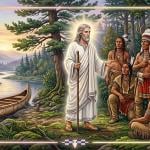
- The Chinese were once a nation that worshipped one God and called him the Tao, which is equivalent to ‘Logos’.
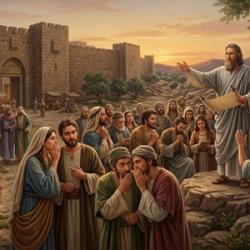
By choosing this specific word, Logos, John did something brilliant: he spoke to both the Jews and the Greeks at the same time. To the Greeks: He was saying, “The cosmic reason you’ve been looking for is a Person.” To the Jews: He was echoing the Hebrew Memra (the “Word” of God used in the Targums to describe God’s creative power
Hebrew Names of God: A Guide To Interpreting The Names of God
| YHWH / Yahweh | The self-existent One; “I Am.” | Gen 2:4, Ex 3:1-22, Isa 40:3 |
| Adonai | The Lord over all; Master. | Gen 15:2, Ps 8:1, Rom 10:9 |
| Elohim | Creator, powerful and mighty. | Gen 1:1, Ps 19:1, Jer 31:33 |
| El-Shaddai | God Almighty; The All-Sufficient One. | Gen 17:1, Ps 91:1 |
| El-Elyon | The Most High God. | Gen 14:17-20, Isa 14:13-14 |
| Yahweh-Jireh | The Lord will provide. | Genesis 22:13-14 |
| Yahweh-Rapha | The Lord our healer. | Ex 15:26, Ps 103:3, Jer 17:14 |
| Yahweh-Shalom | The Lord is peace. | Judges 6:24 |
| Yahweh-Rohi | The Lord my shepherd. | Psalm 23, Isa 40:11, Eze 34:12 |
| Yahweh-Nissi | The Lord our banner (victory). | Exodus 17:15 |
| Yahweh-Tsidkenu | The Lord our righteousness. | Jer 23:6, Ps 4:1, Ps 24:5 |
| Yahweh-Shammah | The Lord who is present. | Eze 48:35, Ps 139:7-12 |
| Yahweh-Sabbaoth | The Lord of Hosts (Armies). | 1 Sam 1:3, Isa 6:1-3 |
| Yahweh-Maccaddeshem | The Lord your sanctifier. | Ex 31:13, Lev 20:8 |
| Yahweh-Ghmolah | The God of Recompense. | Jeremiah 51:6 |
| El-Gibhor | Mighty God. | Isaiah 9:6 |
| El-Olam | The everlasting God. | Isaiah 40:28-31 |
| El-Roi | The strong one who sees. | Genesis 16:13 |
| El-Chuwl | The God who gave birth. | Psalm 139:13-18 |
| El-Deah | God of knowledge. | 1 Sam 2:3, Rom 11:33-36 |
| Attiyq Youm | The Ancient of Days. | Daniel 7:9, 13, 14 |
I hope this article inspires you to dig a little deeper into God’s Word, the Bible. It is as deep as you want it to be.
Thanks for reading this week’s article. I hope you were blessed. Please share this article with your friends and social media. And if you wish to support more articles like this one I have links below.














 Ad-Free & Subscriber Log-In