

“Can you find out the depths of God? Or find out the perfection of the Almighty? It is higher than the heavens; what can you do? It is deeper than Sheol; what can you know?” – Job 11:7-8.
Theology is generally defined as the systematic study of God. As in any discipline, the terms used must accurately reflect the concepts they represent. So, while it is true that the topic of language more appropriately belongs to disciplines such as grammar, rhetoric, and philosophy, language is an essential feature of a comprehensive theology. If theology is the study of God, religion is that virtue by which proper praise is given to God. Here too, precise language is vital.
In this essay, I will explore a problem shared by theology and religion. Is language, as a human construct, capable of telling us anything about God? Put differently, is language sufficient for the creature to understand or even explain the Creator?
The Infinite And The Finite
Within the much broader horizon of religion and the philosophy of language lies a fundamental religious problem: what can be accurately said of God?
The first problem one encounters is developing a working definition of God. To provide an essential definition (that is, to define the essence of a thing) is to combine the genus of a thing with a specific difference. For example, humans belong to the genus of animals, and the specific difference is rationality.
The God depicted in the Bible and by Catholic theology is not within the created order. He is not one cause among many, but rather God is the source of creation. Therefore, God cannot be placed within a genus. As such, explaining who God is becomes a complicated task.
For its part, philosophy depicts God as the unmoved mover, the ground of existence, and that which nothing greater can be conceived. For Aristotle as for Thomas Aquinas, movement was synonymous with change. Since infinite regresses of changes (or causes) are impossible, God is posited as the cause of change while being itself unchanged.
At a more religious level, Catholicism states that “Since our knowledge of God is limited, our language about him is equally so. We can name God only by taking creatures as our starting point, and in accordance with our limited human ways of knowing and thinking.” (Catechism of the Catholic Church, Paragraph 40).
Complicating the problem of developing language for God is the Christian understanding of God as a Trinity of persons. In extrapolating from the biblical data, Catholicism asserts that God is a Trinity. The doctrine of the Trinity should in no way be confused with polytheism. Rather, God is one divine essence, participated in by three persons: the Father, the Son, and the Holy Spirit.
Therefore, when using religious language to discuss God, one can refer to God’s essence, or to the persons that comprise the Holy Trinity.
The Problem Of Language
Ironically, language is not an easy thing to define. From the perspective of philosophy, language is not just words. Nor is language viewed solely as a manner in which certain animals communicate. Instead, language is considered a system for thought, meaning, truth, and understanding reality.
Aristotle viewed language as a rational tool for expressing thoughts about reality, with spoken words being the primary medium. He argued that while spoken and written languages are conventional and vary among people, the mental states and the objects they represent are fundamentally the same for all humanity. An example will make this point clear. Deus, Gott, and Dieu are three terms (units of language) in Latin, German, and French that represent one concept: God.
Still, how can language created by finite, temporal, and fallible human beings tell us anything about an infinite, eternal, and omniscient God?
Coming To Terms
Owing to the inherent limitations of language and the human intellect, religious language often takes one of four forms.
The first is called apophatic language. In this form, one speaks about what God is not. For example, God is not a physical body, nor is God a created being. The Greek theologian Pseudo-Dionysius held that God transcends human language, making “negative theology” the only vehicle for speaking about God. (Stang, Charles M. Apophasis and Pseudonymity in Dionysius the Areopagite. Oxford University Press on Demand, 2012).
While apophatic theology can be helpful, it does not tell us who God is. Nevertheless, this kind of negative language appears in the Bible. In John’s Gospel, we read that “No one has ever seen God.” (John 1:18).
The second type of religious language used involves analogies. Analogies utilize human qualities as standards against which to compare divine qualities. This form is seen in Scripture as well, where God is described as a shepherd who guides, protects, and provides for His people. (Psalm 23; John 10:11). Additional analogies used in both the Bible and in religious texts include referring to God as “Father,” “Fire,” “King,” and “Rock.”
Arguably, the most intriguing form of religious language about God involves symbolism. Symbolism is used non-literally to describe otherwise ineffable experiences. Indeed, the German philosopher and theologian Paul Tillich considered symbols the best vehicle for expressing religious or transcendent terms. The reason for this lies in the nature of symbols. A symbol is both a term or object, yet it points to something beyond itself.
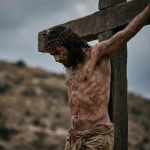
Tillich demonstrated this point by using a nation’s flag as an example. A flag is a thing in itself, but it often suggests a sundry of other concepts, such as a person’s homeland or patriotism. In a similar way, a crucifix is a thing in itself, but it also implies Catholicism, which in turn, points to faith and God. It should be mentioned that while a sign points to a thing, the symbol actually participates in the thing it refers to.
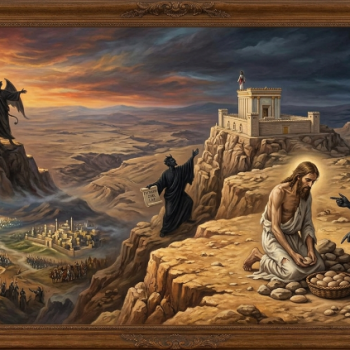
The final form of religious language is myth. The modern person tends to limit the definition of myth to a widely held, but false belief. However, the more inclusive definition of myth or mythology is a narrative that is universally accepted and conveys abstract truths such as good and evil, death, and creation. In this sense, myth is a literary genre.
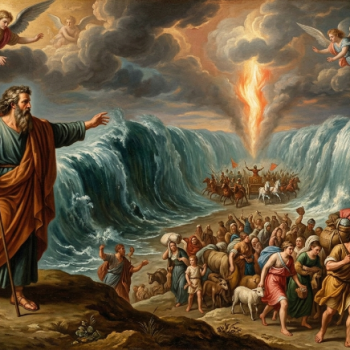
The mythology most associated with the Bible is probably the creation narratives in the Book of Genesis. While some Christians accept the creation stories literally, it is more commonly accepted to understand them as myths designed to show that God is the Creator.
Conclusion
Inherent in the study of theology and religion is the problem of language. Specifically, can language, as a human artifact, accurately portray transcendent realities? If it cannot, can we even talk about God?
The Catholic tradition argues that, despite its inherent limitations, language functions as a bridge rather than a barrier. Through analogy and symbol, the creature does not capture the Creator but rather points toward the Mystery beyond the reach of literal definition.








 Ad-Free & Subscriber Log-In