


Excerpt from the book Copyright © 2025 by Karl Forehand
Did My Tradition Get It Right?
“The master key of knowledge is, indeed,
a persistent and frequent questioning”
– Peter Abelard
From what I remember, my family regularly attended Southern Baptist (SBC) and Independent Fundamentalist Baptist (IFB) churches. IFB churches gained more attention recently when reality TV stars Jim Bob and Michelle Duggar showcased their cult-like beliefs and their leader, Bill Gothard, who was unmarried and childless yet developed the Institute in Basic Life Principles (IBLP) curriculum used by many homeschoolers. The reality TV show was canceled due to sex scandals and abusive practices, which shed light on the toxicity present even in homeschooling materials. To avoid triggering survivors, I won’t recount the numerous stories we’ve heard on our podcast and through documentaries like Shiny Happy People.
I remember feeling smug at times when I was a Southern Baptist. We mocked and pointed fingers at Catholics because of their numerous abuse scandals. Recently, Russell Moore highlighted a cover-up at the executive board level, revealing that over 700 abuse cases in Southern Baptist churches were systematically swept under the rug. Along with my dramatically changing beliefs, I also learned more about the history of my former denomination. The official narrative is that the Southern Baptist Convention was founded by a group of people who wanted to continue being slave owners and separate from their northern counterparts. Today, they continue to double down on their racism, misogyny, homophobia, and toxic belief systems like hell.
You may belong to a less overtly toxic religious tradition, but we Christians are all branches of the same tree. No matter how much we might like to think of ourselves as original, we all depend on recreating the past to some extent. I experienced this as a church planter. When we believed we were doing something NEW, we later realized that what we created wasn’t very different from what we had before.
When discussing our traditions and denominations, we often assume they have flaws; yet we choose to attend the one we believe is the most correct. Our friends and family usually join us, and we want to be close to them. We haven’t explored world religions or other faith practices, leading us to believe that ours is the best and that God is on our side. This conviction makes us feel justified in any practices we adopt. When I say, “There are systemic issues in religion,” people often reply, “Maybe in your church, but not in ours.”
If we’re honest, we must acknowledge that we lack adequate exposure to diverse ideas and viewpoints to assert we have the best one. As time passes, we become more convinced that our approach is superior, and eventually, we might be tempted to penalize others for not adhering to our “way.” I encourage everyone to carefully examine the link between religious individuals, wars, and genocide worldwide. All these outcomes arise from the fundamental belief that we are right!
I believe theology is the study of assumptions regarding the belief systems of specific religions. The doctrine of the Trinity, which is widely accepted in Catholicism and Protestantism, did not become prevalent until the 2nd century as it gradually gained more followers. Theologians share similarities with scientists in some ways, but their truths stem from texts and established assumptions rather than direct observation or experimentation. When a theologian proposes an assumption, it may be accepted and persist for centuries until a new idea captures the followers’ attention.
When this leads to a split within the congregation, the group divides and forms new churches and denominations. In the Protestant context, this accounts for tens of thousands of denominations that believe they are right, and that God endorses them.
After closely examining its outcomes, I began to question the validity of my denomination (SBC). Observing my surroundings, I noticed several troubling issues. Denominational leaders and prominent pastors projected confidence, but their theological understanding appeared weak when put to the test. Although they spoke assertively about God’s sovereignty, they stumbled when confronted with straightforward follow-up questions, such as, “What about victims of abuse?”
One issue is that theologians foster a dependence on their expertise. Audience members rigidly receive theology and practical advice on how to live and what to believe. They are discouraged from independent thinking and advised not to ask too many questions. The organization takes precedence, leaving little room for individual needs, inquiries, or concerns. While church leaders resemble authoritarian figures in other countries, they simplify concepts for the masses and insist that congregants adhere strictly to their guidance.
I believe this simplifies the parishioners, making them more receptive to control. Prioritizing operational issues and financial obligations overshadows individual needs, as the needs of the many are placed beneath those of the leaders, ensuring the organization’s survival. Protecting the doctrinal statement becomes a top priority, with everything reliant on the affirmed beliefs that members are encouraged to uphold.
After serving as a pastor for two decades, I finally paused to reflect on the question presented in this chapter. After navigating the complex journey of Christianity, how can I be sure that my denomination made all the right choices and listened to the insights of the appropriate theologians? As I compared my congregation to the broader world, I often noticed that those labeled “sinners” outside our walls frequently behaved better than those within. Within Christianity, leaders have committed acts of molestation, rape, and substance abuse and have too often succumbed to greed, power, manipulation, and exploitation.
One key moment may have occurred at the outset when Jesus explicitly did not instruct anyone to establish a religion or write a holy book that misrepresents historical context, let alone concepts like the Trinity. Even when Christianity had only six leading schools of thought, the changes we experienced were primarily influenced by cultural shifts rather than widely recognized interventions from divine authority. Interestingly, while Jesus is believed to have died on the cross, none of the contemporary historical writers mentioned this event until 60 years after it took place.
If we had truly embraced Jesus’ message of loving our neighbors and committed ourselves to this principle, our world would likely be much better. Many conclusions drawn by theologians were influenced more by desires for power, control, and cultural factors than by divine inspiration. Emperor Constantine may have impacted Christianity more significantly than Jesus when he fused the church with the state in the 4th century.
My decision to leave the pastorate and reevaluate my faith wasn’t impulsive. I wasn’t merely trying to indulge in sin, evade responsibility, or reject my upbringing and fellow believers. I told Laura, “I can’t continue like this!” Consequently, I stepped down from my church and began exploring everything. When corruption was uncovered in so many evangelical institutions in the U.S., it led me to question all my assumptions and seek the truth wherever it might be found.
Nothing was deemed sacred simply because it had endured for centuries or millennia. After studying the scriptures for two decades, I gained valuable insights into how things functioned. I was prepared to abandon my long-held beliefs to seek genuine truth rather than merely defending inherited viewpoints and ideas.
I discovered insights from various traditions and found simplicity in nature, highlighting the flaws and contradictions of organized religion. I was repeatedly warned that questioning or exploring matters not sanctioned by the church would lead me into a troubling abyss. However, that never occurred. I now feel morally uplifted, having discarded the pretense of accepting beliefs that no longer align with my values. My judgment of others has diminished, and I increasingly advocate for marginalized individuals daily. I’ve healed from many past traumas and am learning to trust my intuition along with the timely guidance that comes my way.
I empathize with those who hesitate to embrace deconstruction. Religious communities sometimes foster a sense of co-dependence, making members fearful about stepping away or taking a break from religious practices. While I acknowledge that taking a year off or beginning to ask questions can be challenging, you won’t regret it.
I urge you to stop ignoring your fears and concerns. A well-placed platitude or dismissive comment can be jarring, and you don’t have to accept every aspect of your religious tradition. All denominations and belief systems likely have flaws. Our convictions do not necessarily validate something as accurate. This tendency to shape God in our image is counterproductive, as strengthening our faith may reinforce misguided assumptions and beliefs.
Having always been interested in theology, I often reflect on how people form beliefs about God or the afterlife. With practice, they can convey these beliefs so convincingly that others accept them. This phenomenon occurs daily in various organizations. Over time, as individuals become more entrenched in their beliefs, these ideas often evolve into rigid or less adaptable concepts in their minds. Can you see how beliefs begin to take shape?
In 2016, I distanced myself from my denomination and began my journey of deconstruction. The best approach to this process differs from Stephen Covey’s concept of “Begin with the end in mind.” Deconstruction isn’t about confirming or refuting existing beliefs but seeking raw wisdom from various traditions. This journey of exploration is genuinely fulfilling.
While some church leaders possess significant wisdom, others are merely loyal individuals to their denominations or local parishes who are rewarded for their allegiance. I believe that the true thinkers in the church are primarily Mystics, often overlooked by the institution due to their unconventional ideas and their pursuit of profound questions that many believers are hesitant to confront.
If you feel drawn to stay within organized religion, consider beginning a Mystic’s journey to genuinely experience the Universe, rather than simply accepting your group’s established beliefs.
Questions About Questions
What belief(s) did you inherit concerning this question?
How is your response to this question changing?
Learn to be Where You Are (Presence)
Learn to be Who You Are (Authenticity)
Finding Regulating and Somatic Healing
Are you genuinely committed to deconstruction and seeking more profound answers?
If that’s the case, this book was created for you. As a former pastor, I made the mistake of deconstructing a bit and then trying to start something new, as I was trained to do. The problem with that approach is that I wasn’t ready to begin something new.

I hadn’t delved deeply enough or asked enough questions. The first stage of deconstruction typically includes assessing our beliefs regarding hell and the afterlife, supporting queer individuals and women in their fight for equality, and achieving a better understanding of racism and privilege.
Many people in deconstruction communities expend significant effort criticizing Evangelicals and attempting to gain a following. While I believe they deserve intense criticism, this strategy fails to effectively tackle the problem because they generally don’t listen to us!
Our tendency to punish our former organizations sometimes overlooks the challenging process of healing and growth. It is the same trap we fell into in our former associations.

Campfires occupy a special spot in the mosaic of history. They act as communal hubs across different cultures and faiths. The campfire’s circular design fosters equal participation within the collective group. The flames at the center draw our focus and encourage face-to-face interactions as we exchange experiences, wisdom, and insights about the world beyond. It is where legendary myths and tales are born.
Order Now – Study Questions in each chapter!
This book is named Campfires in the Desert as it stems from nearly 400 discussions we held with individuals on our podcast, The Desert Sanctuary, and our aspiration to improve.
Available now!
Thanks for considering us, autographed copies are $20
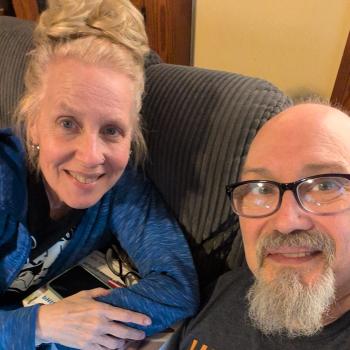
Karl Forehand Campfires in the Desert – A Soft Book Release. Karl Forehand is a former pastor, podcaster, and award-winning author. His books include Out into the Desert, Leaning Forward, Apparent Faith: What Fatherhood Taught Me About the Father’s Heart, The Tea Shop, and Being: A Journey Toward Presence and Authenticity. He is the creator of The Desert Sanctuary podcast and community. He has been married to his wife Laura for 35 years and has one dog named Winston. His three children are grown and are beginning to multiply! You can read more about the author here.











 Ad-Free & Subscriber Log-In