

Throughout the world, countless people gather daily to pray the Rosary. Their intentions are vast and deeply meaningful: for our Pope, for world peace, for an end to abortion, and for the holy souls in Purgatory. Yet beyond these intentions, the Rosary itself is something far greater. It is a pathway into deeper union with Jesus Christ through the heart of His Blessed Mother.
As Pope John Paul II beautifully said:
“The Rosary is considered a perfect prayer because within it lies the story of our salvation.”
When we pray the Rosary, we are not merely repeating words—we are entering into the mysteries of Christ’s life, death, and resurrection.
A Crown of Roses for Our Lady
The word Rosary comes from the Latin rosarium, meaning “garland” or “crown of roses.” This image is not just poetic, but it is deeply rooted in Christian tradition.
An early legend tells of a young monk who lovingly prayed the Hail Mary over and over. Each time he did, the Blessed Virgin Mary took a rose from his lips. These roses were gathered into a garland, which she then placed upon her head.
From this, a beautiful truth emerged:
Every Hail Mary we pray is like offering a rose to Our Lady. When we complete a full Rosary, we present her with a crown.
This imagery reminds us that even the simplest prayers, when offered with love, become something beautiful in the eyes of heaven.
Prayer Beyond One Tradition
While the Rosary is distinctly Catholic in its current form, the use of prayer beads and repetitive prayer stretches across cultures and centuries.
In many parts of the world, Buddhist and Hindu practitioners have long used beads to guide meditative prayer. Similarly, early Christian monastics in Egypt adopted repetitive prayer as a means of constant communion with God.
The “Jesus Prayer” is a simple yet profound prayer that became widely practiced in the East:
“Lord Jesus Christ, Son of God, have mercy on me, a sinner.”
Saint Basil the Great even encouraged its use, especially for those who could not read or access written prayers. He recommended a cord of knots to keep track of repetitions—a precursor to what would later become the Rosary.
Even before cords, some monks used small stones or pebbles to count their prayers. This reveals a timeless human desire: to remain close to God through constant, rhythmic prayer.
The Formation of the Rosary
Over time, these methods of counting prayer evolved. Beads, berries, and cords were strung together, gradually forming what we now recognize as the Rosary.
In the West, early Christians prayed 150 Our Fathers to mirror the 150 Psalms. Eventually, the Hail Mary became central, forming what was called the “Psalter of the Virgin Mary.”
A major development came through Dominic of Prussia in the 15th century. He introduced meditations on key moments in Christ’s life in what we now call the Mysteries of the Rosary. This transformed the Rosary from simple repetition into a deeply contemplative prayer.
“Preach My Psalter”: The Gift of the Rosary
The Rosary, as we know it today, is traditionally linked to Saint Dominic. According to tradition, in 1214, the Blessed Virgin Mary appeared to him during a time of great spiritual struggle in the Church.
Overwhelmed by sin and heresy, Dominic withdrew into prayer and penance. After days of intense intercession, Our Lady appeared to him with a powerful message:
“Preach my Psalter.”
She revealed that the Rosary would be a spiritual weapon—a means to convert hearts and bring souls back to God.
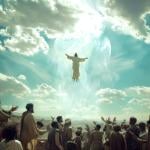
When Dominic began preaching the Rosary in Toulouse, a dramatic storm arose. Thunder shook the cathedral, lightning flashed, and the people were filled with fear. They saw an image of Our Lady raise her arms toward heaven, calling them to repentance.
When the storm ceased, Dominic continued preaching. The people responded. They turned away from error, embraced the faith, and peace returned to the city.
A Prayer for Today
The story of the Rosary is not just history, but it is a call to action.
In a world still marked by confusion, division, and suffering, the Rosary remains what it has always been:
a powerful, simple, and deeply transformative prayer.
It is a prayer for the family.
A prayer for the Church.
A prayer for the world.
And perhaps most importantly, it is a prayer that changes us.
Each decade invites us to slow down, to reflect, and to walk alongside Jesus and Mary. In doing so, we are gradually conformed more fully to Christ.
Final Reflection
The Rosary is more than repetition, it is relationship.
More than words, it is meditation.
More than devotion, it is transformation.
When we take up the Rosary, we are not just praying we are placing roses into the hands of Our Lady and allowing her to lead us ever closer to her Son.









 Ad-Free & Subscriber Log-In