

“For I know the plans I have for you, declares the Lord, plans to prosper you and not to harm you, plans to give you hope and a future” (Jeremiah 29:11 NJKV).
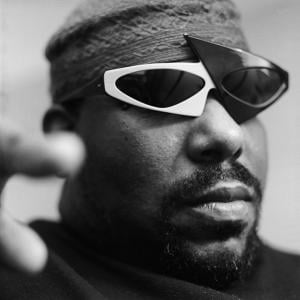
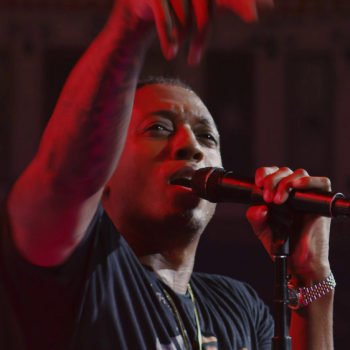
One of Hip Hop’s most prominent voices died this past week. Afrika Bambaataa (aka Lance Taylor) died on Thursday, April 9, at the age of 68 years old due to cancer. This is a clear and present rupture in the foundation of Hip Hop culture.
Afrika Bambaataa’s main points throughout his life were Peace, Love, Unity, and Have Fun, which are all bound together through Hope. It is this latter point, Hope, that became the catalyst through which Afrika Bambaataa communicated with his community and the growing identity of Hip Hop.
A Hope To Build From

Reading the narrative of Hope, it’s important to see how this is applied in a secular and sacred analysis.
Secular Hope: based on desire and expectation. An invalid, vacant position framed by external, worldly features.
Sacred Hop: based on faith and knowledge in what Christ has done for us (read: salvation, forgiveness). A valid, occupied position framed by scriptural knowledge, personal acceptance of Christ, and faith in what God provides.
Afrika Bambaataa magnifies Hope through a dynamic, complex relationship of sacred and secular Hope. Turning the gaze on his community, the 1970s Bronx, Afrika Bambaataa used secular Hope to address gang violence, poverty, and socio-political oppression in a segregated urban environment. This allowed Afrika Bambaataa to turn the Black Spades into the Zulu Nation, later renamed the Universal Zulu Nation.
Without saying it directly, Afrika Bambaataa employed a sacred reading of Hope in his secular application of Hope. In line with scripture, Afrika Bambaataa used this triad as a central agent of the Hope he professed to his community.
Exile, Diaspora, Home
“…I will surely deliver thee, and thou shalt not fall by the sword, but thy life shall be for a prey unto thee: because thou hast put thy trust in my, saith the LORD” (Jeremiah 39:18 KJV).
Afrika Bambaataa captured the spirit of the oppressed community in which he was situated. Though Bambaataa did not specifically work along the lines of Moses, leading his people out of exile, what Bambaataa did do for the oppressed youth in the 1970s-80s Bronx, New York, was to bring them out of a state of mental depression, self-defeat, and socio-political oppression.
Through the newly formed Hip Hop culture, Afrika Bambaataa usurped the political disenfranchisement of the majority-minority communities in the Bronx, offering an alternative methodology and expressive practice. Illustrating how music can be an agent of positive identity expression, Afrika Bambaataa drew on the attention and spirit of the younger generation and led them toward an alternative way of living, rather than the basic existence and survival mode that was more prevalent at the time.
It was through Hip Hop that Afrika Bambaataa presented a Moses-like image to the youth. The transformation of the Black Spades gang into the Universal Zulu Nation is one example. The artistry of cutting/mixing beats with two turntables, and eventually an electronic drum machine, made Bambaataa stand out amongst the community as a positive figure who used music to challenge hegemonic norms and speak firmly about Peace, Love, Unity, and Having Fun, bound together through Hope. This was a paradigm shift that the community sought. Though it may not have been Bambaataa’s intent to replicate a posture akin to Moses, he did lead his community out of mental oppression toward a space and place filled with positive artistic energy. Afrika Bambaataa continued to magnify Hip Hop’s Message in his actions: work to support the community and speak positively to present a counterpoint to social limitations, segregational norms, and political marginalization.
Afrika Bambaataa embraced the diasporic nature of Hip Hop. Tracking the journey Hip Hop endured from the slave trade to Jamaica, and eventually settling in the ghettoized New York City, Bronx area, Afrika Bambaataa employed these different identities and musical attributes to help craft the profile and image of Hip Hop. Similarly to the exiled Jewish people from their homeland, seeking to eventually come to the foretold promised land.
Ezekiel 11:14-20 tells of this journey and return. A short analysis offered by “Enter the Bible” states,
“The Jews in exile think they are far from the Lord and must settle down in Babylon. In response, this section presents a new promise: God’s own self will be their Temple while they are in exile (11:16). What is more, God promises to cleanse them from idolatry, gather them again, and give them back the Promised Land. God will renew thecovenant and “give them one heart, and put a new spirit within them,” removing their “heart of stone” and giving them a “heart of flesh” (11:19). Thus God will bring Israel back to spiritual life in the Promised Land–they will not live in foreign lands forever” (Enter the Bible, n.d.).
If we read these points through the development and importance of Hip Hop, as communicated by Afrika Bambaataa, we see that the youth in the socio-politically ghettoized Bronx were living in cultural exile. Hip Hop, offered by Bambaataa, removed their dependence on oppressive programs and mental limitations. Bambaataa offered the youth the opportunity to express a positive Message and gain a new heart, spirit, and desire to improve themselves and their community. Those who took hold of this opportunity found that they would not have to “live in [a] foreign [land] forever,” that being the ghettoized, economically oppressed, socially challenged, academically defunct, and politically removed urban American environment. Afrika Bambaataa was expressing the reality of Ezekiel 11:14-20 through Hip Hop for the marginalized and disenfranchised Black urban youth.
The outcome of this agency from Afrika Bambaataa was the narrative of a new home, a condition of living rather than existing or survival. Framed on his points of Peace, Love, Unity, Having Fun, and Hope, Bambaataa helped move the spirit, minds, and artistic expression of youth culture during the 1970s-80s in the hegemonically restrictive urban environment. Visibly, the change was seen through the evolution of Hip Hop culture. Internally, the change was the reality of replacing the multiple levels of defeat with the opportunity and possibility of gaining a location of culture, a positive self-image, a purpose in one’s life, and the realization of building a new identity, a home base.
“Not only so, but we also glory in our sufferings, because we know that suffering produces perseverance; perseverance, character; and character, hope” (Romans 5:3-4 NKJV).

Living Beyond The Limits
“The Hip-Hop Alliance, headed by early rapper Kurtis Blow, wrote on Instagram, ‘Today, we acknowledge the transition of a foundational architect of Hip Hop culture, Afrika Bambaataa. As the founder of the Universal Zulu Nation, Afrika Bambaataa helped shape the early identity of Hip Hop as a global movement rooted in peace, unity, love, and having fun…At the same time, we recognize that his legacy is complex and has been the subject of serious conversations within our community. As an organization committed to truth, accountability, and the preservation of Hip Hop culture, we believe it is important to hold space for all voices while continuing to uplift what empowers and protects the people’” (Variety, April 9).
The quote highlights the importance of Afrika Bambaataa’s life and legacy. Applied through a theomusicological lens, Bambaataa encapsulated each of the core elements: personal testimony, discipleship, biblically-centered narrative, community, and activism. Though Afrika Bambaataa did not make any statements about his faith or religious preference, the narrative of his life’s work aligns with those from scripture, specifically on how he supported and helped lead his community out of socio-political oppression and defeat. Through Hip Hop, Afrika Bambaataa demonstrates how scripture can be seen, understood, and realized in everyday life. Bambaataa did not allow his community to remain localized in an economically disenfranchised, marginalized, and defeated environment. Afrika Bambaataa flipped the script on the social narrative, through Hip Hop, to express scriptural truth on how to live and gain a new spirit and heart. It was his core principles of Peace, Love, Unity, and Having Fun, surrounded by the gravitational force of Hope, which gave light and liberty to the work of Afrika Bambaataa. It is these same unifying factors that outline the walk, in faith, of those who follow scripture.
Remembering Afrika Bambaataa is also a means to recall how, through a theomusicological reading and application of Hip Hop culture, scriptural truth guides one’s heart, mind, spirit, and steps to better themselves and their community through personal testimony, discipleship, a biblically-centered narrative, community involvement, and activism.
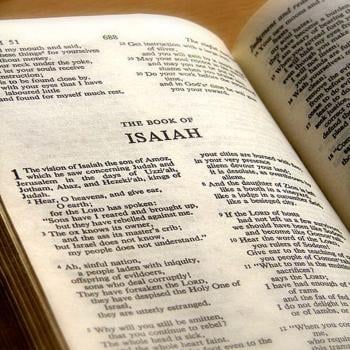
“But those who hope in the LORD will renew their strength. They will soar on wings like eagles; they will run and not grow weary, they will walk and not be faint” (Isaiah 40:31 NJKV).
Articles Of Interest
These are a few articles providing some background information on the life and passing of Afrika Bambaataa.
Carsen Holaday. Afrika Bambaataa’s death: Hip-hop pioneer and DJ dies at 68 after cancer diagnosis in New York, The Independent,











 Ad-Free & Subscriber Log-In