

Most of the time, it may look like the articles are a rehash of older songs and artists, which are timeless favorites. Truth be told, that’s only part of the equation. Scouring the Christian music scene is a dedication, and one not taken lightly.
It’s no mystery that a majority of critical work lies in Christian Hip Hop. However, taking note of what comes across the pop, Heavy Metal, alternative, and Punk music scenes, related to Christian culture, is also on the daily radar. When Pitchfork magazine, known for its dynamic and inclusive reviews, meets theomusicology nearly halfway, the work appears to be on the right track.
“Praise Him with the sounding of the trumpet; praise Him with harp and lyre” (Psalm 150:3 NKJV).

What A Difference A Week Makes
Pitchfork recently took up the task of reviewing the new record by M.I.A., M.I.7, a pop/Hip Hop artist who is known for her socio-political songs aligned with her Tamil/Hindu heritage and religious affiliation. Her testimonial conversion to Christianity in 2017 changed the direction of her work going forward.
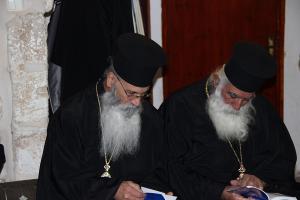
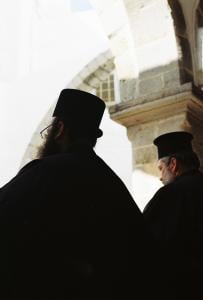
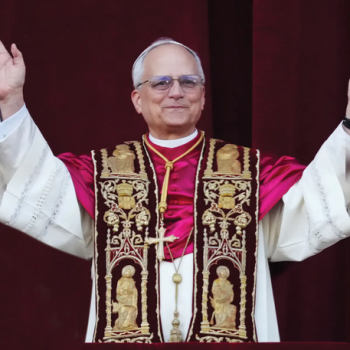
The following week, Pitchfork nearly read my mind as I was taking another dive into Christian Heavy Metal. The review of “Paradise metal” by Father Dionisios Tabakis, an Orthodox Greek priest, his inclusion of Heavy Metal in solemn worship music, turned Pitchfork on its ear. How could the world make any sense of this?
Both of these albums deserve their own critique, which is forthcoming in a short series to follow – stay tuned and subscribe for free!
In the meantime, a brief introduction of each of these works by artists from very different musical backgrounds and genres is presented to tempt the interest. When pop culture has a conversion, and Heavy Metal is used to marry orthodox ancient Greek Christianity, the analytical lens goes full stop!
To those begging the question, yes, Pitchfork was contacted, asking to provide additional reviews of these albums/artists. The response was a sound “No.” Safe to say that secular audiences will have to deal with reviews from well-equipped music reviewers, but who may be a bit out of their area with these examples.
A straightforward review dealing only with the surface sounds misses the nuance and faith-based integrity of these works. Granted, many may not be prepared to discuss ancient Greek Orthodox theology from a musical perspective. M.I.A. may be more aligned with a secular music journal. Still, this new direction from an already controversial artist requires an approach that can balance musical analysis, theomusicology, culture, and faith-based cultural signifiers. Pitchfork’s lack of interest in this multilayered critique opens the door for an apt review of these two juxtaposing artists in this creative space.
Without further ado, let’s take a cursory look at selected works by these two artists, M.I.A. and Father Dionisios Tabakis, and explore how contemporary Christianity is being musically expressed.
“Let everything that has breath praise the Lord. Praise the Lord!” (Psalm 150:6 NJKV).

When A Vision Changes Your Music
M.I.A. – “Jesus, featuring Sunday Service Choir“, MI7, April 16, 2026.
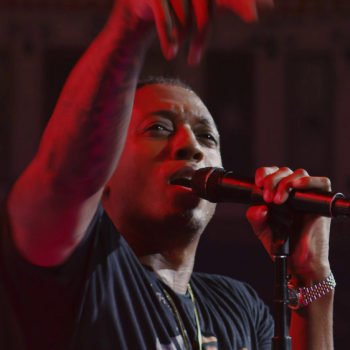
When M.I.A. declared her conversion to Christianity in 2017, she knew her work from that point on was going to shock audiences and may have dire consequences for her career overall. She lost record deals, promotion opportunities, and recently was dropped as a headliner for a major international tour. Yet, despite these dramatic events, M.I.A. did not fall from her commitment to her Christian conversion.
In Premiere Christian News, M.I.A. notes the changes that directed her work following a vision.
“But I had a vision, and I saw the vision of Jesus Christ. It’s very, creatively, it’s a very crazy thing because it turned my world upside down. Because everything I thought and believed was no longer the case…And I think that was maybe a sign that something major was going to happen in the world and that people [needed] to be introduced to this concept. But I always found the concept of Christianity quite basic compared to… wow, this is going to be shocking if people go, “Maya calls Christianity ‘basic’” (Premiere Christian News, May 28, 2022).
M.I.A. predicted the negative impact this news was to have on her career. In the same interview with Premiere Christian News, M.I.A. states, “I am. I’m not going to lie. Then, when I had this vision, it turned my world upside down. I kind of couldn’t let go of the Tamil side. I think that’s why 50 per cent of the record is sort of like that. Because I’m still me. That’s still my language. And those are still my tools to be able to create beats like that or a sound like that…But I think the message was just to get to a peaceful place. Watch the space. The history is, even if it costs me my career, I won’t lie. I will tell the truth, and I will tell you what’s on my mind and my heart. If I’m coming back now, saying Jesus is real, there’s a point. Basically, all of my fans might turn against me” (Premiere Christian News, May 28, 2022).
Bold and unapologetic, M.I.7 is a record that addresses this change in her artistic career and personal life. Pitchfork recognizes this in a review of the video Everything. “[S]he’s got this massive smile on her face. I don’t think I’ve seen her smile like that before” (Pitchfork, April 17, 2026).
M.I.A., Everything, M.I.7,
Her tracks are open and honest, illustrating her transformation in faith and artistry. For those who are aware and adept to the unstable juxtapositions of style, beats, and in-your-face socially conscious, politically underscored, and double-entendre meanings, the record M.I.7 presents a different approach to her work. The subtleties are more testimonially narrated with the need to contextualize these in the arc of M.I.A.’s work. Those who will enter her work at this juncture may miss the abundant wealth of her past creative output, laced with controversies. Yet, from this entry point, hearing those older works puts a finer point on the depth, breadth, trajectory, and complex identity M.I.A. has continued to challenge publicly, now on a faith-based level.
“Sing to the Lord a new song; sing his praise from the ends of the earth” (Isaiah 42:10 NKJV).
Heavy Metal Is Heavy Theology
Father Dionisios Tabakis, “Paradise Metal” YouTube Channel.
Notable points from the Pitchfork review of “Paradise Metal” highlight the necessity of applying a sensitive lens to what some Western listeners will see as a step into the past, seeking the light of the present.
“Would you be so enamored with this record if it weren’t by a 53-year-old Greek priest?” Probably not. But that answer has less to do with his identity or image than the structure that identity lends Paradise Metal…Paradise Metal, then, prompts the kind of question that I believe Western listeners should always consider when extolling something so far beyond their wheelhouse, whether that’s the aforementioned Tuareg guitar or mbalax rhythms or Korean gayageum or Bolshevik folk songs: Am I fetishizing this because it’s something exotic to me, or do I like this because it makes me feel something?” (Pitchfork, May 14, 2026).
There’s no doubt that the striking image of Father Dionisios Tabakis catches the eye. The ear is drawn in by the ease with which Father Dionisios Tabakis maneuvers between traditional non-fretted string instruments and his distortion-grinding Western fretted guitar. Pitchfork provides a useful review of the instrumentation and outliers in the brief, compact record by Father Dionisios Tabakis. The blocking point for the review? It’s a mystery how a 53-year-old Orthodox Greek priest can incorporate Heavy Metal textures to articulate religious discipline. The question is not as stark as it appears on the surface. The issue lies in that reviewers reserve their analysis to the surface. When adding to the equation the sacred and secular sonic environments and heritage of Father Dionisios Tabakis, the collected works on “Paradise Metal” fall in line with this lineage.
Take, for example, the short track “Powerful Resurrection,” which is an excerpt from a longer hymn about the resurrection of Christ. The short text included in the YouTube notes states, “CHRIST IS RISEN Hymn of the Resurrection of the Orthodox Church” (Father Dionisios Tabakis, YouTube, April 29, 2026).
To read more from Alan Lechusza Aquallo’s “The Sweatpant Sessions,” please consider subscribing for free and check out others on Patheos.








 Ad-Free & Subscriber Log-In