

This week’s review in the “top of the Country” series is Ella Langley’s new album Dandelion. This is very much the year of Ella Langley–even if she drops off the charts tomorrow (and that does not look likely), she will have spent all of January- the first week of May, 2026 in the Number 1 spot on Billboard’s Hot Country Singles. That her album hit Number 1 as well means this is a very good year for her.
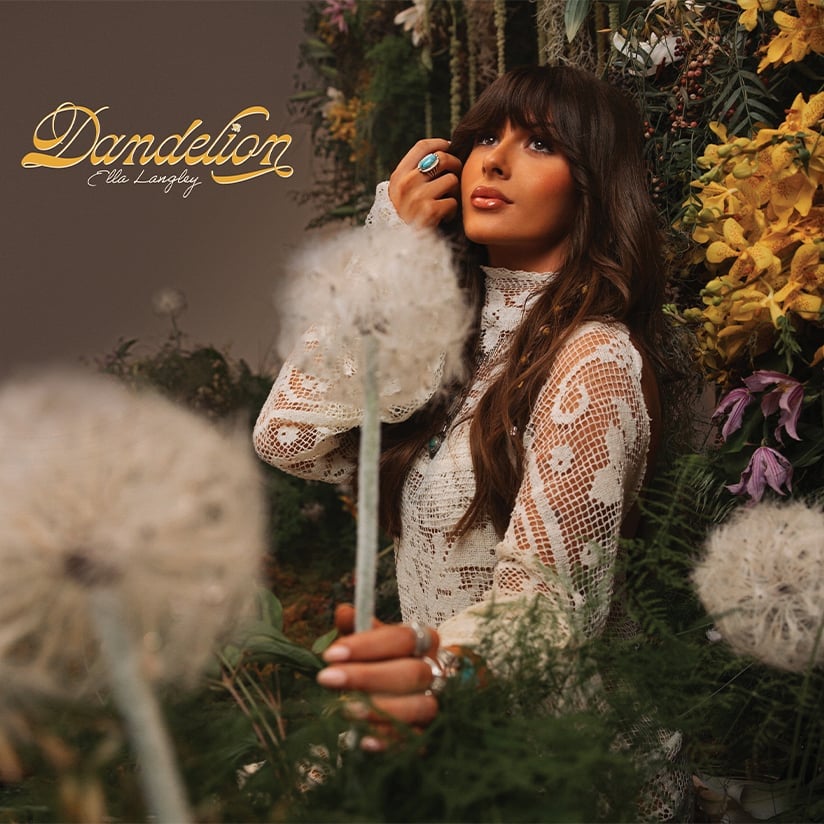
Overall, it is a solid album. Like Lainey Wilson, Luke Combs, and Morgan Wallen (who all have experienced similar runs of success), neither the quality of the album nor Langley’s success are a surprise. She sounds like she is from somewhere. Where much of the Pop world has a generic American tone (which isn’t a bad thing–that can make you focus on the lyrics or the interesting musical things going on). the people dominating Country music today all still sound deeply regional in their style and music. The Southern accent in speaking or singing is still king. Or, in this case, queen.
Standout songs on Dandelion include “Loving Life Again” and “Speaking Terms.” “Choosin’ Texas” (reviewed here) and the titular “Dandelion” also are included and worth a listen.
But I want to make this a longer post than normal by focusing on two songs that are both worth extended reflection:
“It Wasn’t God who made Honky-Tonk Angels”
This is of course a cover of the old Kitty Wells song, which was itself a response to Hank Thompson’s song “The Wild Side of Life.” The question these two songs ask is: whose fault is it when someone (specifically the wife, in these songs) is unfaithful? Thompson suggests the woman is just “wild”, while the Kitty Wells (and now Ella Langley) song suggests that “it wasn’t God who made Honky-Tonk Angels” but that the way women are treated by men drive them to this kind of behavior.
And there’s a great lesson here as Christians. We know that this back-and-forth blaming goes back to the garden of Eden, and we know it won’t be resolved in song in 2026. But we also know that we need to both be aware of what’s going on in society and culture, and remember that we are shaped by the culture we live in and by the things that happen to us. And we need to remember the importance of personal responsibility and that we make our own choices. That’s a lot of things to keep in mind when assigning blame, but if we let any of them go we fail to understand God’s world as it actually exists.
The other song worth some notice makes up the Intro and Outro: “Froggy Went a Courtin'”
This merits some notice because what we have here is rising–really now we can call her a successful–artist recording a song that hits the intersection of folk music and children’s music. I think there is a market for a big-name Country singer to release an album of music that hits this intersection.
Now, to be clear: I do not think this would be a good project for an artist attempting to break out. I also don’t mean just an album of children’s songs. Burl Ives is great, but we don’t need another Little White Duck. And I don’t mean an album of just folk songs. We get that from Allison Krause and Union Station. But if, say, Blake Shelton or Kacey Musgraves or George Strait or, well, any established artist were to release an album of songs that are singable and familiar (but not rage-inducing on repeat) that hit the make between folk and childrens, well, that’s money just waiting to be picked up.
Which isn’t to say I want children’s music to become the new Christmas album where everyone and their dog has one. But two or three of these kinds of albums are overdue, and there is a great opportunity available. Ella Langley’s excellent short clips of “Froggy Went a Courtin” is great evidence of that.
Dr. Coyle Neal co-hosts the City of Man Podcast and is an Amazon Associate (which is linked in this blog). He teaches Political Science, Philosophy, and History in Southwest Missouri.








 Ad-Free & Subscriber Log-In